Market Developments
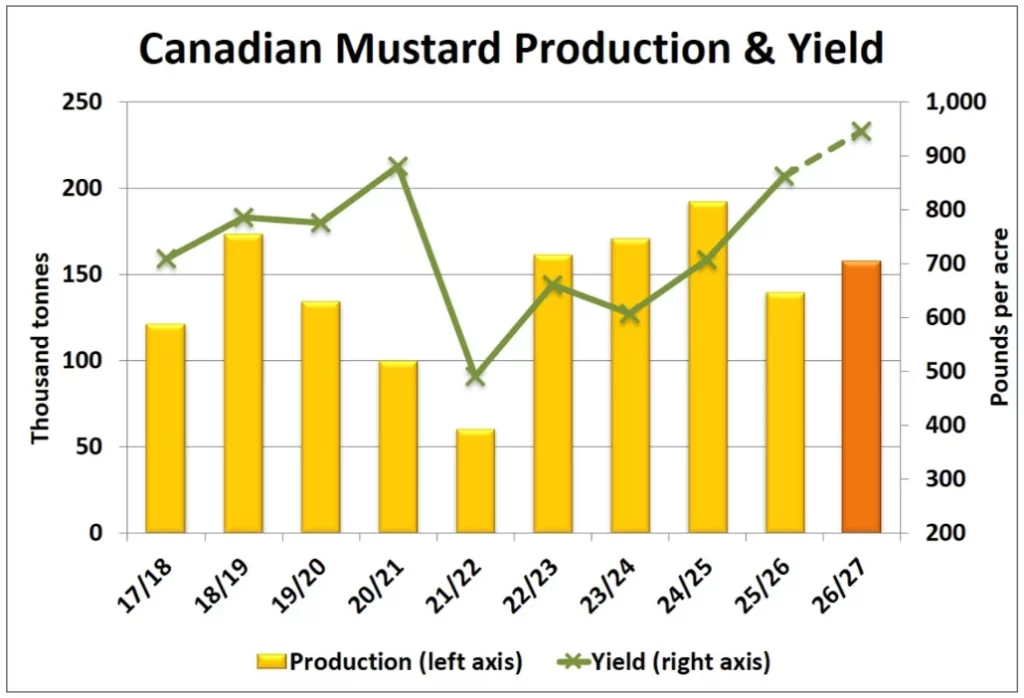
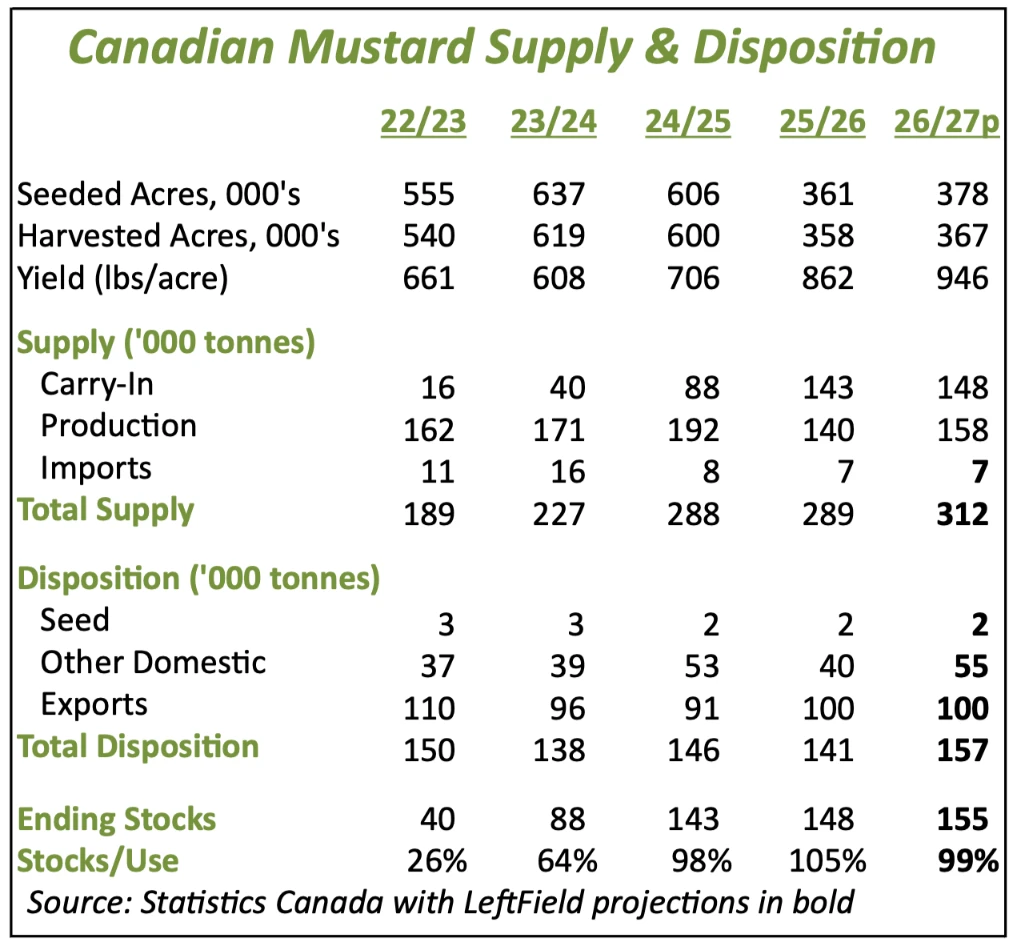
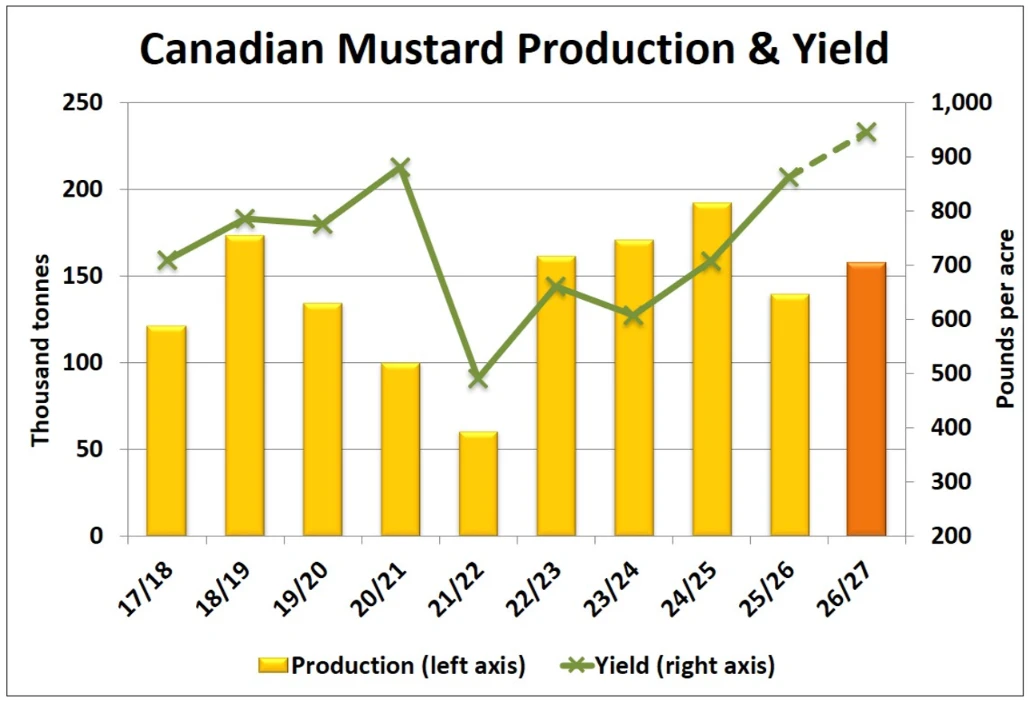
- In its September model-based crop estimates, StatsCan pegged 2026 mustard production at 158,000 tonnes, up 18,000 tonnes (13%) from last year. The prairie-wide yield was reported at 946 lb/acre, the highest since 2016/17.
- If we apply the percentage increase in the 2026 yield to StatsCan’s June acreage for each class, yellow mustard production would come in at 80,000 tonnes, 5% less than last year while oriental production would be 35-40,000 tonnes, 42% more than last year and brown production would also be 35-40,000 tonnes, 26% above a year ago.
- Last week, Sask Ag trimmed about 100 lb/acre from its previous 2026 mustard yield estimate and the new yield of 1,024 lb/acre is very close to the StatsCan provincial yield of 1,001 lb/acre. As a result, we’re inclined to adopt the StatsCan yield, which would be the highest since 2016/17. Keep in mind, the key mustard growing areas of Saskatchewan have experienced multiple years of dry and drought conditions, which dragged down the yield average.
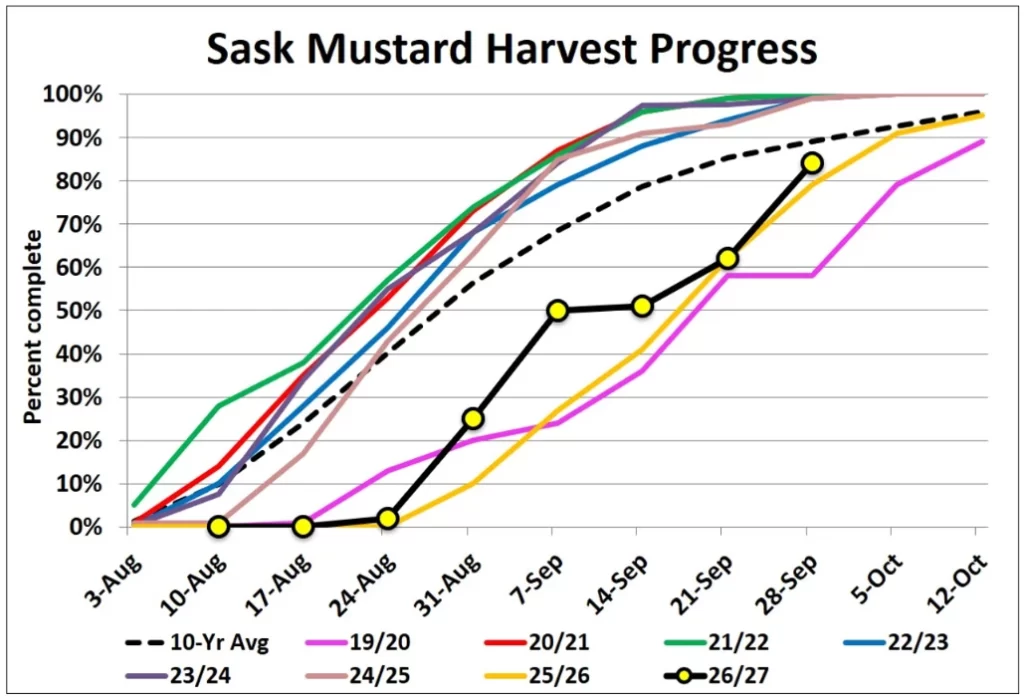
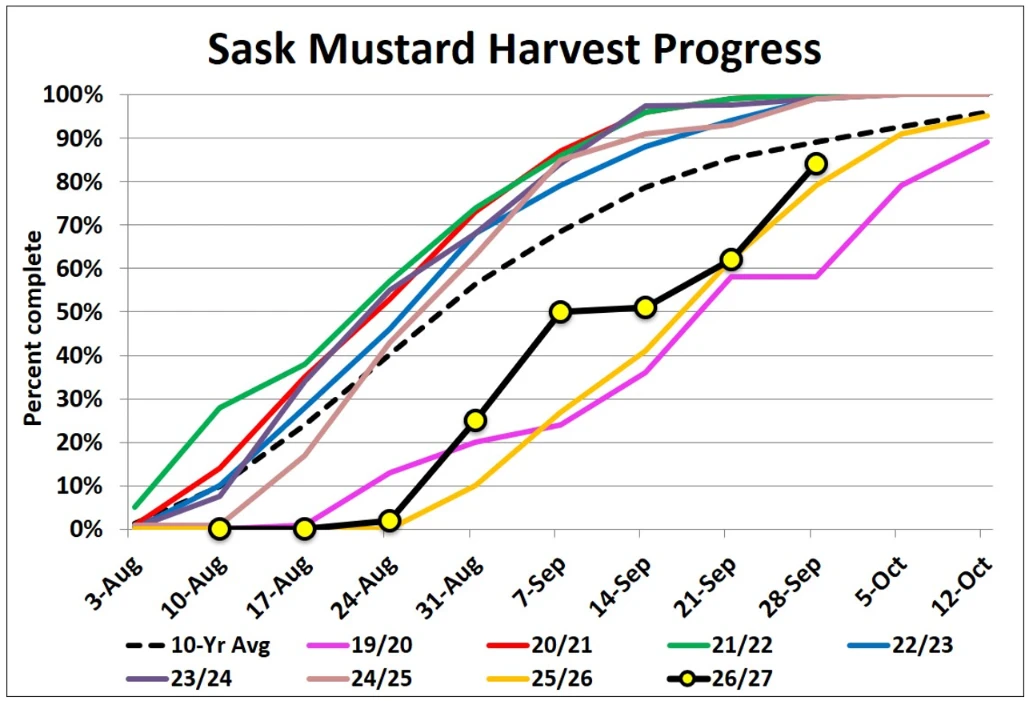
- The mustard harvest in Saskatchewan improved this week, with Sask Ag reporting 84% of the harvest done as of September 28. That’s just slightly below the 10-year average of 89% complete and is in line with the slow pace of last year. So far, we haven’t seen any grade estimates for 2026 but if we assume the average of 2019 and 2025 grades, 65% of the crop would be a 1Can (10-year average of 72%) and 15% would be a 3Can or lower (8% average), which would compound the issue of low-quality mustard carried over from the last two years.
- The EU’s mustard imports were 5,900 tonnes in July, the most since March, but still not historically large. Canada accounted for 2,500 tonnes of that total, the most since September 2025 and Canadian market share hit 42%, the highest since August 2024. Imports so far in 2026 are 36,800 tonnes, well below last year’s pace of 54,000 tonnes and the slowest since 2018. We don’t have recent mustard production data for the EU, but suspect more demand is being filled by domestic production.
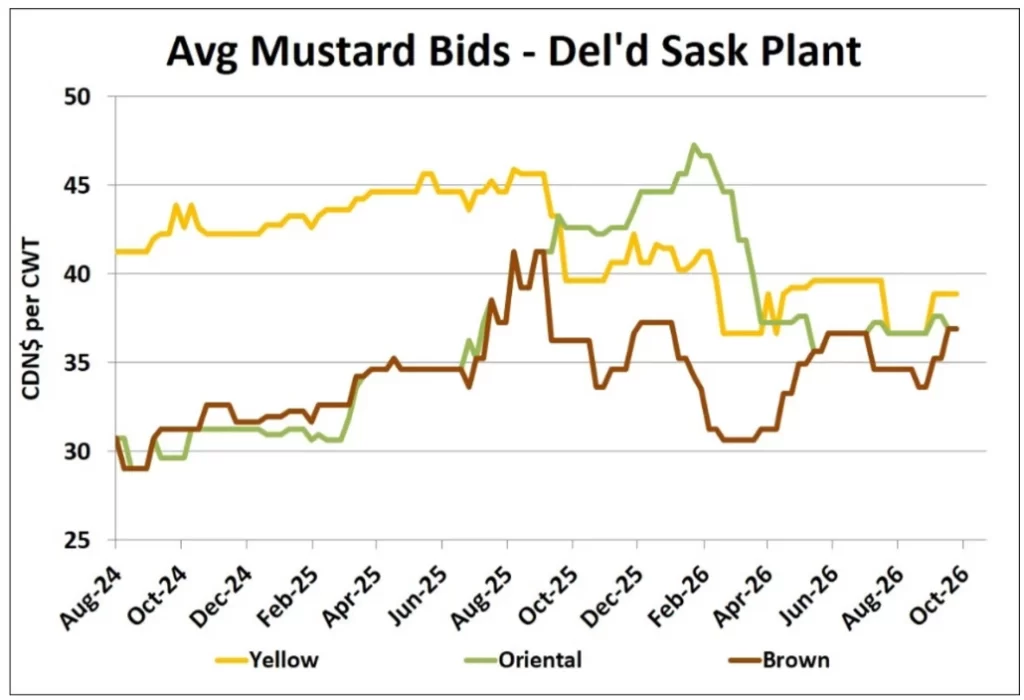
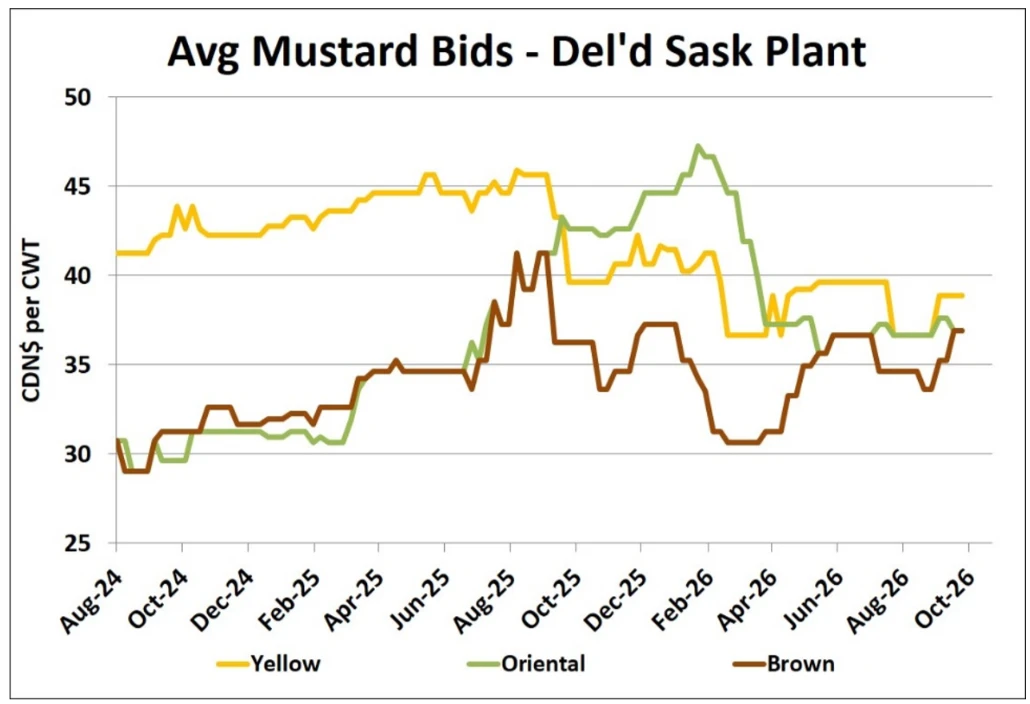
- Bids for all classes of mustard have been working their way higher from the bottom in late August. Brown mustard has seen the largest gains with yellow also higher. The seasonal recovery started showing up a bit earlier than usual, possibly because harvest delays and difficulties caused farmers to hold back on selling their mustard. The seasonal index shows that mustard bids tend to keep rising until late November or early December before turning sideways.
Outlook
Mustard bids are firming up, which fits the normal seasonal tendency at this time of year. A second straight year of modest Canadian production should help provide support for mustard prices, with more upside possible for yellow than oriental or brown. The bigger unknown in the 2026/27 outlook is the size of demand, with concerns about the volumes needed by Europe and the US. While bids will likely see a bit more seasonal strength, the gains could start to ease soon if importers don’t step up with bigger purchases.