Market Developments
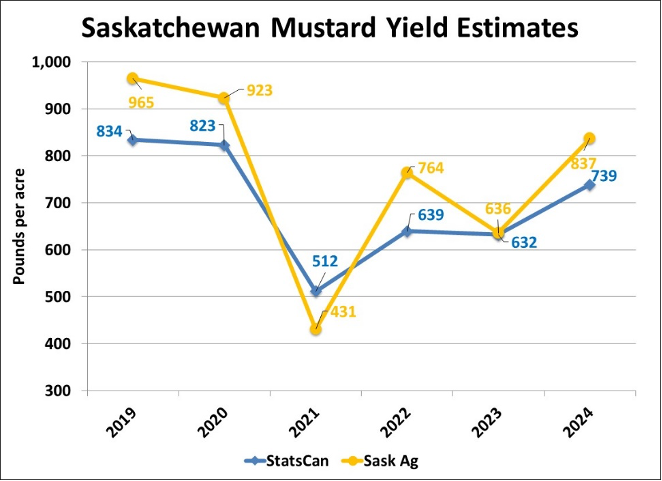
- In its early September yield estimate, Sask Ag showed a 2024 mustard yield of 842 lb/acre but then dropped that yield to 688 lb/acre at the end of September. Then, in its final crop report of the season, Sask Ag brought the mustard yield back up to 837 lb/acre, nearly 100 pounds above StatsCan’s yield for the province.
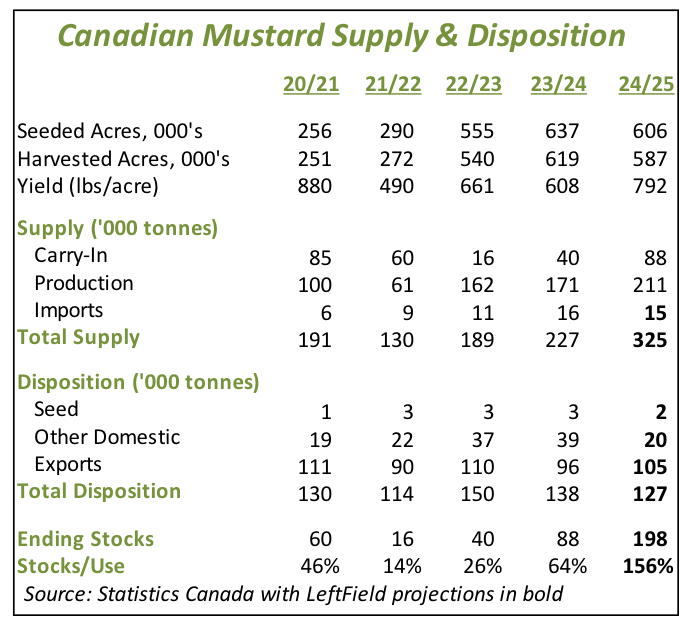
- In our 2024/25 S&D, we have adopted the StatsCan yield and crop size of 211,000 tonnes, 40,000 more than last year. If we would use the higher Sask Ag yield, it would add 15-20,000 tonnes to the total. That said, Sask Ag’s yield haven’t correlated well with StatsCan and for now, we’ll keep using the lower StatsCan yield, which would still result in 2024/25 supplies of nearly 325,000 tonnes, the most since 2005/06.
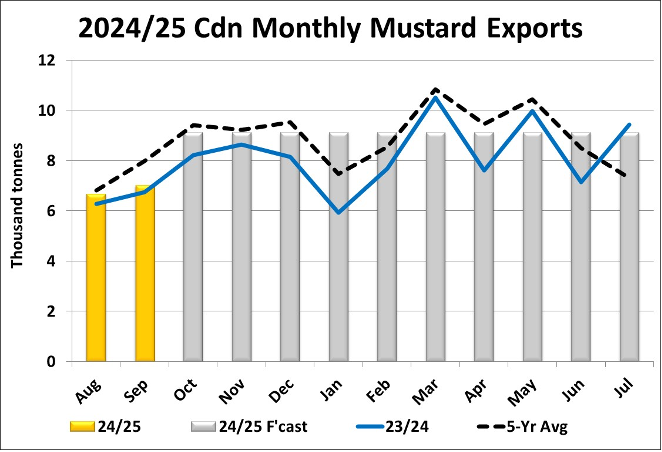
- Canadian mustard exports improved marginally in September to 7,000 tonnes and remained slightly ahead of a year ago but lower than the 5-year average of 8,000 tonnes. Despite EU tariffs on Russian mustard, Canadian exports to Europe dropped below 1,400 tonnes in September, the lowest for the month since 2015/16. On the plus side, the 4,550 tonnes exported to the US were a solid improvement over a year ago. While exports normally start the year on a slower note, our full-year export forecast of 105,000 tonnes is already looking a bit optimistic, as it would require monthly exports to average 9,100 tonnes for the rest of the year, well above last year’s pace.
- Mustard exports by the US started 2024/25 on a very strong note, extending the heavy pace of 2023/24. In September though, exports slowed considerably to just over 1,000 tonnes. This may be related to limited old-crop supplies before new-crop mustard became available, as 2023/24 stocks had been drawn down by the record exports. If so, the smaller 2024 crop (based on FSA acreage data) could keep this year’s exports from repeating the performance of 2023/24. That said, we do expect some bounceback in monthly exports now that the 2024 harvest is available for shipment.
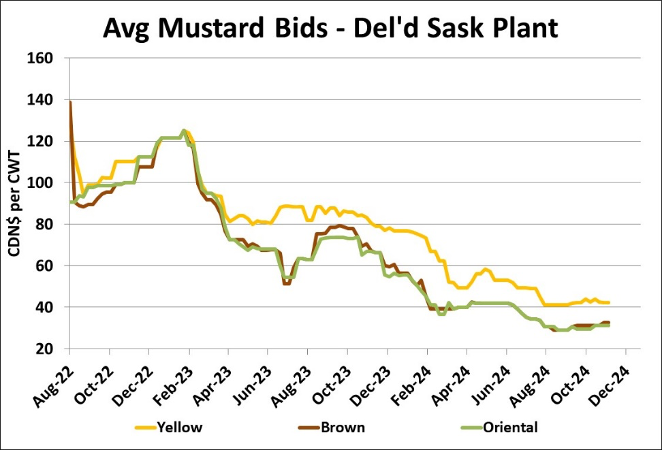
- While there was a small recovery off the mid-August lows for yellow mustard, bids have faded again and are now travelling sideways. The lack of any meaningful response at a time when bids normally strengthen is a clear reflection of the abnormal situation in 2024/25, with very heavy supplies weighing on prices. This also suggests very little upside potential for the new calendar year. The seasonal charts for brown and oriental mustard appear similar, with flat prices through the fall months.
Outlook
Mustard bids have remained flat in western Canada as new business is extremely limited. At the same time, farmers aren’t actively selling. In this type of environment, the posted prices are mostly just indications rather than actual live bids. The very heavy supplies in 2024/25 will limit any upside potential and this weak price environment will likely last into 2025/26.