Market Developments
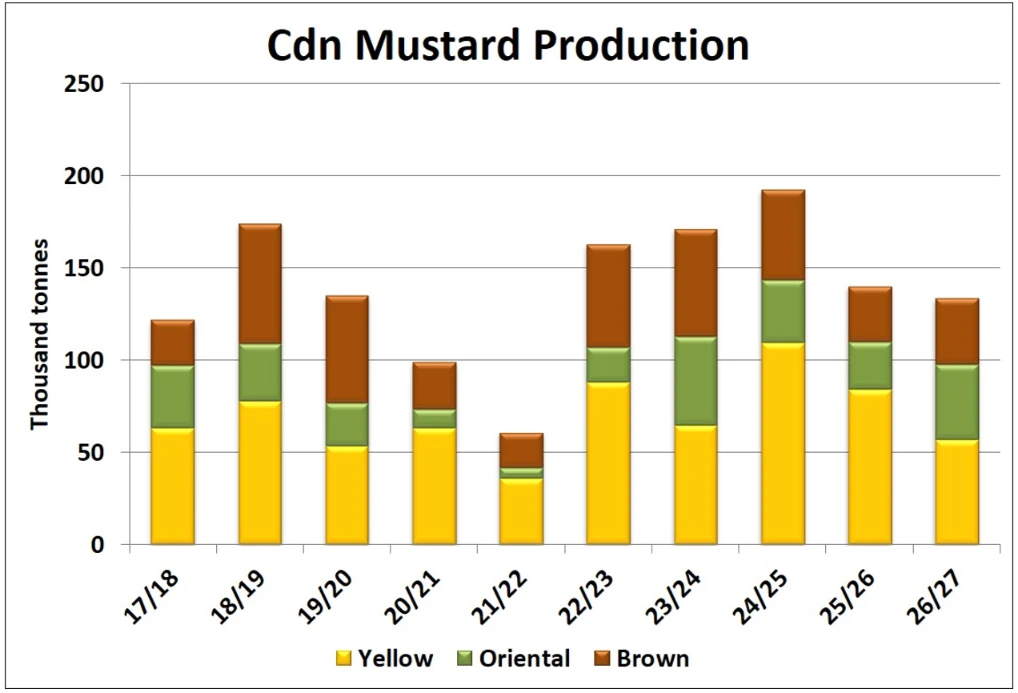
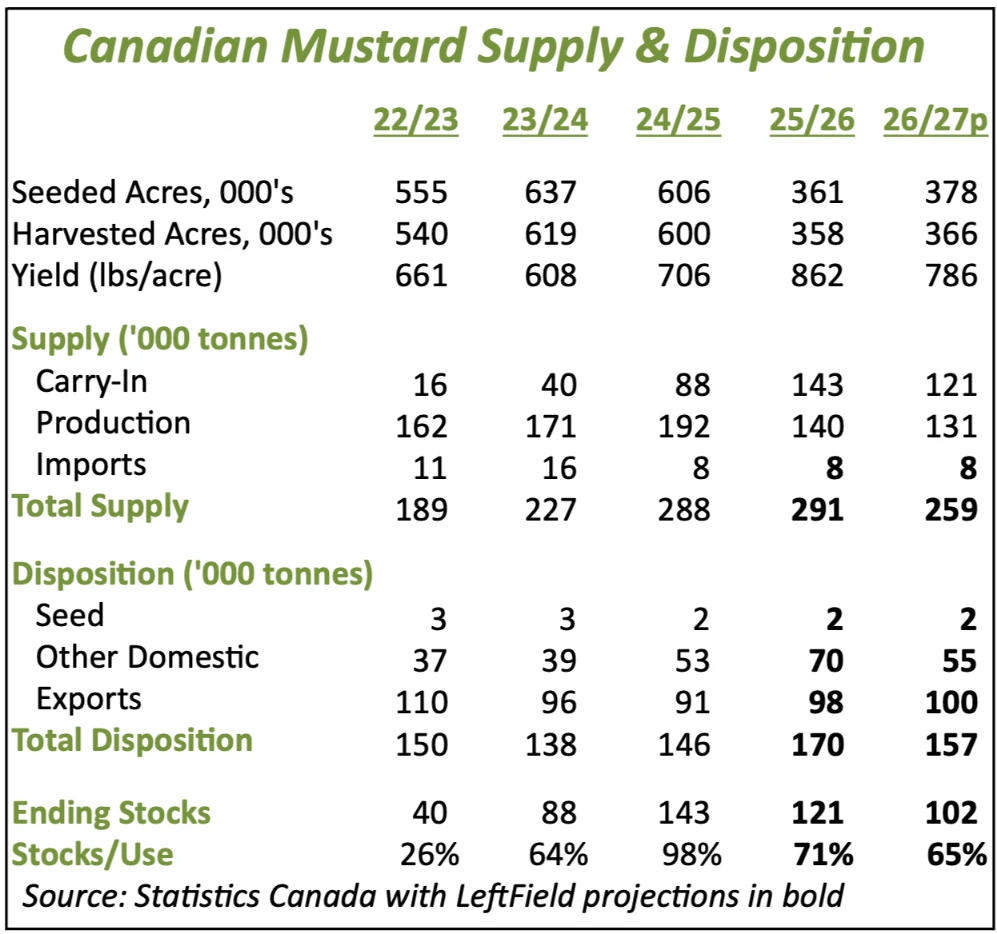
- The delays in the Canadian mustard harvest mean we don’t have any off-the-combine yield reports yet. For now, we’re using an overall yield estimate of 786 lb/acre, 5% above the olympic average which would produce a 2026 mustard crop of 130,000 tonnes, 10,000 tonnes less than last year.
- Last year’s western Canadian yields by type were highly unusual (yellow mustard was the best performer) and a return to more normal yields with a 12% decline in seeded area of yellow mustard would mean a sizable 33% drop in production for that class. Meanwhile, seeded area of both oriental and brown mustard expanded in 2026, up 34% and 18% respectively. This, together with steady to higher yields in 2026, would mean a 57% increase in the oriental crop and 21% more brown mustard production.
- The 2026 Saskatchewan mustard harvest is off to a very slow start again. As of August 24, only 2% was harvested, far behind the 10-year average of 40% complete. This year’s pace is in line with last year’s even slower start, when none of the crop had been harvested at this time. Since last Monday, rainfall in southern Saskatchewan has been limited, which may have allowed further progress. Keep in mind, the quality of last year’s mustard crop was reduced, with 20% ending up as 3Can or lower and if the 2026 harvest doesn’t catch up, downgrades would add to the supplies of lower quality mustard in western Canada.
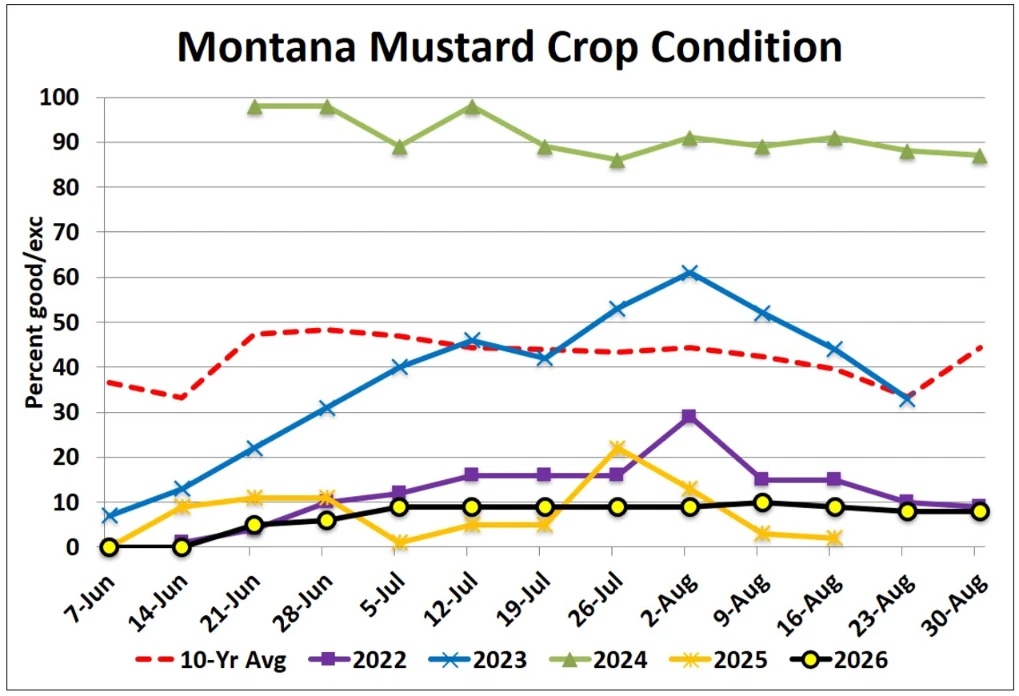
- The crop condition ratings for Montana mustard are a little questionable, as they have been for the last few years. On the surface, this year’s crop ratings suggest poor yields are in store for 2026, as the latest good/exc rating at 8% isn’t much better than last year or 2022. That said, nearly all (91%) of this year’s mustard is rated as fair and only 1% is poor or very poor, in contrast to 2025 year when 28% was rated poor/vpoor. In the absence of clear signals from the data, we’re using the olympic average yield (over the last 10 years) of 670 lb/acre. Based on the NASS acreage data, this would mean US mustard production of 80.9 mln pounds (36,700 tonnes) while the FSA acreage would produce 72.4 mln pounds (32,800 tonnes), versus last year’s crop of 71.1 mln pounds or 32,300 tonnes.
Outlook
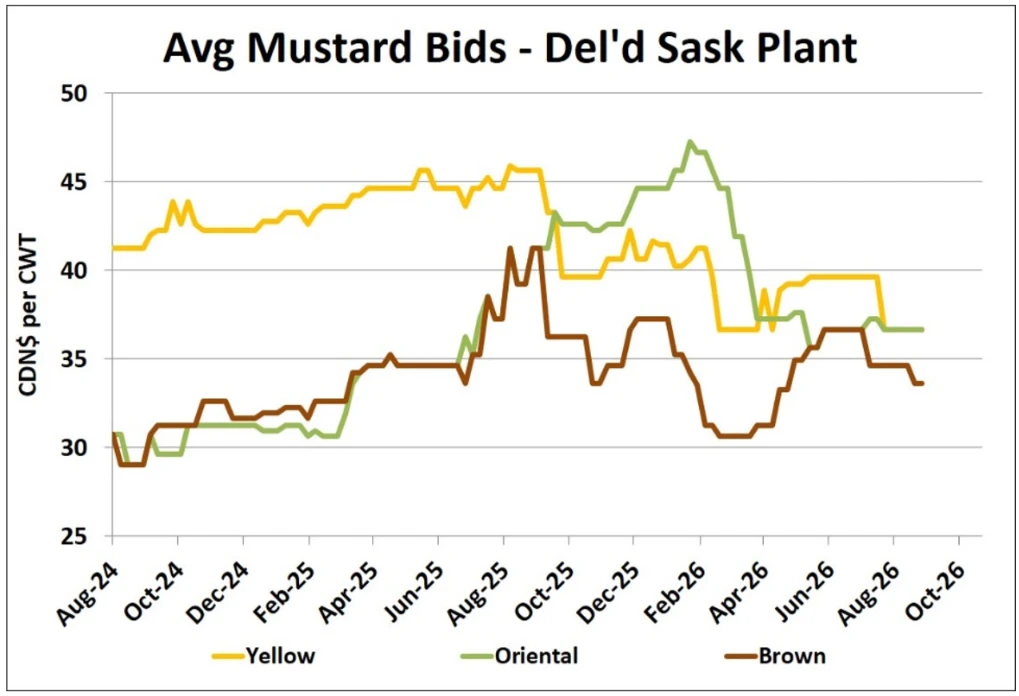
The harvest delays have added to the uncertainty about the 2026 Canadian mustard crop. The market was already dealing with quality issues in 2025/26 and a slow harvest again this fall could result in another year of challenges. Based on StatsCan’s acreage breakdown, the seasonal price recovery will be stronger for yellow mustard, especially if US yields are reduced. Meanwhile, increased acreage of brown and oriental mustard could result in smaller seasonal gains for those two classes in the coming months.