Market Developments
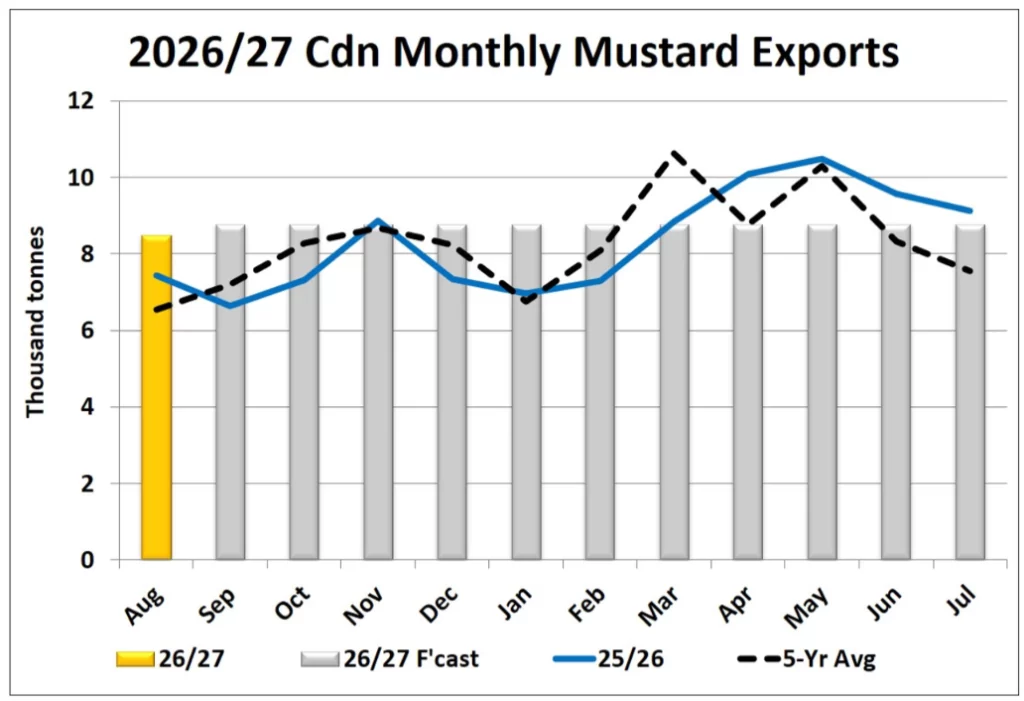
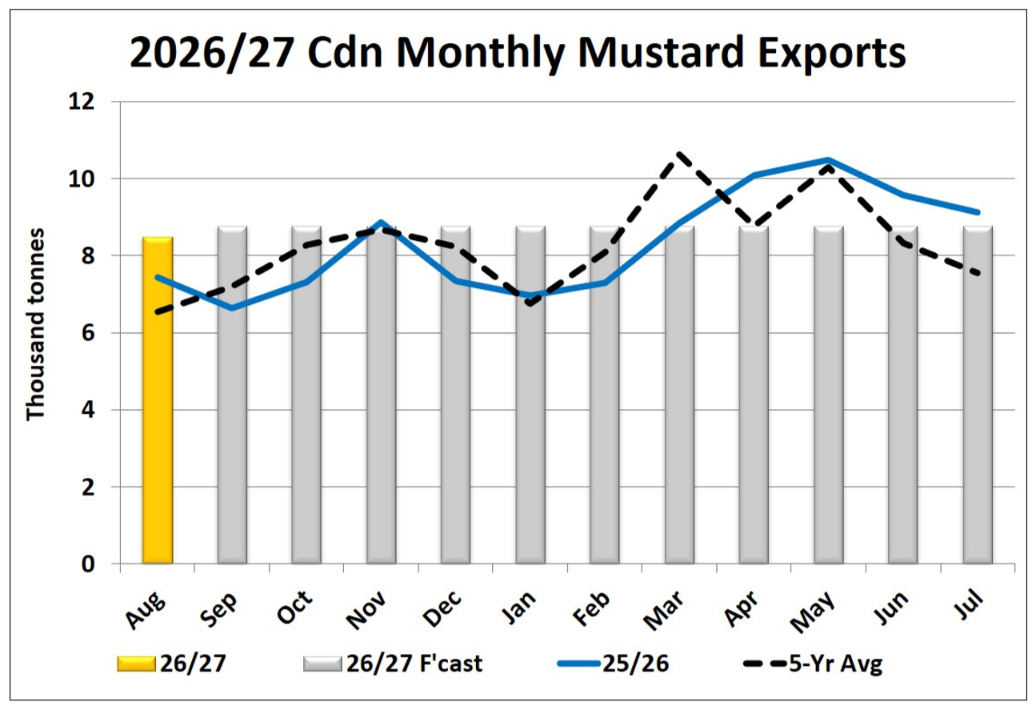
- Canadian mustard exports in August of 8,500 tonnes weren’t huge, but it was still the best start to a marketing year since 2015/16. As usual, the US was the largest destination at 4,600 tonnes, with no other country taking over 1,000 tonnes.
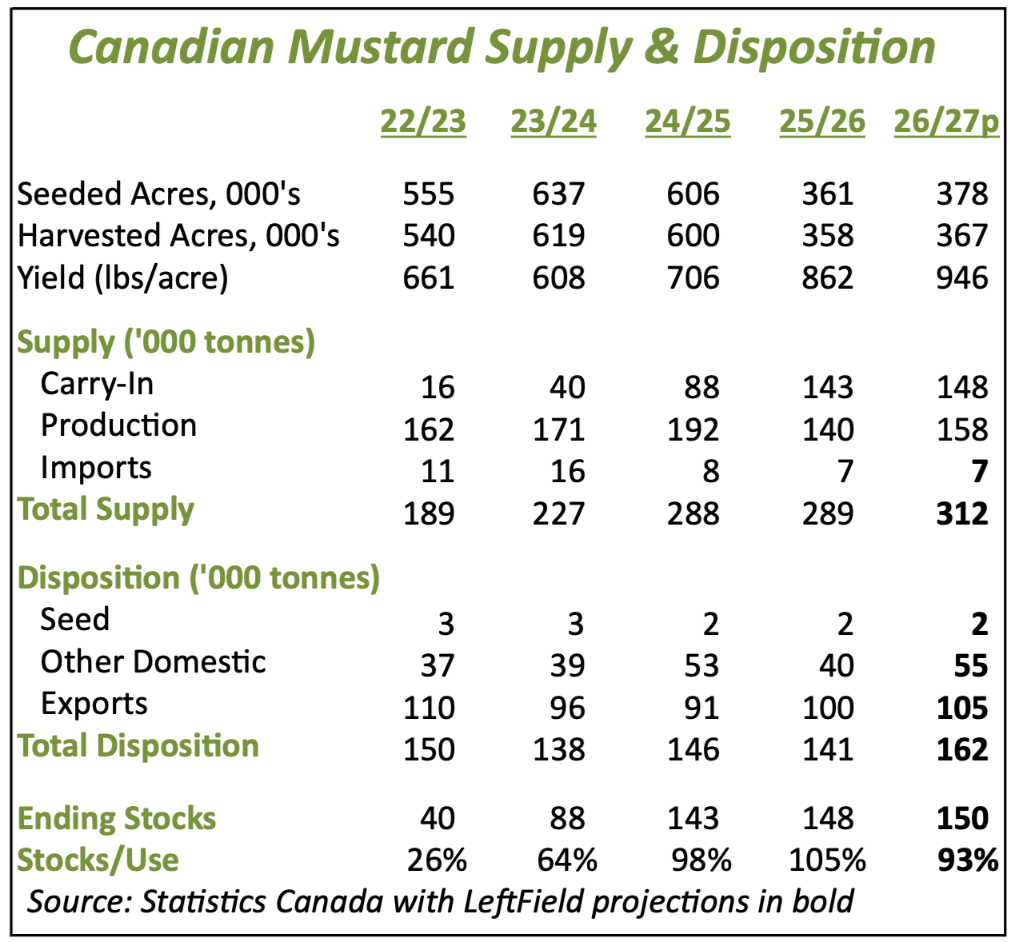
- In last week’s crop report, Sask Ag nudged up its mustard yield to 1,080 lb/acre compared to 1,039 lb/acre the week before. This widens the gap over StatsCan’s Saskatchewan yield of 1,001 lb/acre but seems to confirm a multiyear high for the yield. That said, it’s worth noting that mustard yields have been depressed for numerous years, which makes the 2026 performance appear unusually high. Prior to 2017/18, mustard yields in the 900-1,000 lb/acre range were more common.
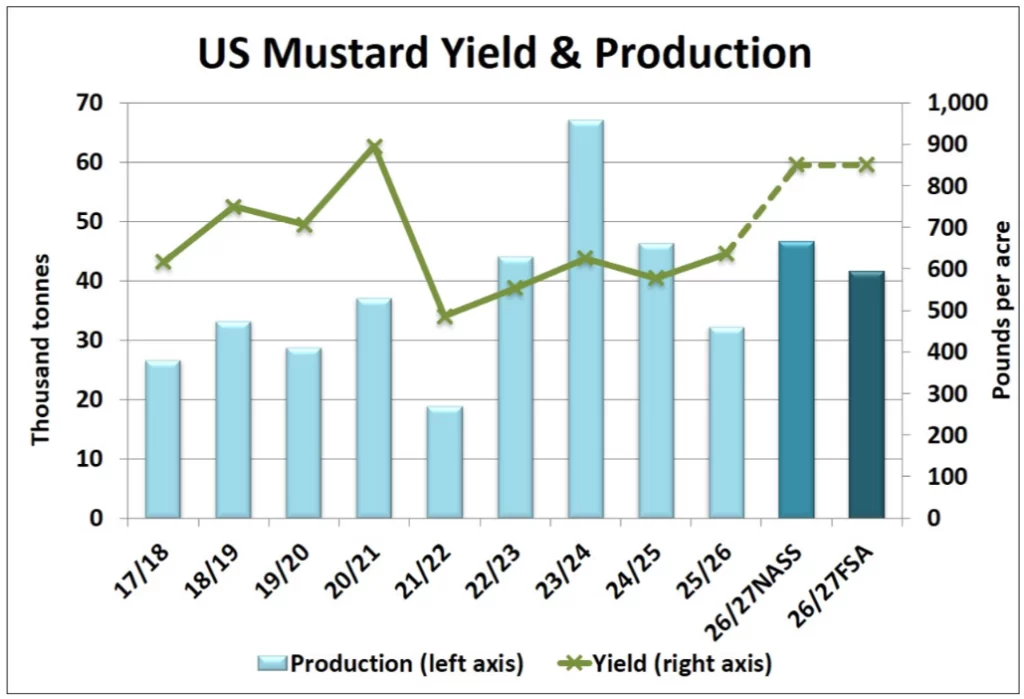
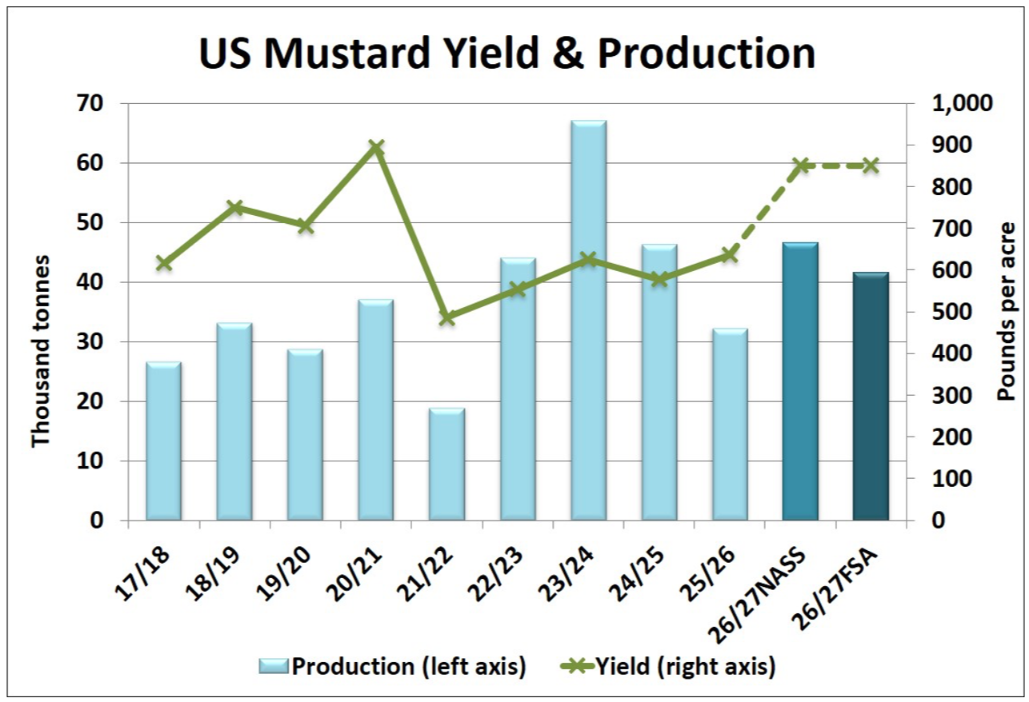
- We don’t expect to see a USDA estimate of 2026 US mustard production until January but based on anecdotal reports and performance of other crops in Montana, a solid rebound is likely. Just like Saskatchewan, US mustard yields have been depressed in recent years and a 2026 yield in the 800-900 lb/acre range is realistic, as those types of yields were typical in prior years. The USDA’s June acreage was slightly higher than last year while the FSA data showed a small decline. With an 850 lb/acre yield, 2026/27 production would be in the ballpark of 42-47,000 tonnes, compared to 32,300 tonnes in 2025/26, which could put a dent in US import requirements.
- European imports of Canadian mustard have rebounded in the last three months, with another 2,300 tonnes in August. Meanwhile, amounts from other key sources were low again in August, with Kazakhstan providing 1,100 tonnes. These shifts in origins have resulted in Canadian market share just below 50% in the last two months. That said, total EU mustard imports are historically low, with 42,700 tonnes in the first eight months of 2026, 20,000 tonnes less than the same time in 2025. As a result, despite Canada’s higher market share, EU imports of Canadian mustard are actually trailing last year’s pace.
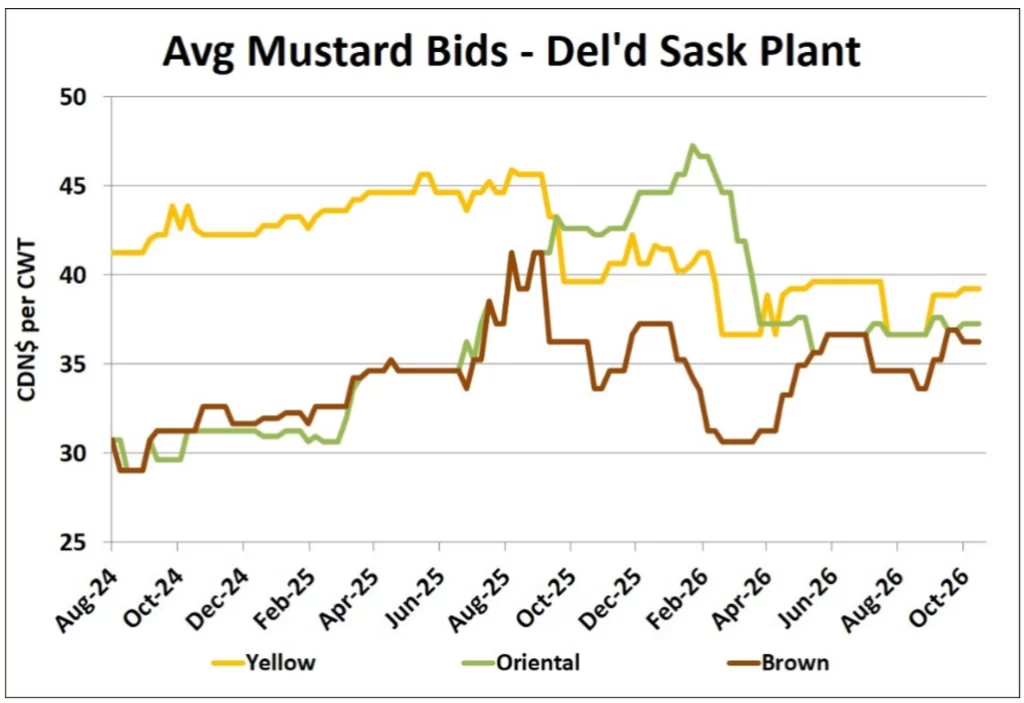
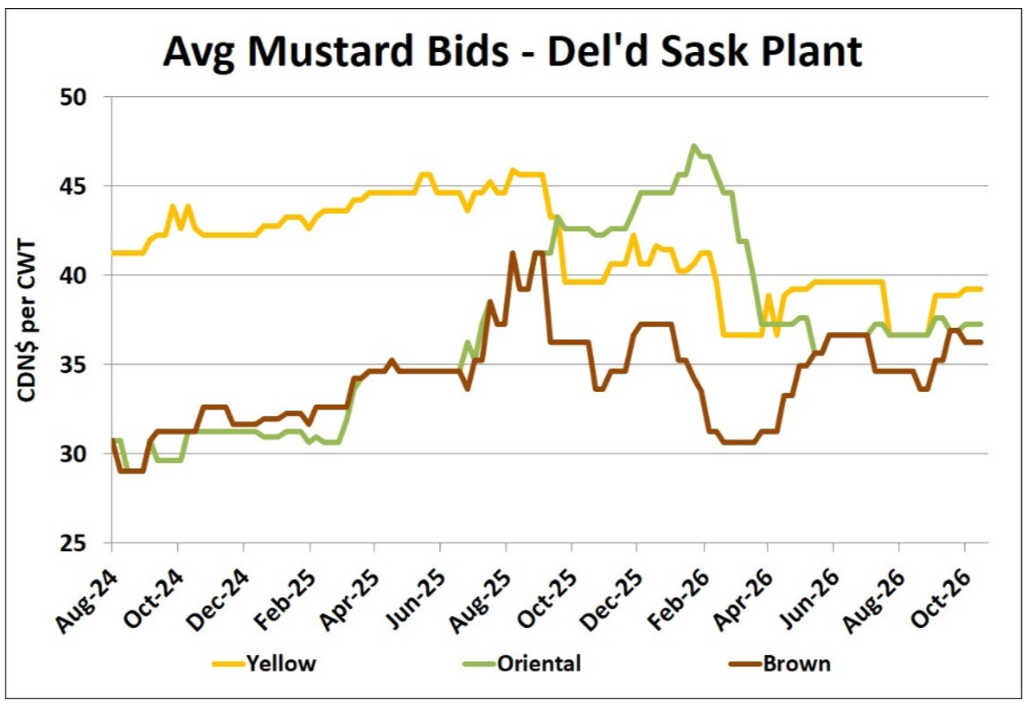
- Despite the delayed harvest and quality issues, strong 2026 mustard yields have allowed bids to turn sideways in recent weeks. The lack of movement suggests quiet market activity but it’s worth noting that the average posted bids for all three classes are holding above levels seen in late 2025/26. The steady bids may be related to disciplined farmer selling but the lack of follow-through after the initial price recovery after harvest also suggests quieter export demand.
Outlook
The normal seasonal behaviour for mustard bids is to rise through the fall months until late November. This year though, the move seems to have stalled earlier than usual which could be a response to the favourable yields and comfortable supplies. While this year’s quality is still not clear, there doesn’t appear to be any urgency among buyers, which raises some concerns about export demand. It’s still too soon to conclude that the mustard market is already peaking but even if prices turn higher again, the upside is likely limited.