Market Developments
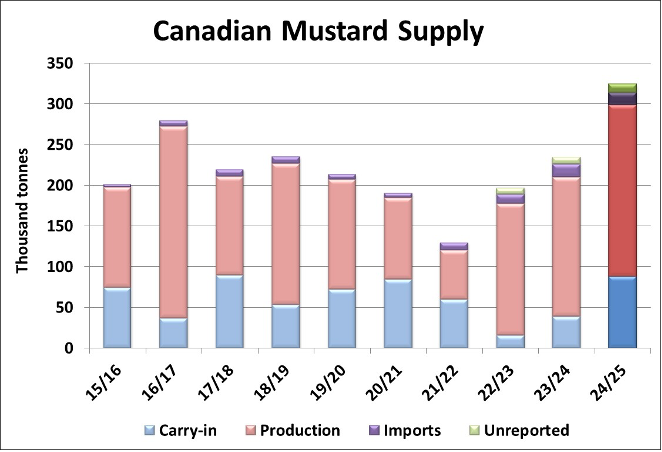
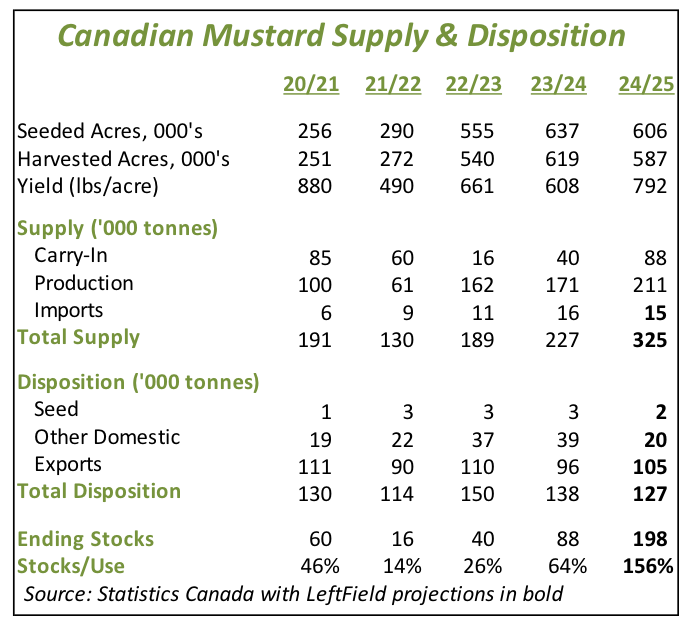
- StatsCan made a few tweaks to its 2023/24 mustard S&D earlier this month, but it offset the slight increase in exports with a small drop in domestic use, leaving 2023/24 ending stocks unchanged at 88,000 tonnes. That’s the largest ending stocks since 2016/17 and with StatsCan also forecasting 2024 mustard production at 211,000 tonnes, supplies would shoot up to 325,000 tonnes (including our projection of 15,000 tonnes of imports and 10,000 tonnes of unreported production). While there’s still plenty of debate about StatsCan’s production estimate, which could be too optimistic, Canadian supplies could be the largest in nearly 20 years. And with annual exports averaging less than 105,000 tonnes in the last five years, this is more than enough mustard to keep the market well supplied.
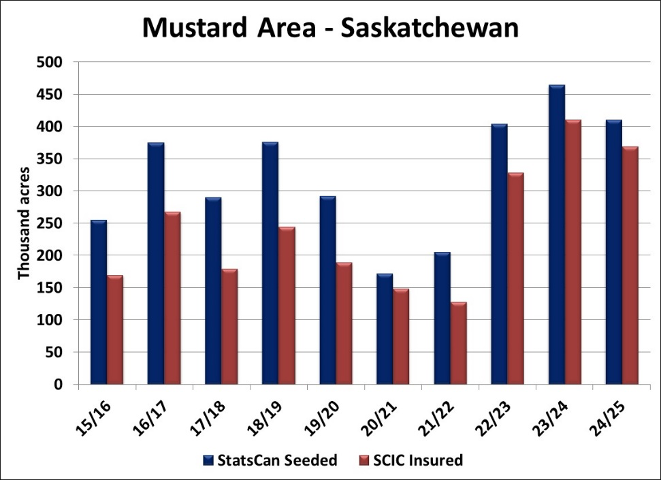
- There still seem to be some questions about whether StatsCan’s seeded area estimates for mustard are overstated. For Saskatchewan, it looks like StatsCan’s 410,000 acres is close to reality. Its total for 2024 represents a 12% decline from the previous year while crop insurance (SCIC) data shows a 10% decline for the province’s insured acres, very close to the same size of change. Not surprisingly, challenging conditions of the last few years in mustard growing regions have raised the proportion of insured mustard acreage close to 90% in 2023 and 2024. It’s possible that StatsCan has overestimated mustard acres in Alberta however. StatsCan showed a 17% increase in 2024 acreage for Alberta while AFSC is reporting 7% fewer insured acres in 2024. This difference would mean a 35-40,000 acre reduction from StatsCan’s total prairie estimate.
- The good news is that Canada’s share of the EU mustard market rose sharply in the last two months. While its share of the “pie” is positive, the total volumes from Canada are largely unchanged as the pie has shrunk. Total EU imports were only 6,000 tonnes in August, the smallest amount since July 2022. The main reason for the low imports appears to be the buildup in stocks that occurred just prior to the EU’s tariffs on Russian crops, which provided a buffer for mustard users in the EU. Prior to that buildup, EU imports averaged 8,000-8,500 tonnes per month, with the larger Apr-Jun imports roughly double that amount. This suggests the larger stocks could offset the loss of Russian mustard into the 2025 calendar year.
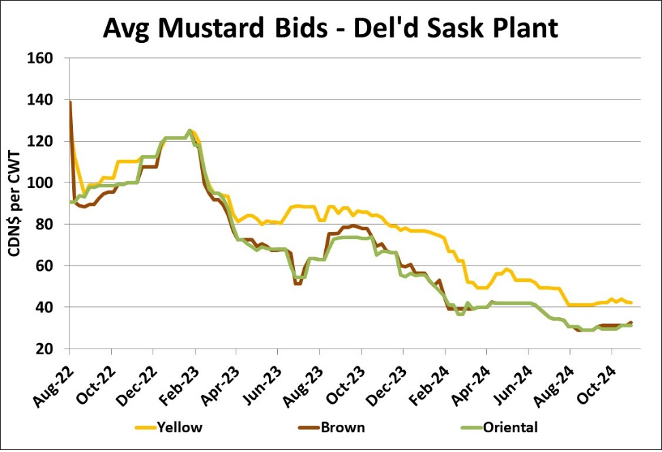
- Prices for brown and oriental mustard have remained flat since the start of harvest as export trade is quiet while farmers avoid selling. For the most part, these prices are seen mostly as indications rather than active bids. There had been some earlier strength in yellow mustard prices earlier, but that has now faded and some buyers are trimming their bids.
Outlook
Mustard markets have become less active as buyers have sufficient coverage for the short to medium-term while farmers are limiting their selling. This suggests there won’t be much movement in bids in the next few months, until demand picks up again in spring. Even then, with the exception of a possible increase in European demand for brown mustard, movement will be routine for much of 2024/25 and will result in a mostly flat price environment.