Market Developments
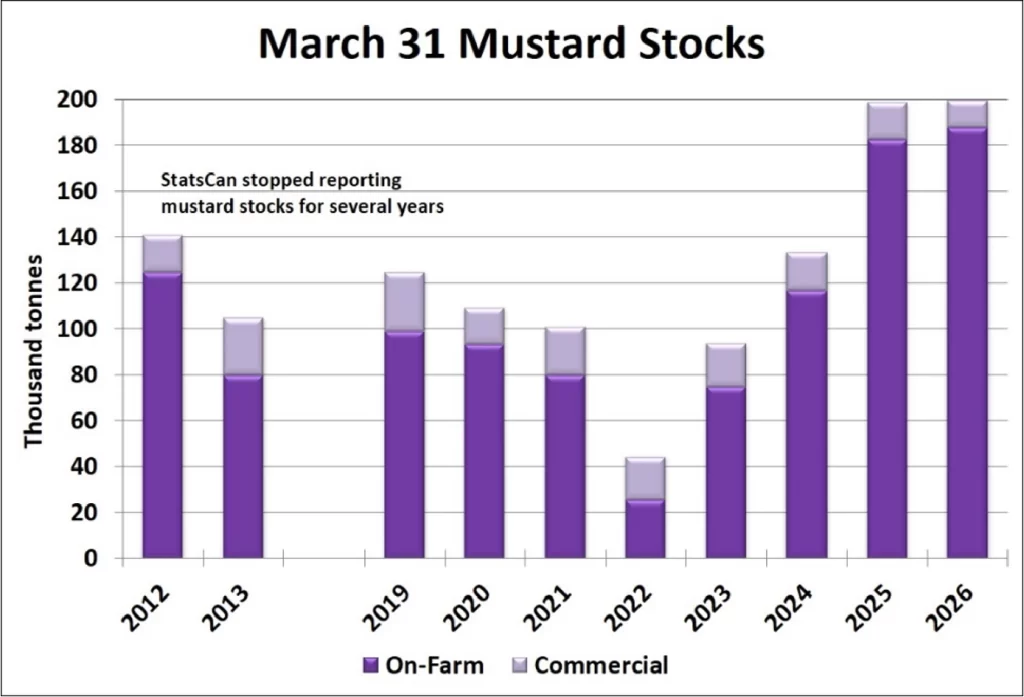
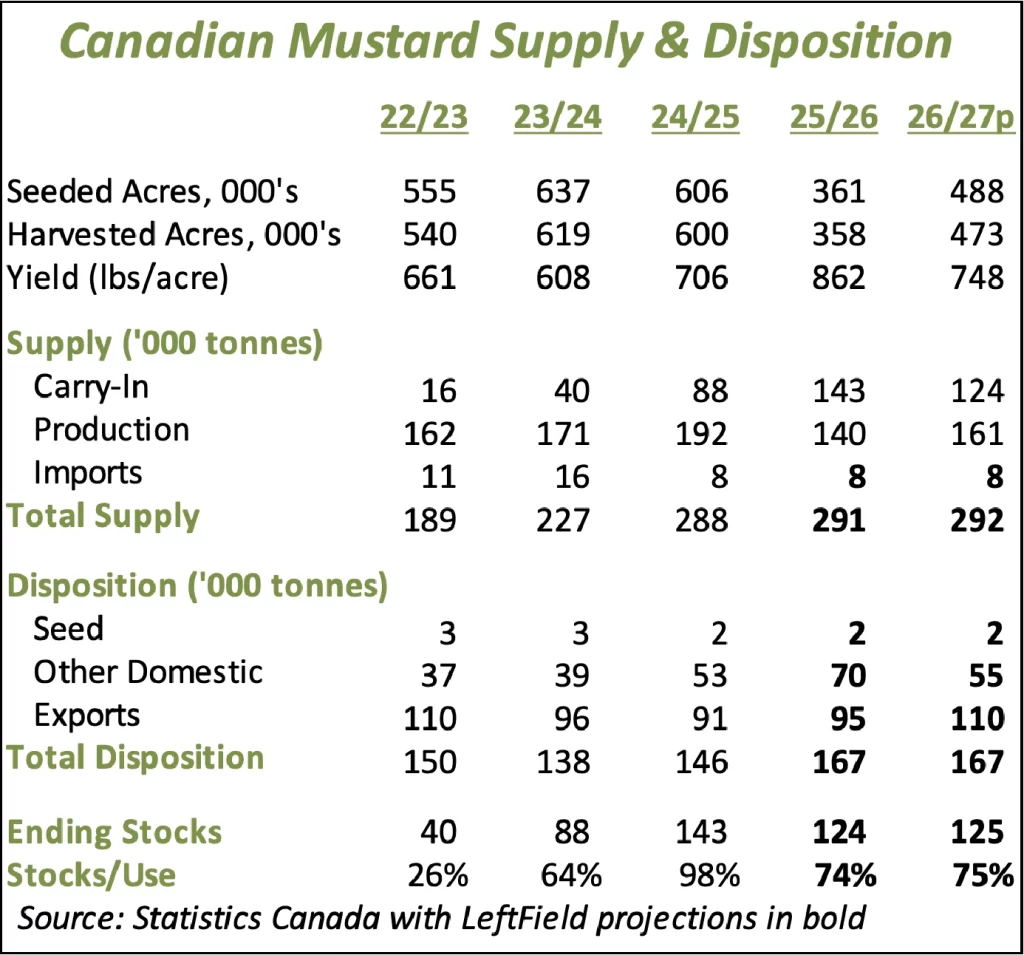
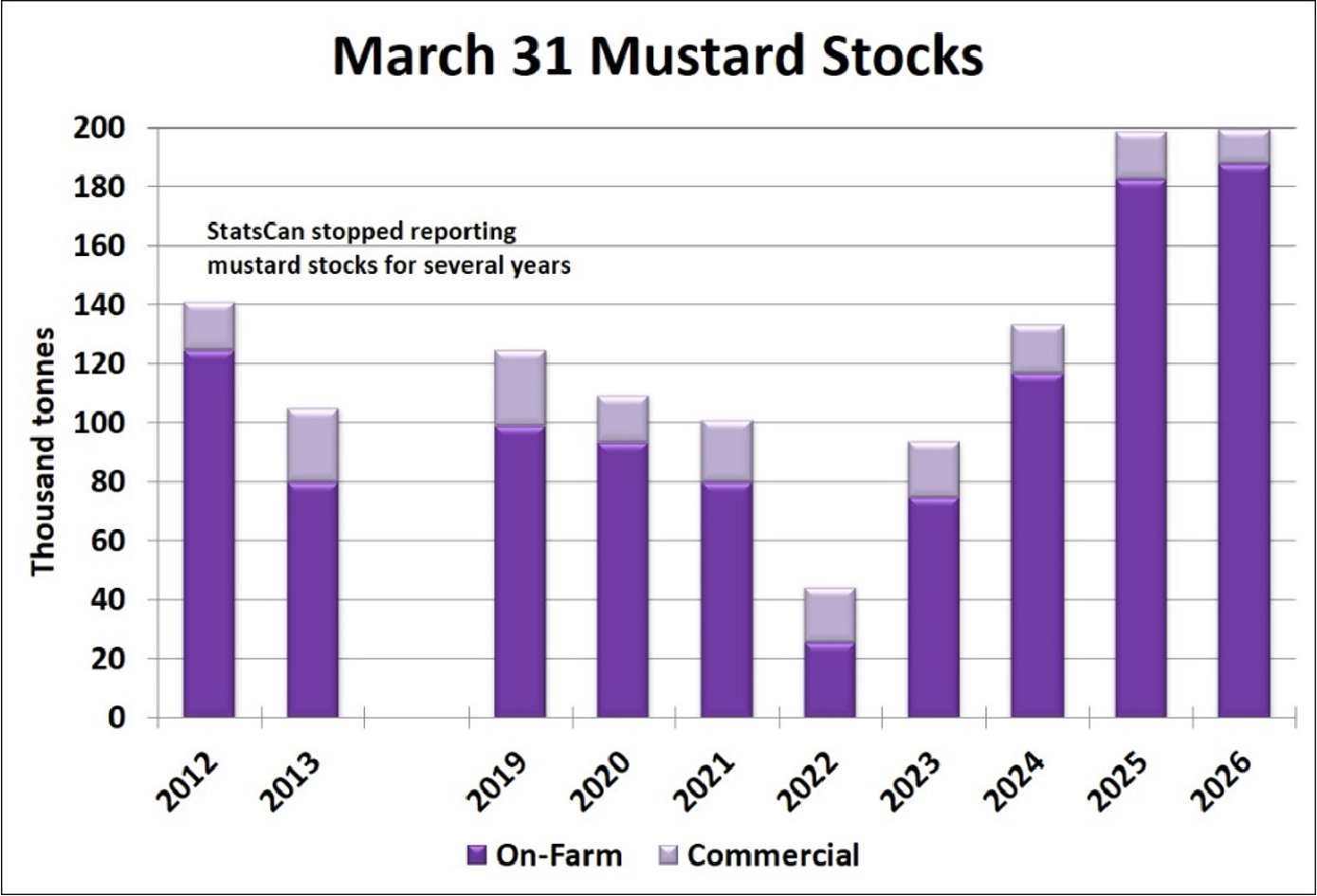
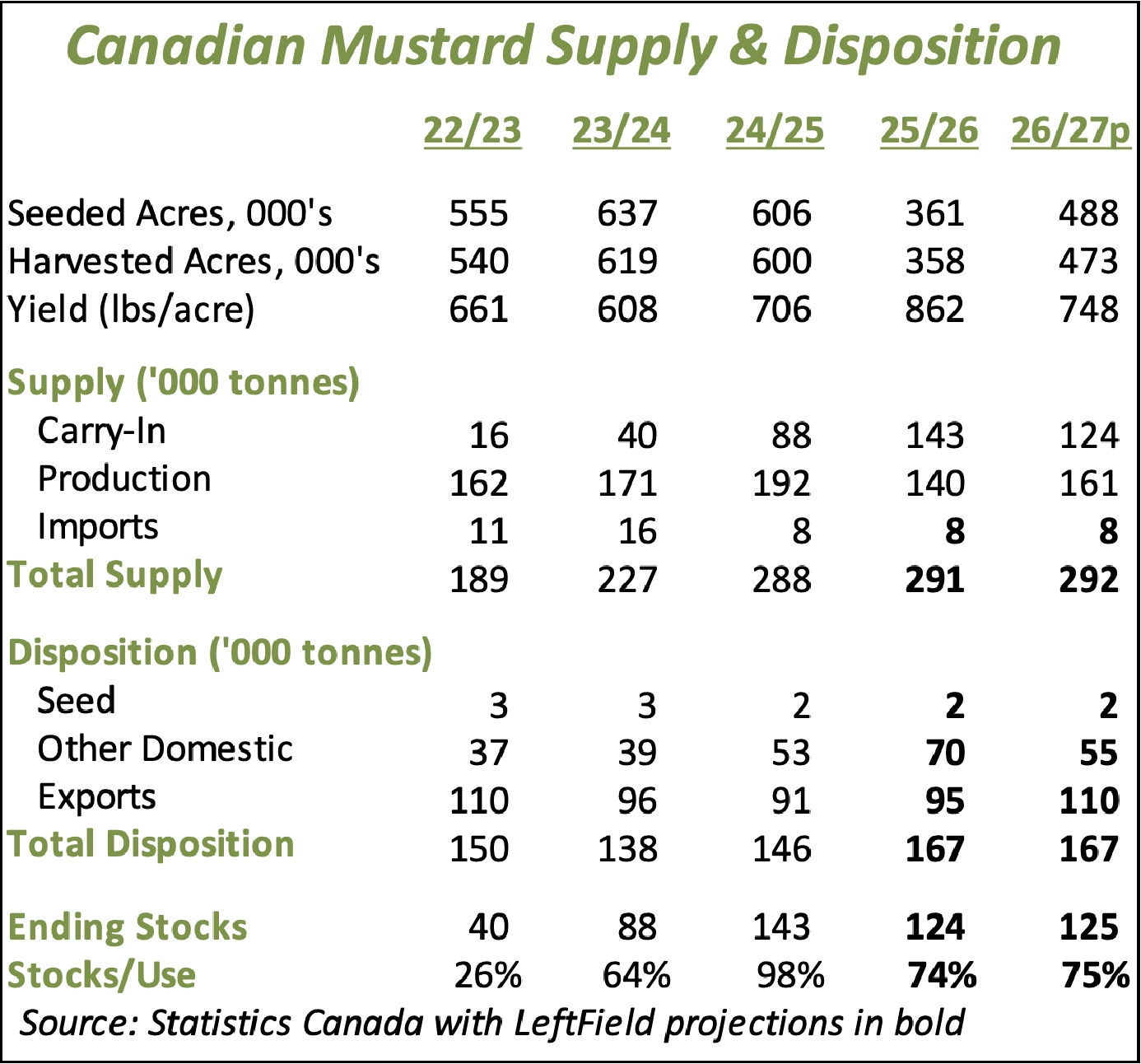
- The StatsCan March 31 mustard stocks estimate came in at 200,000 tonnes, unchanged from the previous year and the highest in 20 years. Because the on-farm stocks number isn’t based on a survey, it’s difficult to know whether some of the low-quality inventories were disposed of in “other domestic use”. Our 2025/26 mustard S&D shows final (July 31) ending stocks down 20,000 tonnes from last year, as we expect/hope some low-quality mustard may have found a home elsewhere. Even so, Canadian mustard supplies are still elevated and the carryover will weigh on the market in the coming year.
- Canadian exports of mustard seed rose to 8,800 tonnes in March, which is often when volumes peak. As usual, the US was the dominant destination, with just over 5,000 tonnes, followed by Belgium at 900 tonnes. Even though exports rose in March, the total was still disappointing and as a result, we’ve trimmed our full-year export forecast to 95,000 tonnes, still slightly ahead of last year’s 91,000 but below the 5-year average of 101,000 tonnes. This adjustment nudges up 2025/26 ending stocks to 124,000 tonnes, versus 143,000 in 2024/25.
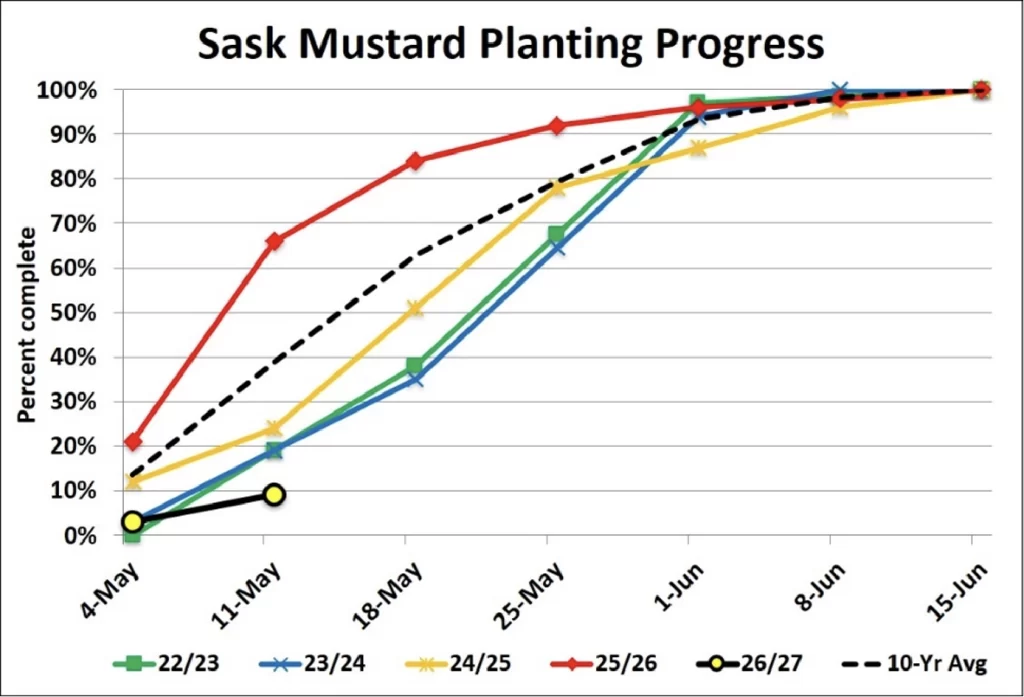
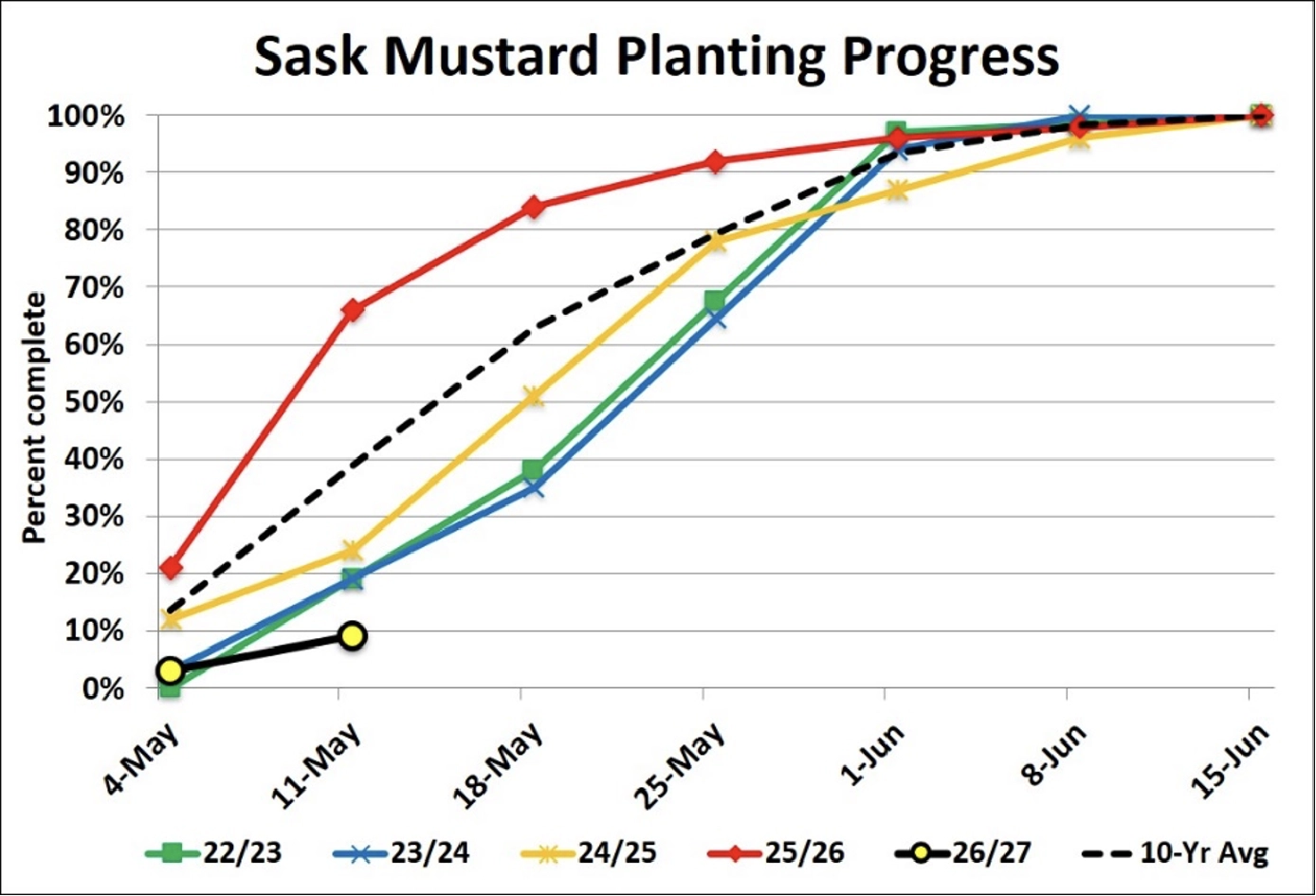
- Mustard planting in Saskatchewan was slow to start the 2026 season. As of May 11, only 9% had been planted, well behind the last two years at 66% and 24% and is trailing the 10-year average of 39%. In Alberta, the pace was better, with 17% complete as of May 5. Since last week’s crop report, weather conditions will have allowed solid progress, but the forecast for later this week is for cool and unsettled weather across much of the prairies, including key mustard-growing areas in the south.
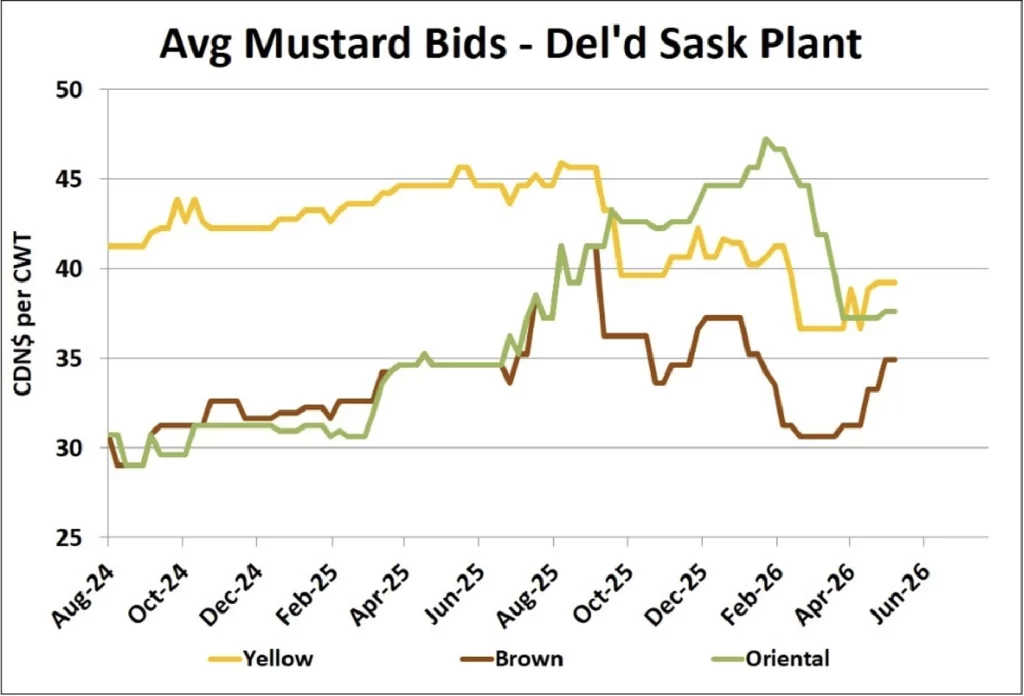
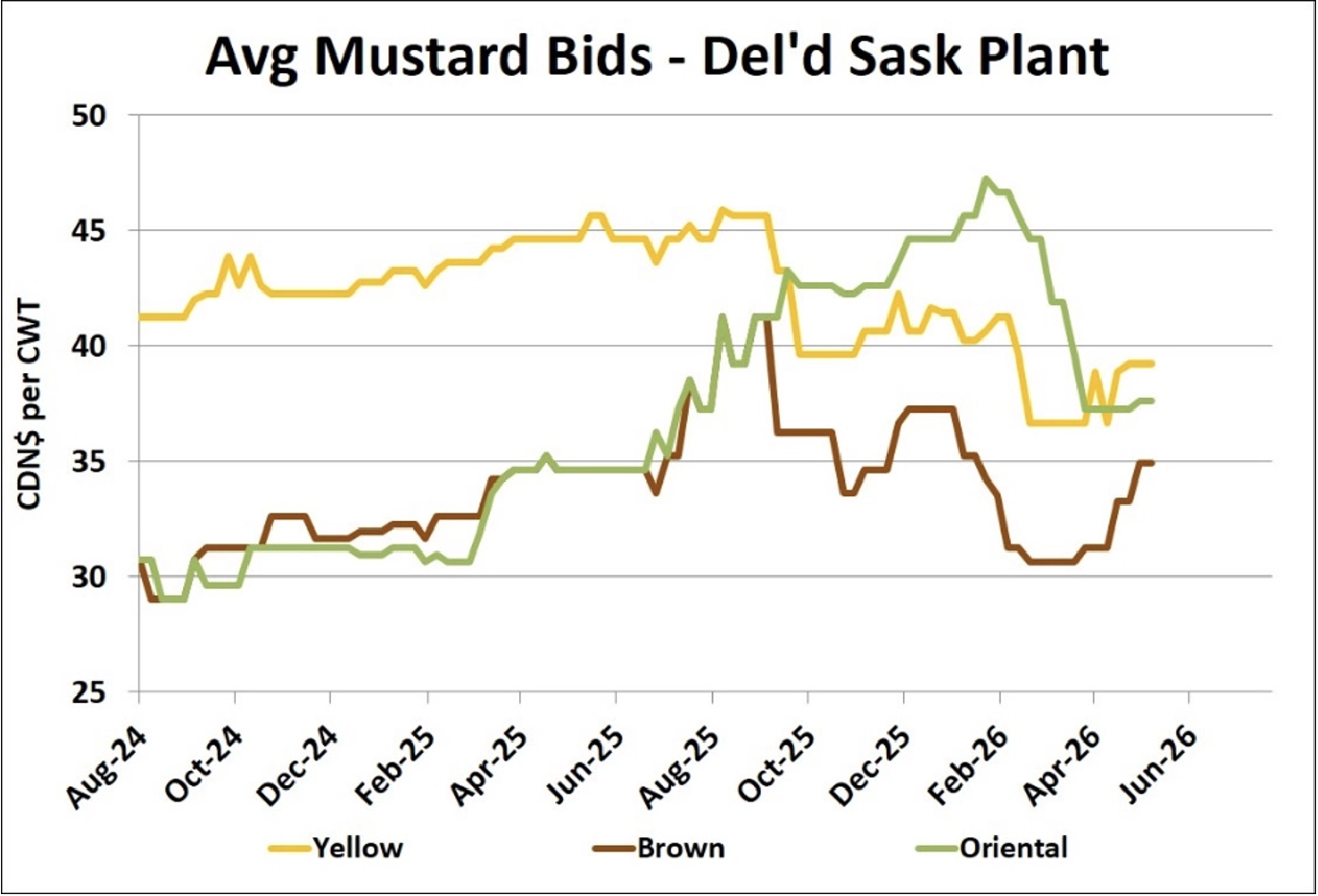
- Mustard trade is typically quite thin that this time of year and that leads to lack of consistent price direction. Oriental mustard bids continue to leak lower for both old-crop and new-crop, as higher prices earlier may have signaled more acres in 2026. On the other hand, brown mustard bids have recovered from the lows and are showing slight upward momentum on concerns about adequate acreage this year. Meanwhile, yellow mustard bids are moving mostly sideways as the typical premium versus the other classes has returned, which suggests 2026 acreage could be well-balanced.
Outlook
The Canadian mustard market is typically quiet at this time of year and is even more so in 2025/26 due to lacklustre exports. Certain buyers’ bids may fluctuate a bit, but volumes bought in summer are limited. Expectations of a rebound in 2026 acreage is keeping new-crop bids subdued. Based on ideas of a larger increase for oriental mustard, those prices could remain under pressure, while brown could see reduced acres and firmer prices and yellow is steady. Of course, that’s based on an average yield outlook, with the entire growing season still ahead.