Market Developments
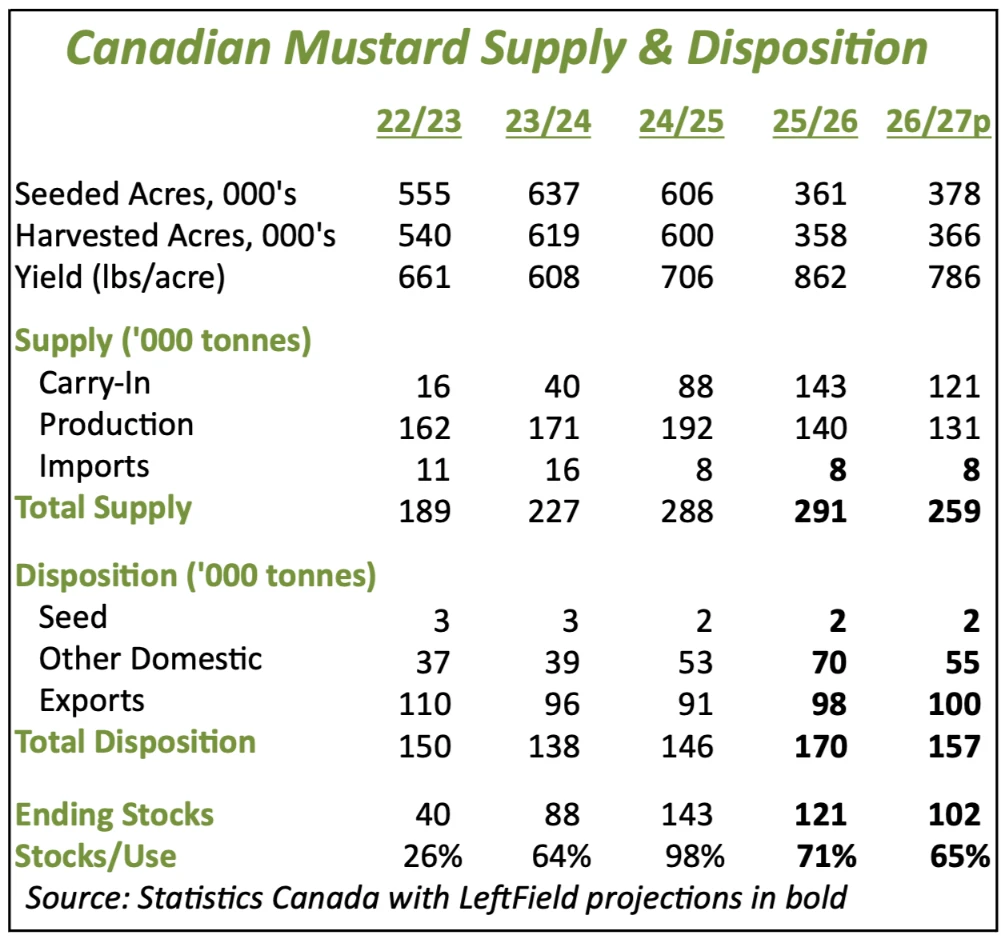
- Ag Canada is providing an online tool with current yield outlooks at a regional level. The assessments as of August 10 show a wide range of mustard yield potential, from a low of 627 lb/acre to a high of 940 lb/acre. Across the various mustard regions, yields ranged from 25% below to 29% above the 5-year average. It’s too soon to know how well this tool is working, but a simple average of the differences works out to 5% above average, close to where our recent yield estimate ended up. That would leave the 2026 crop slightly smaller than last year, with large differences between the classes.
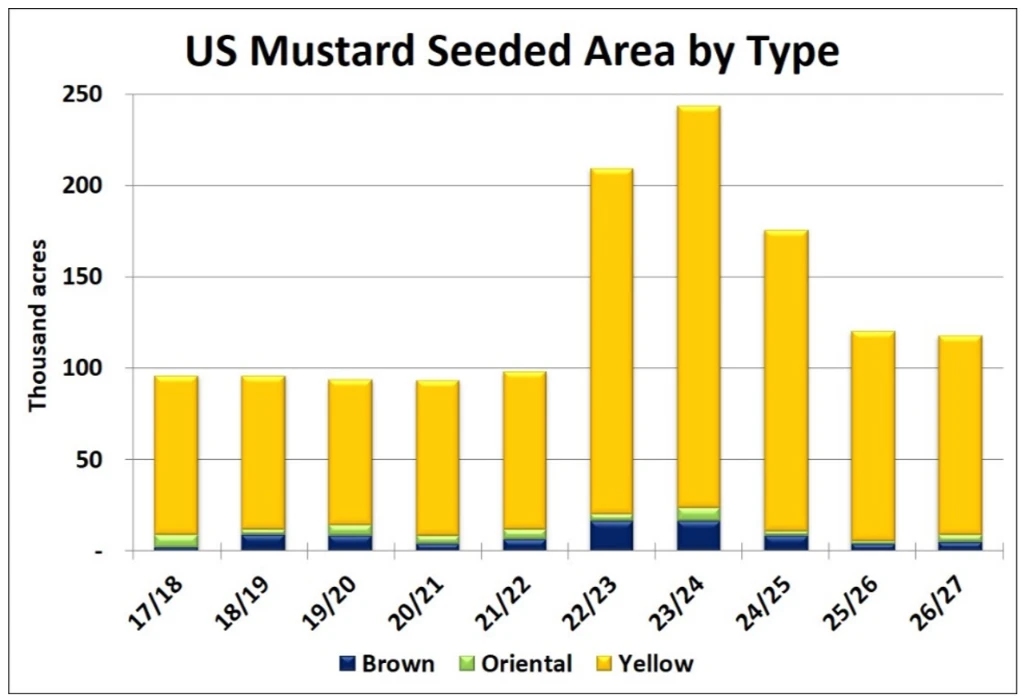
- The first Farm Service Agency acreage declarations showed a slight reduction in 2026 US mustard plantings, at 117,700 acres, 2% less than last year, although a few more acres could be added in later releases. That is also below the June NASS estimate of 131,500 acres.
- The FSA breakdown showed more brown and oriental acreage, but those are a very small part of the US total, while yellow mustard area came in at 109,000 acres, 5% less than a year ago. Combined with the drop in Canadian yellow acreage, this points to the possibility of tighter North American yellow supplies in 2026/27.
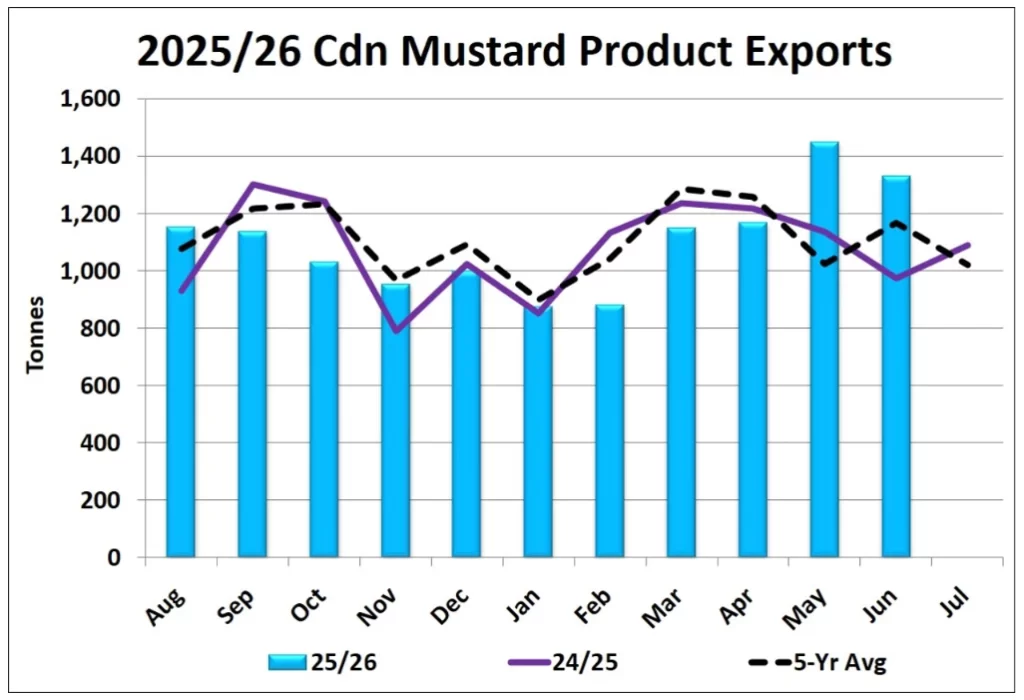
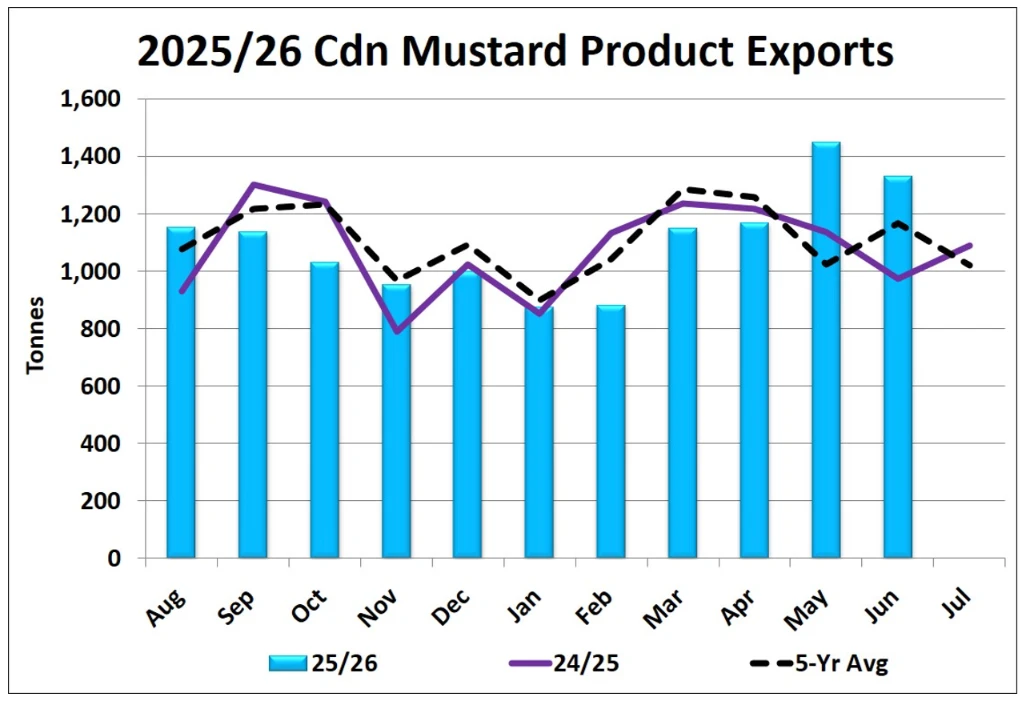
- Canadian exports of mustard products (flour, meal and prepared) have picked up in recent months and were well above average in May and June. Total exports in June were 1,332 tonnes, with the US accounting for roughly half. This late surge has helped the year-to-date total; with one month left to be reported for 2025/26, exports are 12,200 tonnes, the highest total since 2022/23. The year-to-date increase compared to last year has been driven by exports to regions other than the US. The US is still the largest destination, but volumes have been trending lower over the long term.
- Canada’s share of the European mustard market improved in June to 39% but total EU imports for the month remained historically low at 4,800 tonnes. This brings full-year imports for 2025/26 to 77,600 tonnes, slightly lower than last year’s 81,800 tonnes and the smallest import program in our records going back to 2014/15. With considerable uncertainty about Black Sea shipping and increased freight costs for other modes, some demand could shift to Canada in the coming months, although prices will still need to remain competitive.
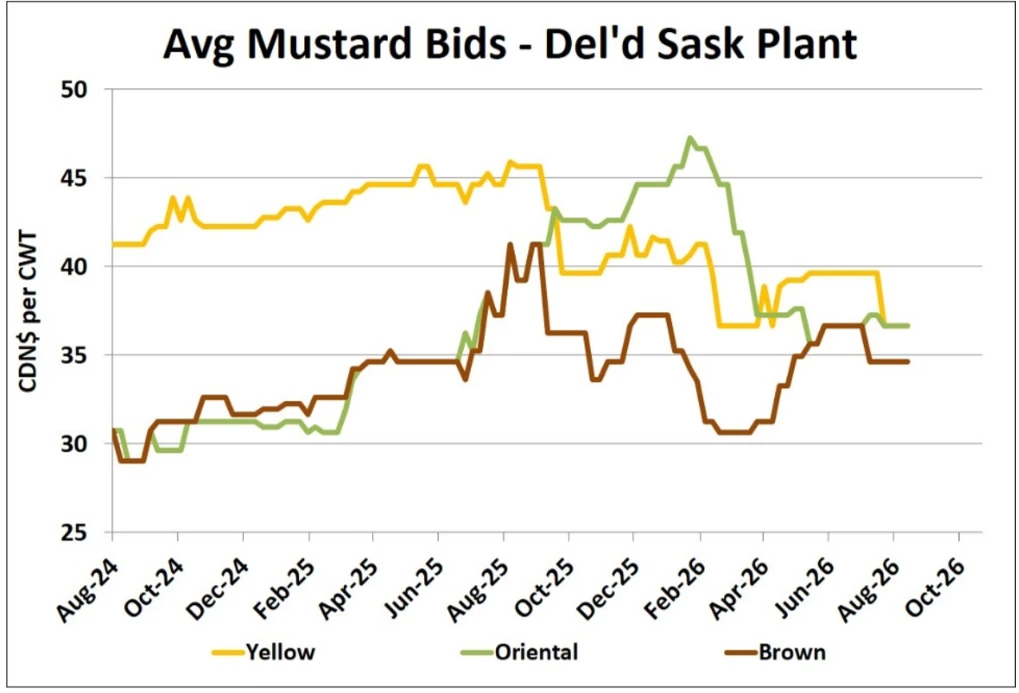
- Bids for all classes of mustard are continuing to decline in western Canada, which is normal seasonal behaviour at this time of year. On average, the seasonal lows occur around mid-September, which suggests a recovery should start to show up in the next few weeks. The ongoing weakness can also be read as a sign that buyers aren’t overly concerned about this year’s yields, though the changes in seeded area by class could still affect the individual supply outlooks.
Outlook
With the mustard harvest about to begin, normal seasonal price patterns are holding and there don’t appear to be any price signals reflecting yield concerns. The next stage in the seasonal tendencies is a postharvest recovery, but the response will likely vary by type. If StatsCan’s acreage breakdown is close to reality, yellow mustard supplies would tighten up more than the other two classes, suggesting more price upside for yellows. A smaller US crop would also be more supportive for yellow mustard in 2026/27.