Market Developments
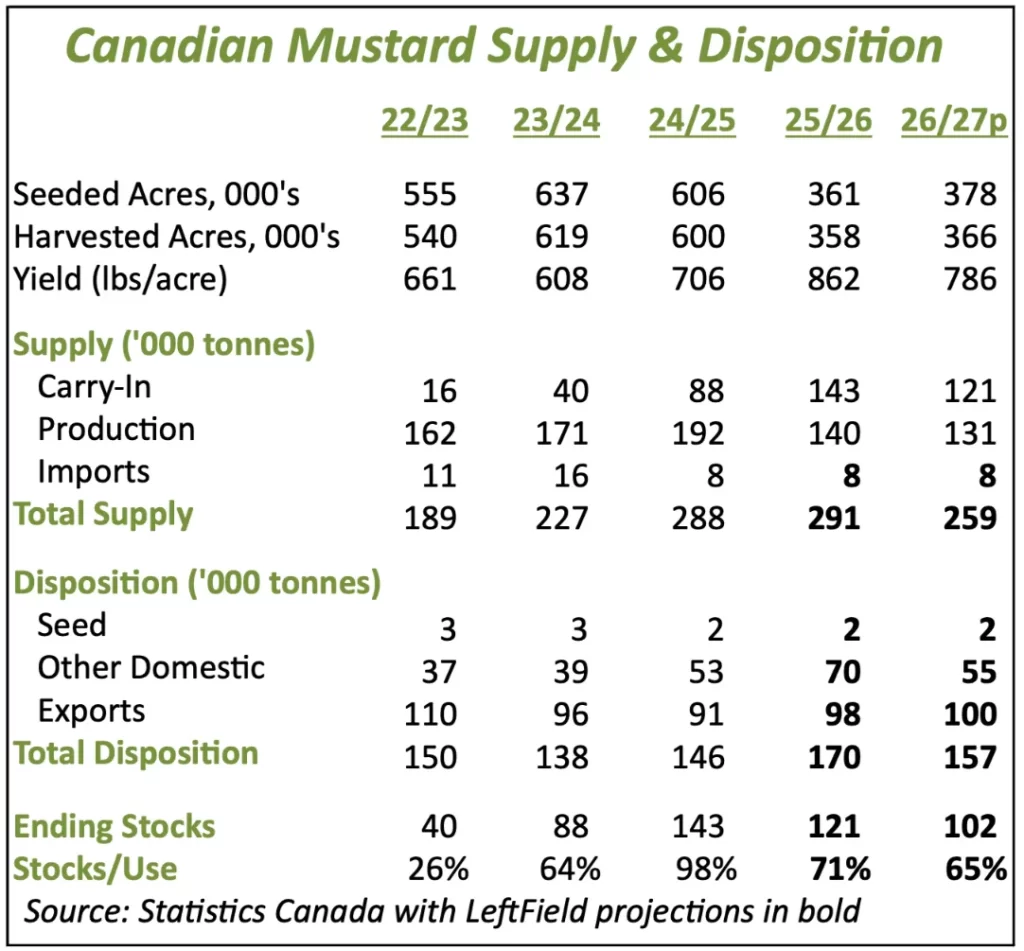
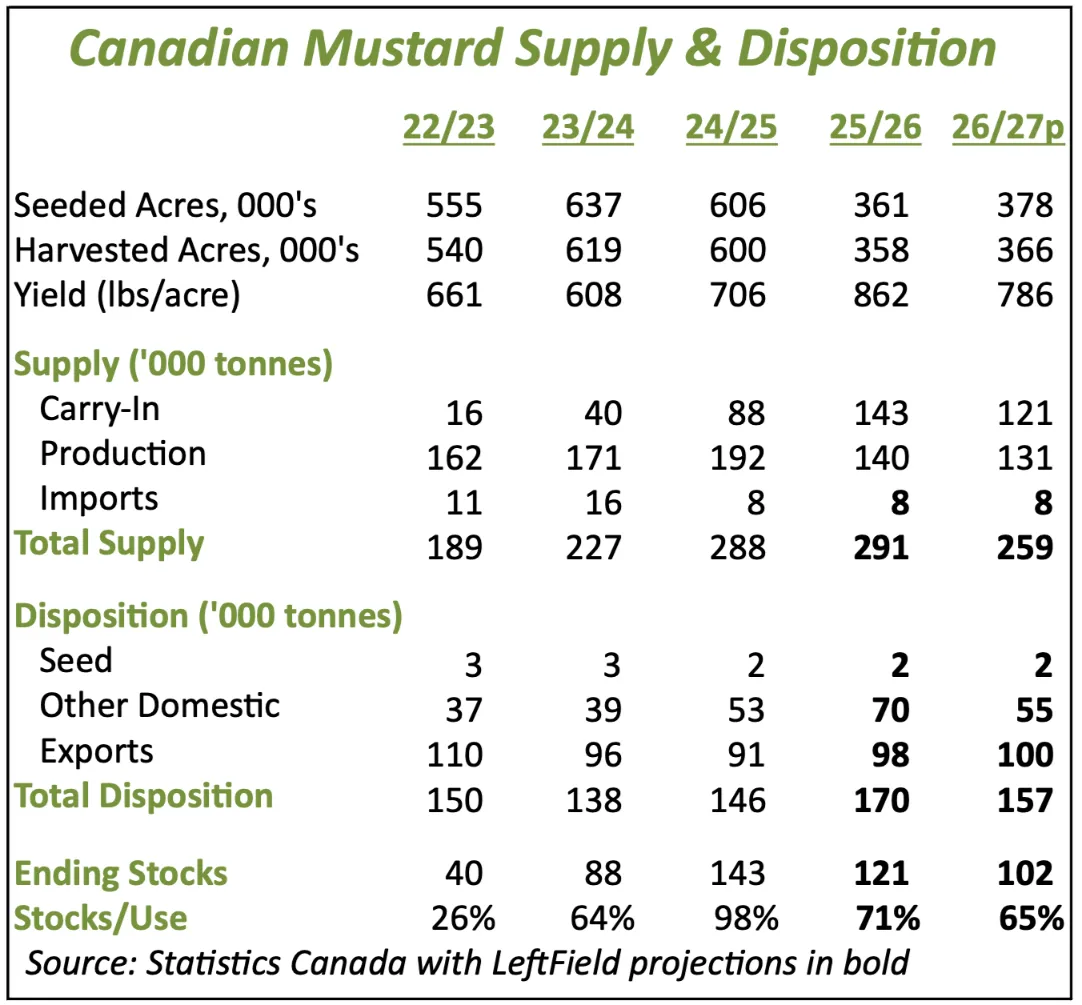
- Prospects for 2026 Canadian mustard production have deteriorated in recent weeks, due to the extended heatwave which threatened the crop during the critical blooming and filling phases. Just a month ago, conditions were very positive but have taken a downturn and caused us to lower our total mustard yield guesstimate to 786 lb/acre, still 5% above the olympic average. Compared to the positive outlook earlier, this trims 10-15,000 tonnes from the 2026 mustard crop, now at 131,000 tonnes, versus 140,000 tonnes last year and the lowest production since the 2021/22 drought year. The StatsCan acreage breakdown showing increases in oriental and brown mustard area and a drop for yellow, which means production of the first two classes would still be 21% and 57% larger than last year while yellow mustard production would drop 33% from a year ago.
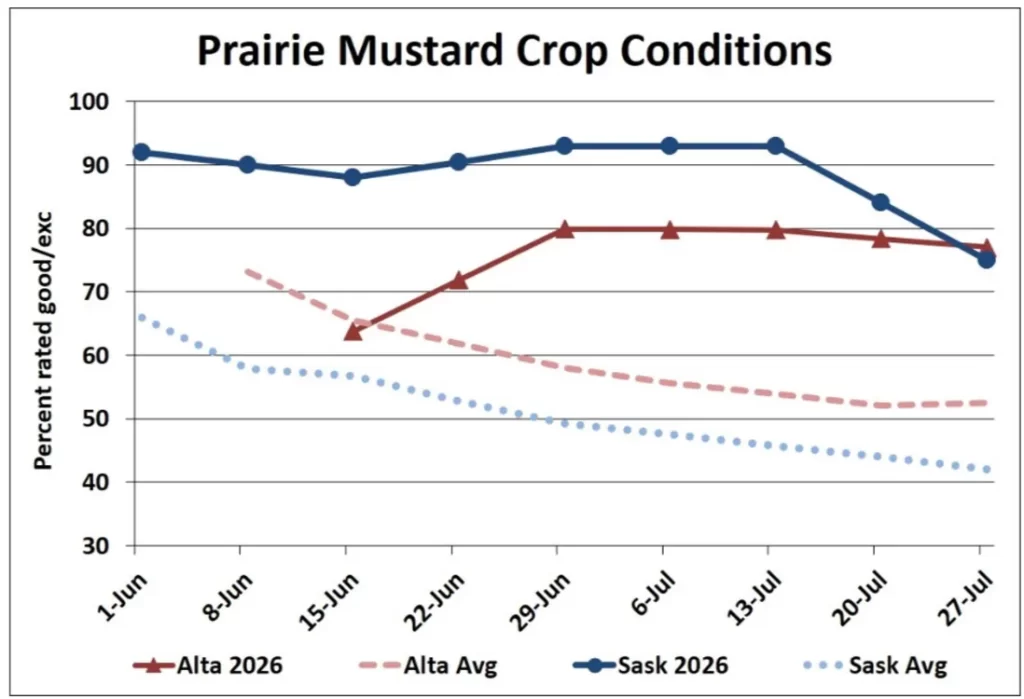
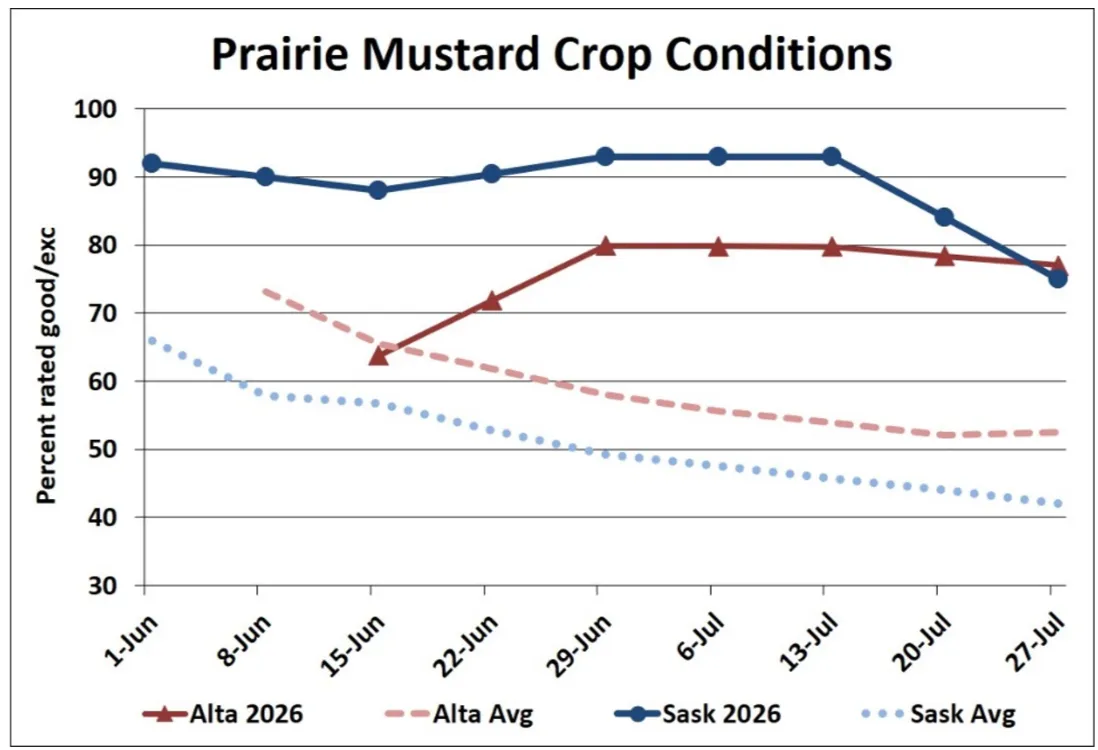
- Hot dry conditions of the past 2-3 weeks have taken a toll on the prairie mustard crop, compared to earlier lofty expectations. Saskatchewan crop ratings dropped from 93% good or excellent in mid-July to 75% good/exc as of July 27, with the heat continuing since that date. Even though the latest rating is still well above the 10-year average of 42% good/exc, the downward turn in the ratings is a stronger indicator of yield potential. In Alberta, the earlier ratings hadn’t been as positive as Saskatchewan but still slipped slightly in the last two weeks to 77% good/exc from 80% two weeks earlier.
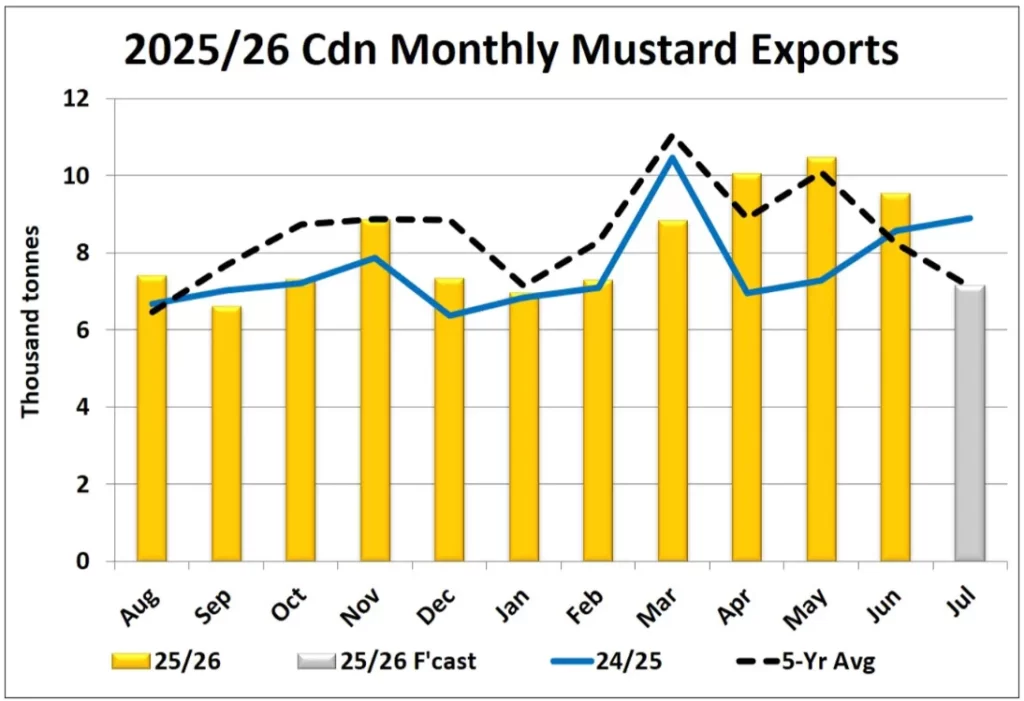
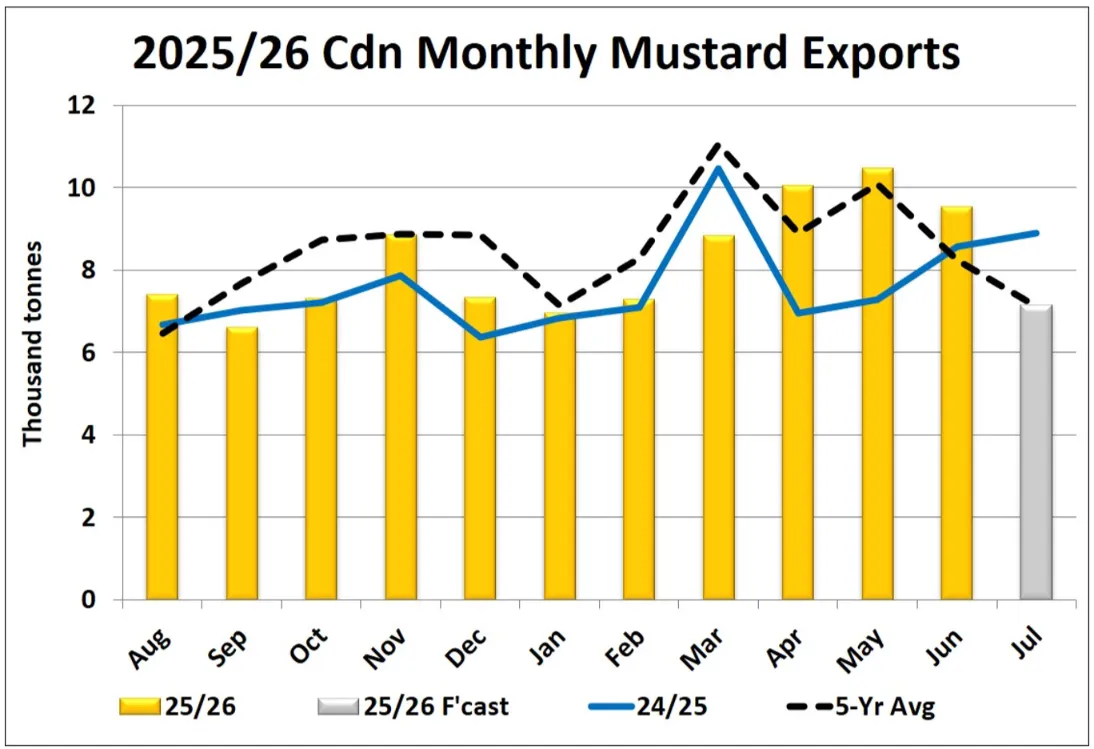
- Canadian mustard exports dipped to 9,600 tonnes in June, but that was still above average for the month and continues the stronger performance late in 2025/26. The US was still the largest destination at 4,100 tonnes, but that was the lowest total since January, while 2,300 tonnes of exports to Belgium (part of a “grocery boat” through Thunder Bay) made up some of the difference. This brings the year-to-date total to 90,800 tonnes, the highest total since 2022/23 but still below the 5-year average of 94,300 tonnes.
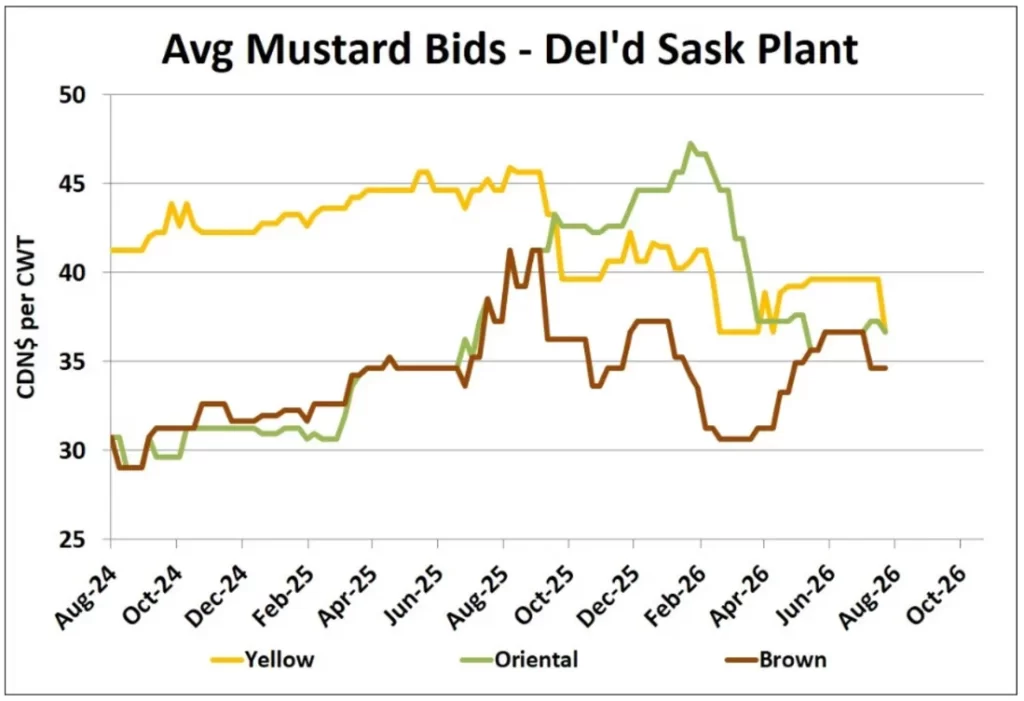
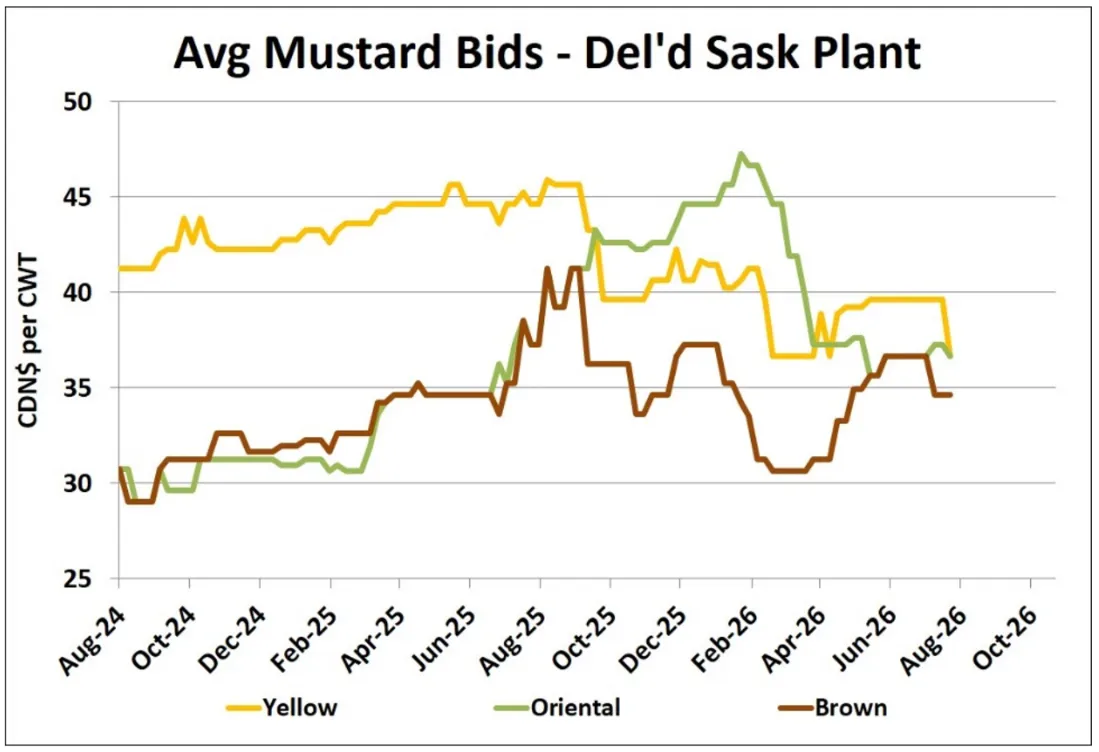
- Both old-crop and new-crop yellow mustard bids declined in the past two weeks, slipping from its premium position of the last few months. Bids for brown mustard have also been moving lower in recent weeks while oriental bids have been more stable. It doesn’t appear that the latest downturn in the condition of the 2026 mustard crop is having an effect on prices, but it’s worth noting that this time of year is still close to the seasonal lows, and a recovery is possible as harvest outcomes become known.
Outlook
There’s a bit more doubt creeping into the 2026 crop outlook, both in terms of yield and quality. Later seeded mustard will likely be affected more by the recent hot dry conditions but the full impact will only be known once the harvest is in its late stages. This is still the time of year of the seasonal lows and a price response to any crop concerns may not show up immediately. A recovery is still expected after harvest and the size of the response will also be affected by farmers’ willingness to sell.