Market Developments
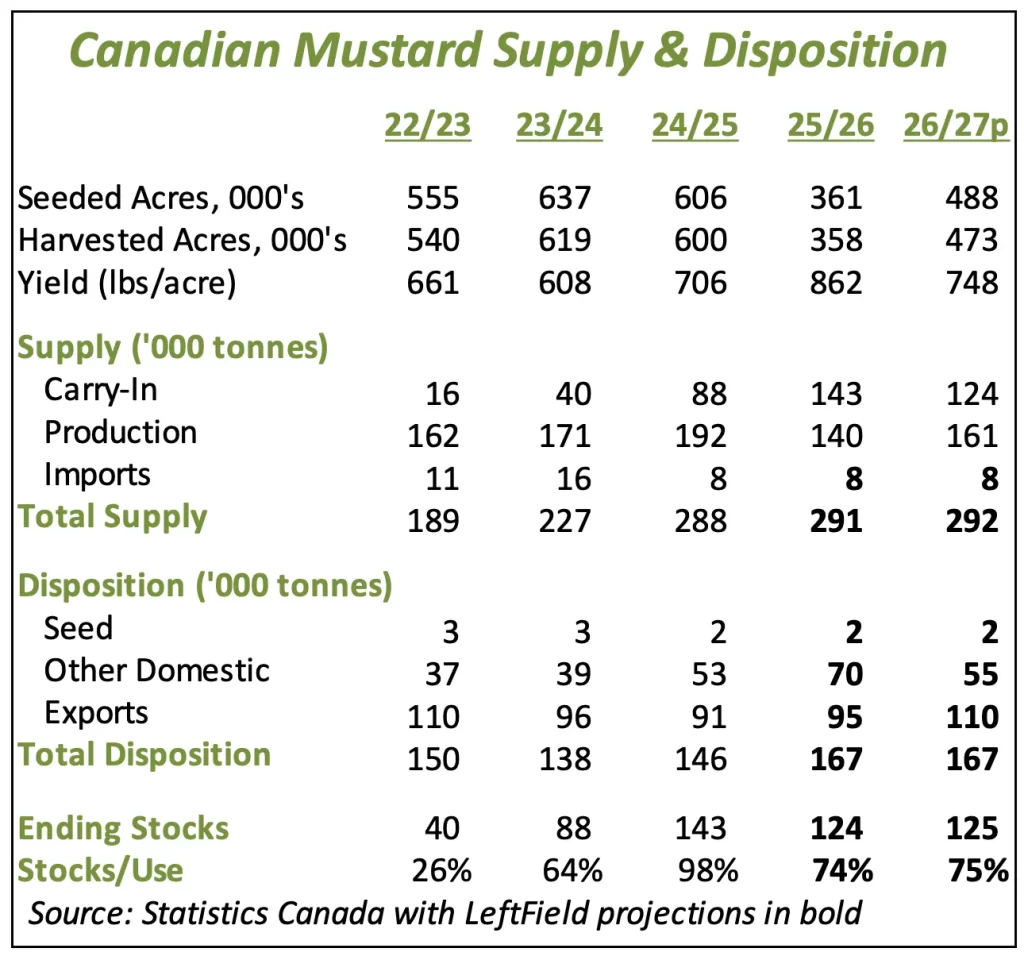
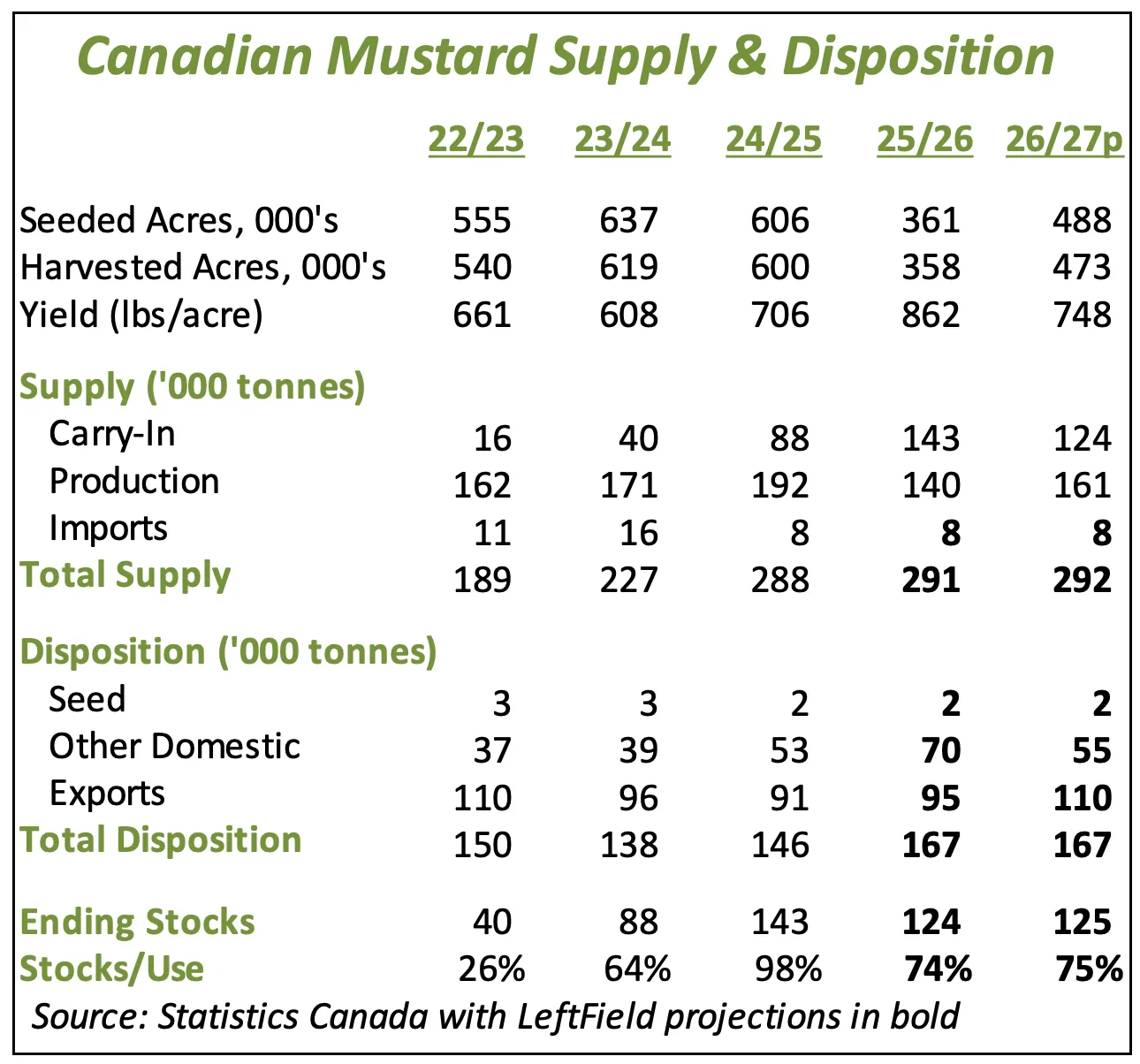
- Next week’s updated 2026 acreage estimates from StatsCan could provide more clarity about the mustard outlook, although some questions will remain. Back in March, StatsCan’s forecast was 488,000 acres, a sizable 35% rebound from the 2025 lows, but not historically large.
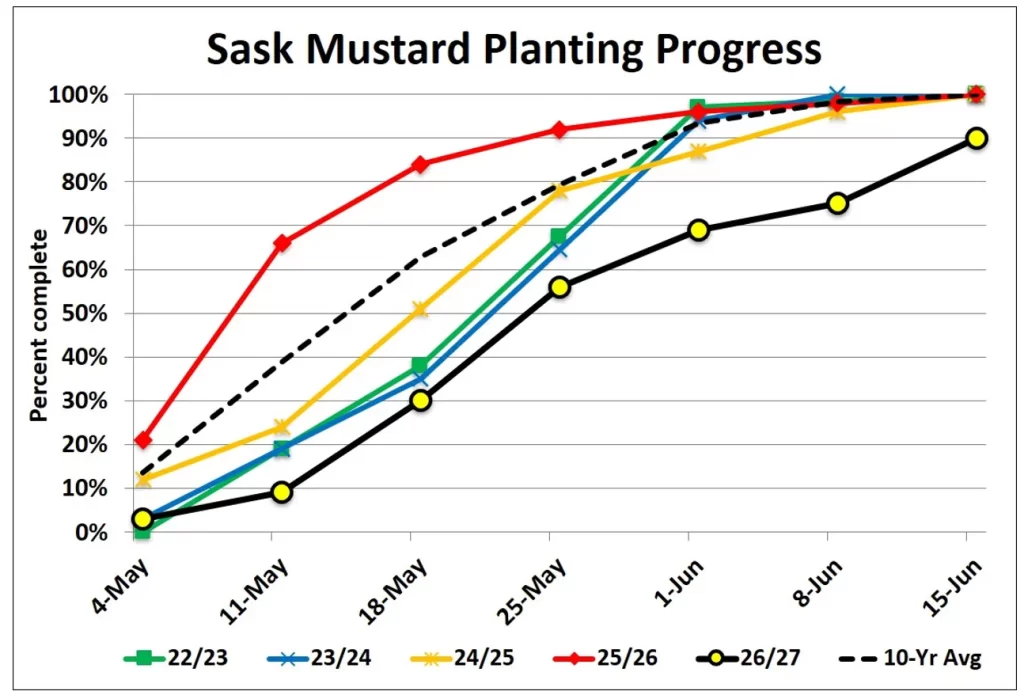
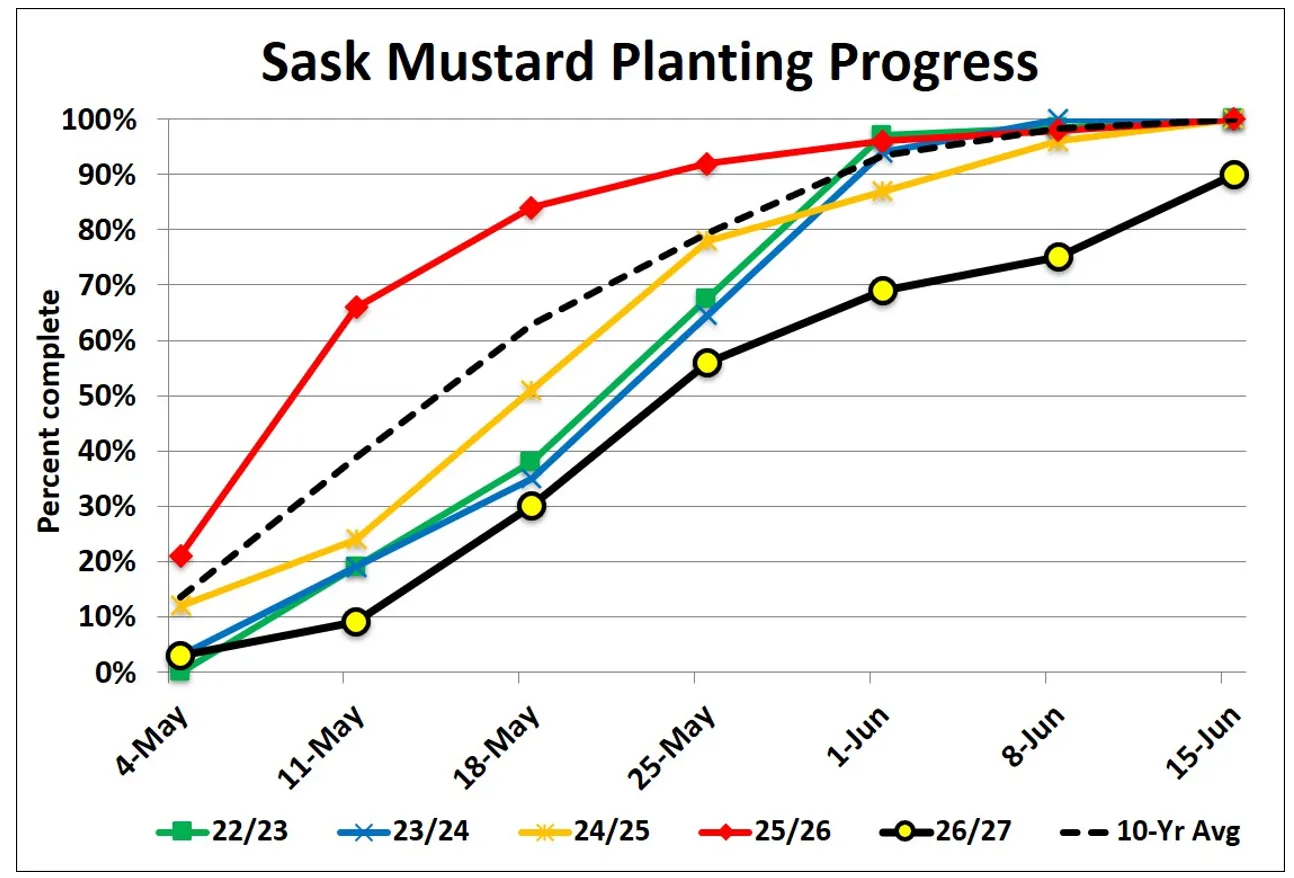
- According to Sask Ag, only 90% of the province’s mustard acres had been planted as of June 15, as the pace failed to close the gap with the average. While seeding may have continued beyond mid June, this seems to indicate that at least some intended mustard acres will remain unplanted. Next week’s StatsCan acreage estimates are based on a farmer survey from mid-May to mid-June, so it won’t include these late-season developments. This means there’s a good chance actual acreage will be 5-8% lower than StatsCan’s number.
- StatsCan will also provide an acreage breakdown by type. Based on price levels early in spring, when farmers were making planting decisions, we’re expecting sizable differences. Back then, oriental mustard bids were considerably stronger, which likely caused a larger percentage increase for that class, with the smallest increase for brown, which had the weakest prices at that time. Our guesstimates are a 62% increase for oriental, 16% for brown and 33% for yellow mustard.
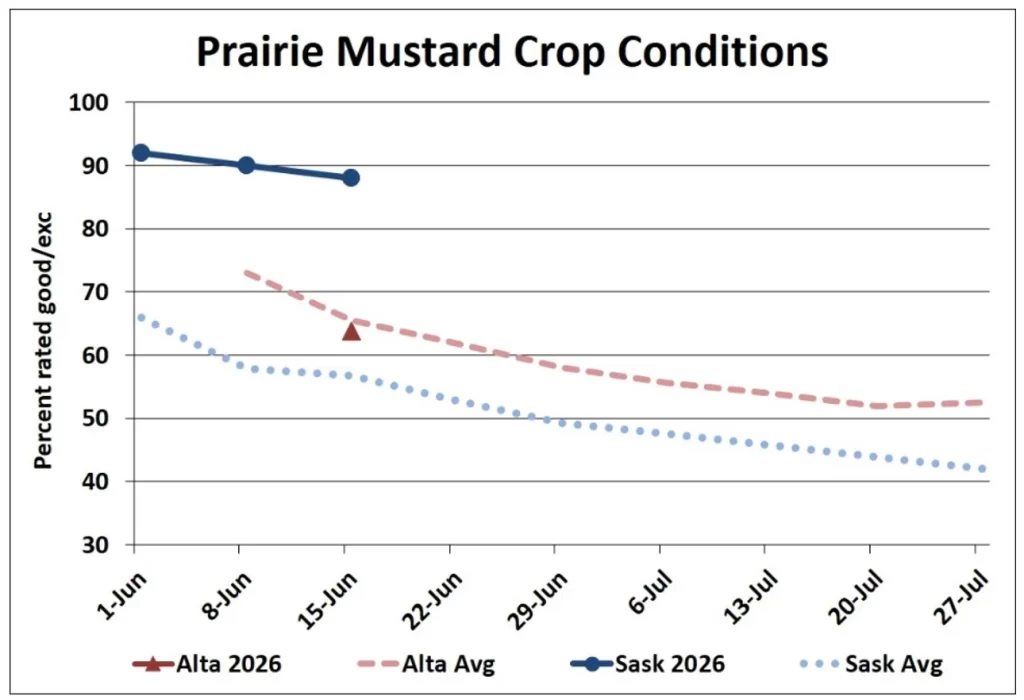
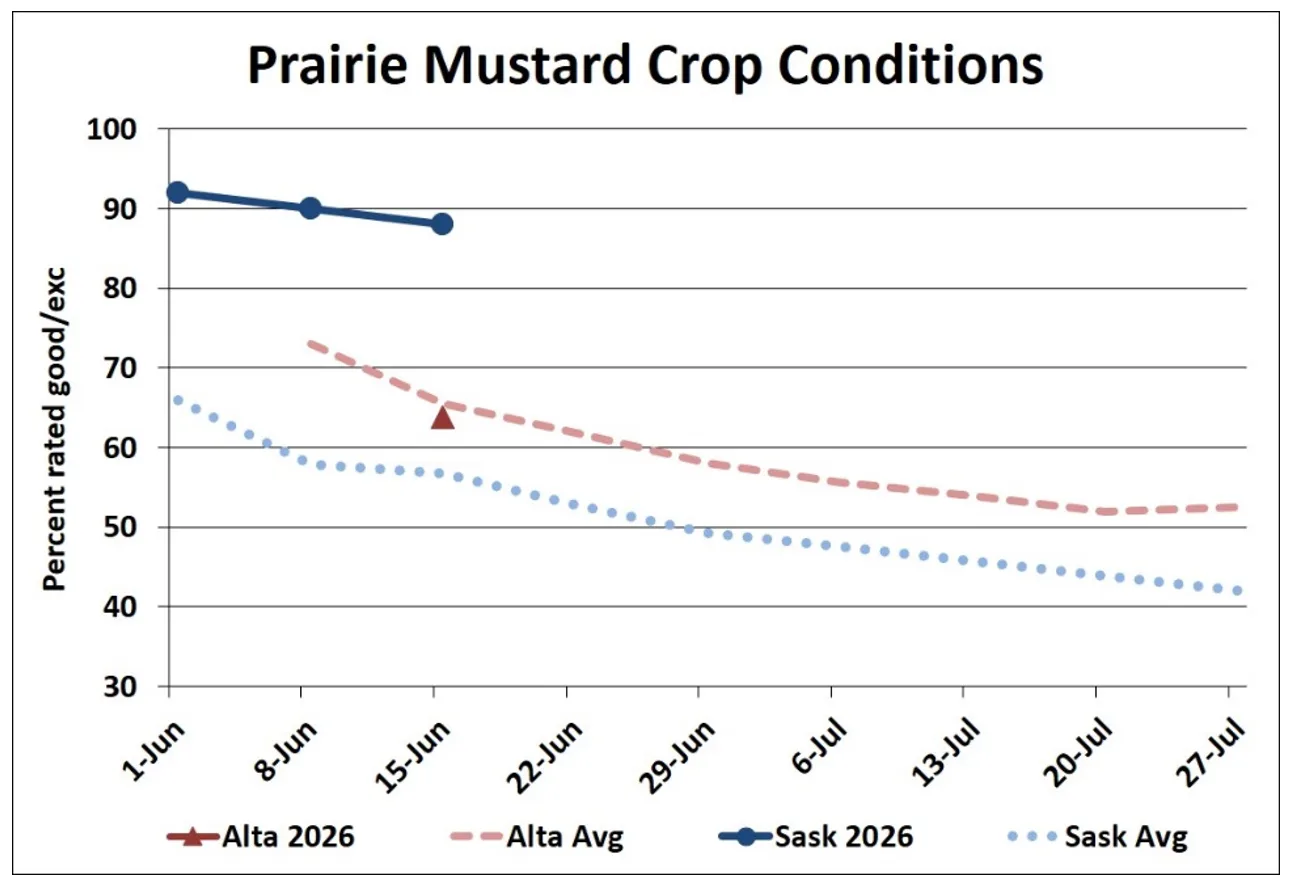
- There’s a big difference between early-season mustard crop ratings in Saskatchewan and Alberta. In Saskatchewan, 88% of mustard was rated good or excellent, far above the 10-year average of 57%. Meanwhile in Alberta, 64% was rated good/exc, slightly below the 10-year average of 66%. These different ratings, along with Sask Ag’s planting progress estimate (see above) add more uncertainty to the 2026 mustard production outlook.
- Mustard imports by the EU dipped slightly to 5,600 tonnes in April, continuing the modest amounts of the past few months. Of that total, Canada accounted for just under 1,500 tonnes or 26% market share. Kazakhstan was the largest source at 2,100 tonnes and its record volumes into the EU for 2025/26 continue to raise questions about the actual origin of that mustard. Through the first 10 months of 2025/26, the EU has imported 68,200 tonnes of mustard, ahead of 2024/25 at 66,600 tonnes but lower than the 5-year average of 75,200 tonnes. Without a hard estimate of EU mustard production, it’s difficult to see if these reduced imports are the result of more domestic production.
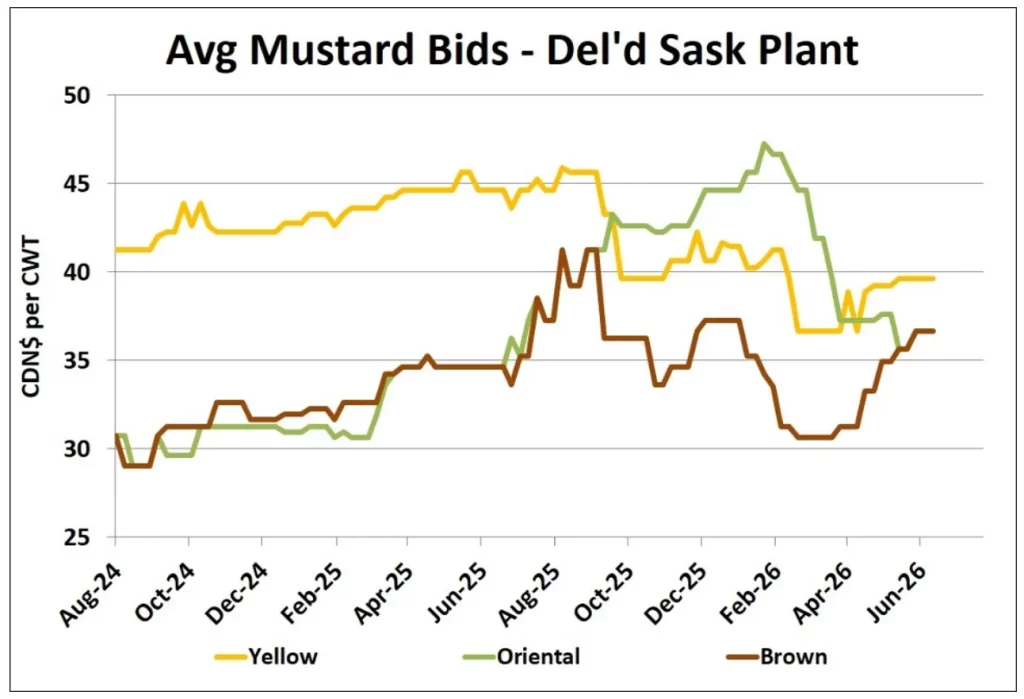
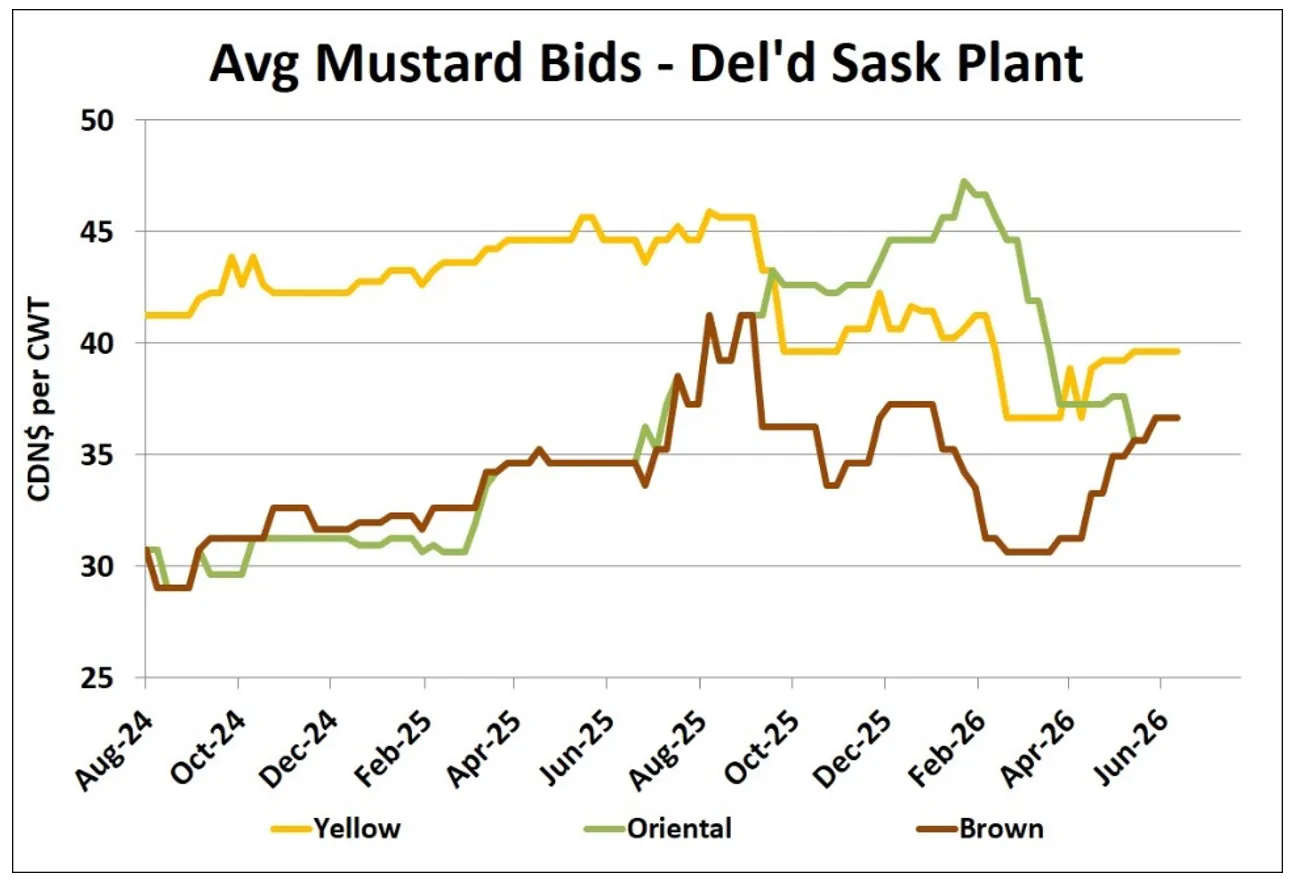
- There’s been very little activity in western Canadian mustard bids in the last few weeks. Both old-crop and new-crop prices seem to have stabilized, although bids are more likely indications than actual live prices. The yellow mustard market has essentially moved sideways since early May, with new-crop bids higher than old-crop. Oriental mustard prices came off the earlier highs and now both old-crop and new-crop bids have a slightly firmer tone. Brown mustard bids have seen the largest gains in the last few months but have also turned sideways more recently.
Outlook
Mustard bids have largely remained steady and avoided seasonal downturns so far. In itself, that’s a moderately positive signal, but the lack of farmer selling is also providing support. New-crop bids are firm, which raise questions about 2026 seeded area, but it also suggests that farmers haven’t been heavy sellers of the upcoming crop. So far, crop prospects in mustard-growing areas are positive and solid yields this summer would limit price strength in 2026/27.