Market Developments
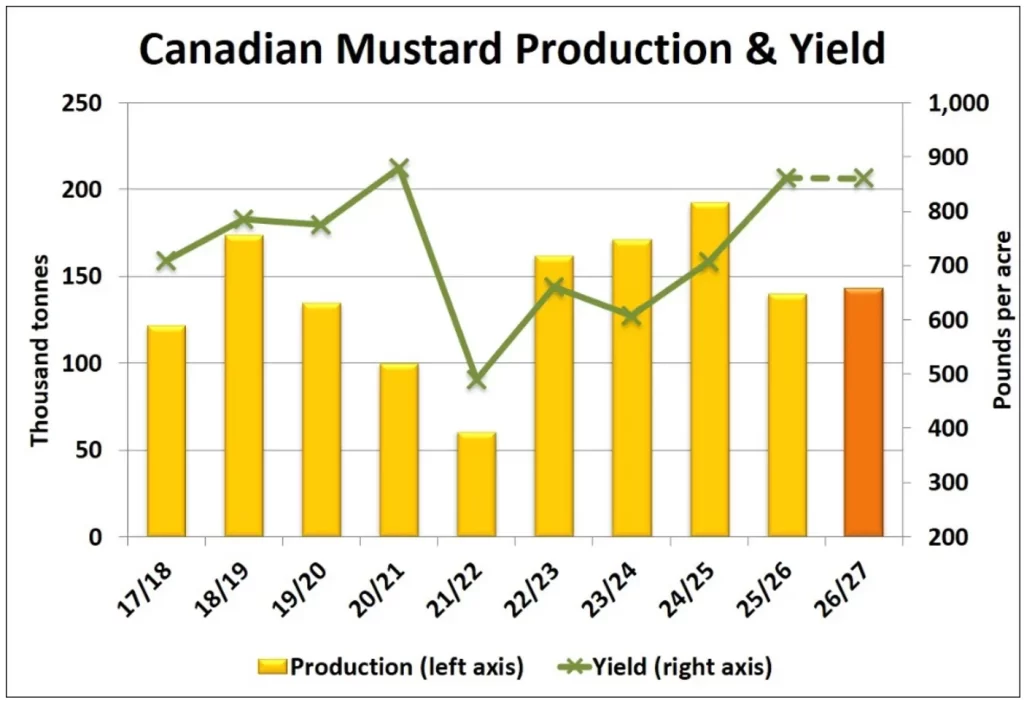
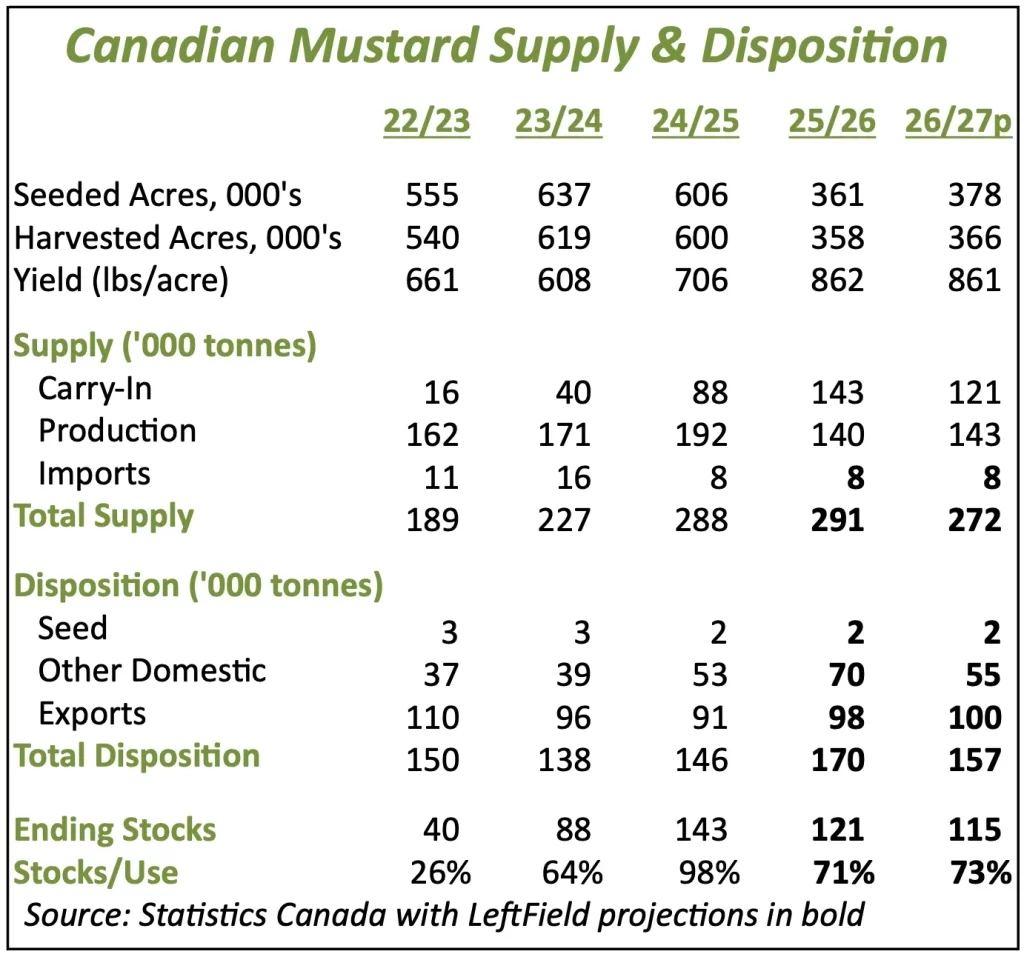
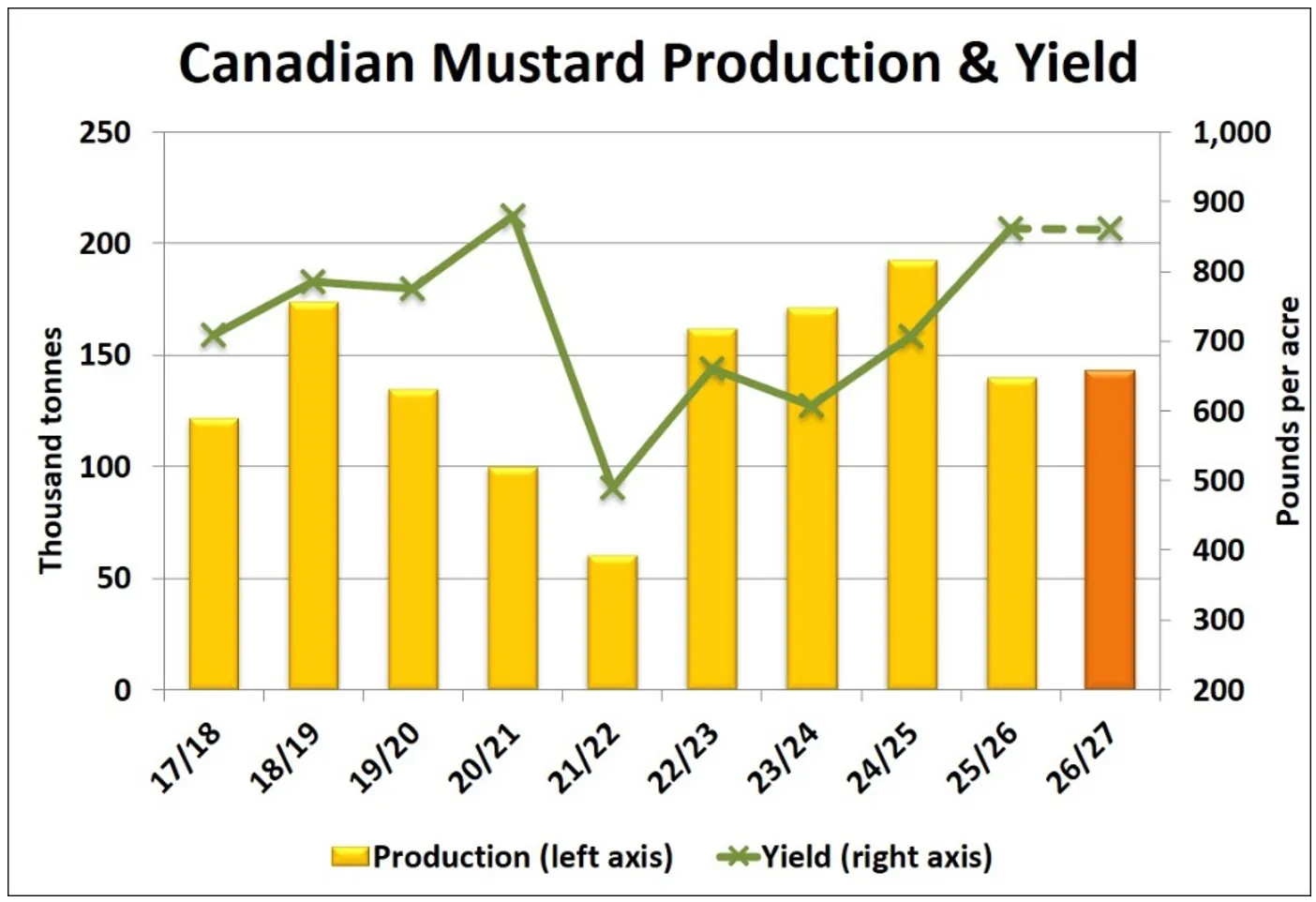
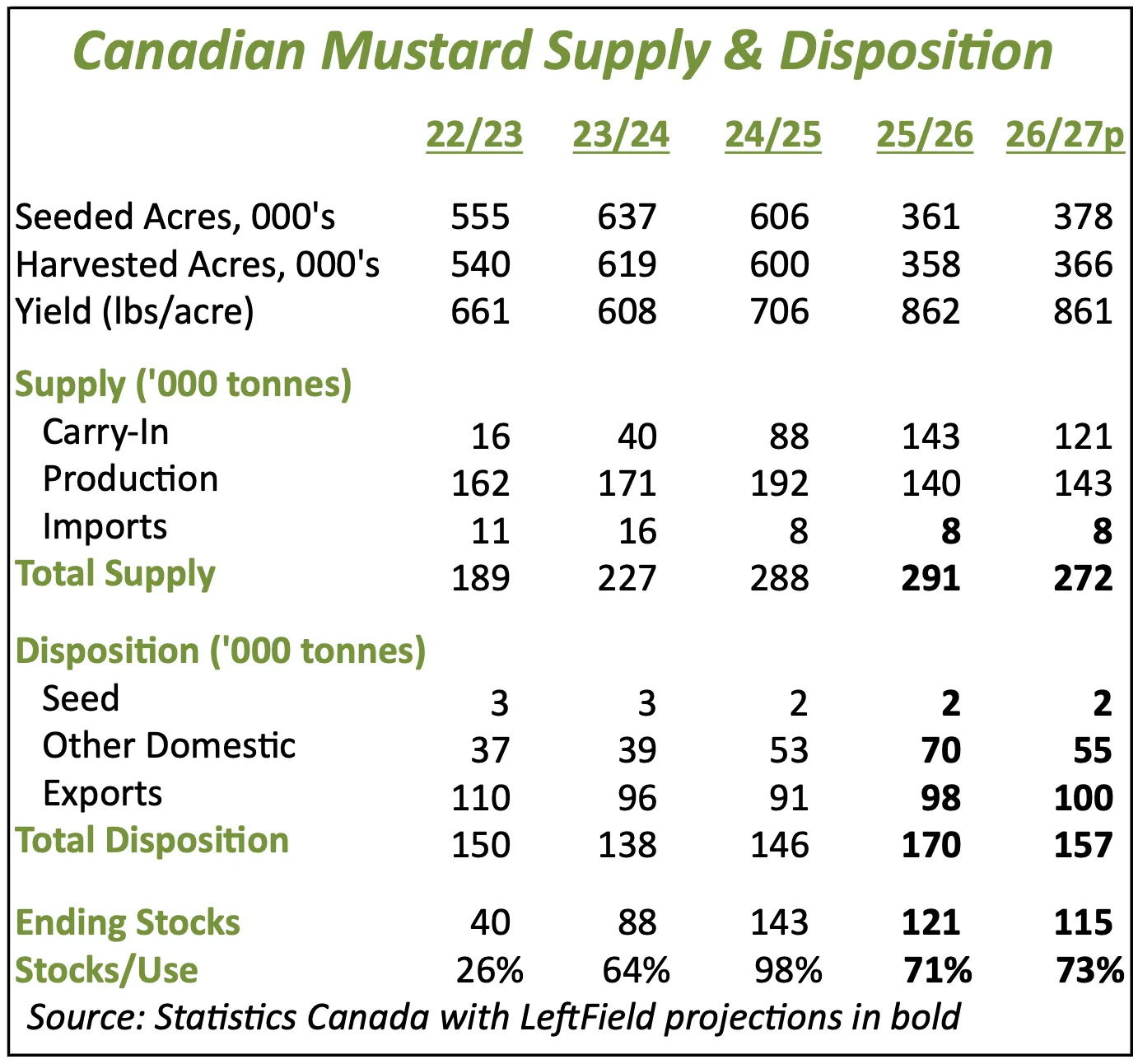
- Provincial crop reports (see below) and an early July road trip are indicating very positive conditions in the southern prairies, including key mustard-growing regions. For now, we’ve raised our overall mustard yield to 861 lb/acre, 15% above the 10-year olympic average.
- The supply outlook for the individual classes is quite different though, due to differences in seeded area for 2026. StatsCan reported a 34% increase for oriental mustard acres and 18% more brown mustard, but a 12% decline was reported for yellow mustard. Based on these acreage and yield numbers for each class, production of oriental mustard would jump by 72%, the brown mustard crop would be up 32% while yellow mustard production would be 26% less than last year.
- Despite a few rough spots, the condition of this year’s mustard crops in Saskatchewan and Alberta are very positive. In Saskatchewan, conditions are holding steady at 93% good or excellent, far above the 10-year average of 46% and in Alberta, 80% is good/exc versus the average of 54%.
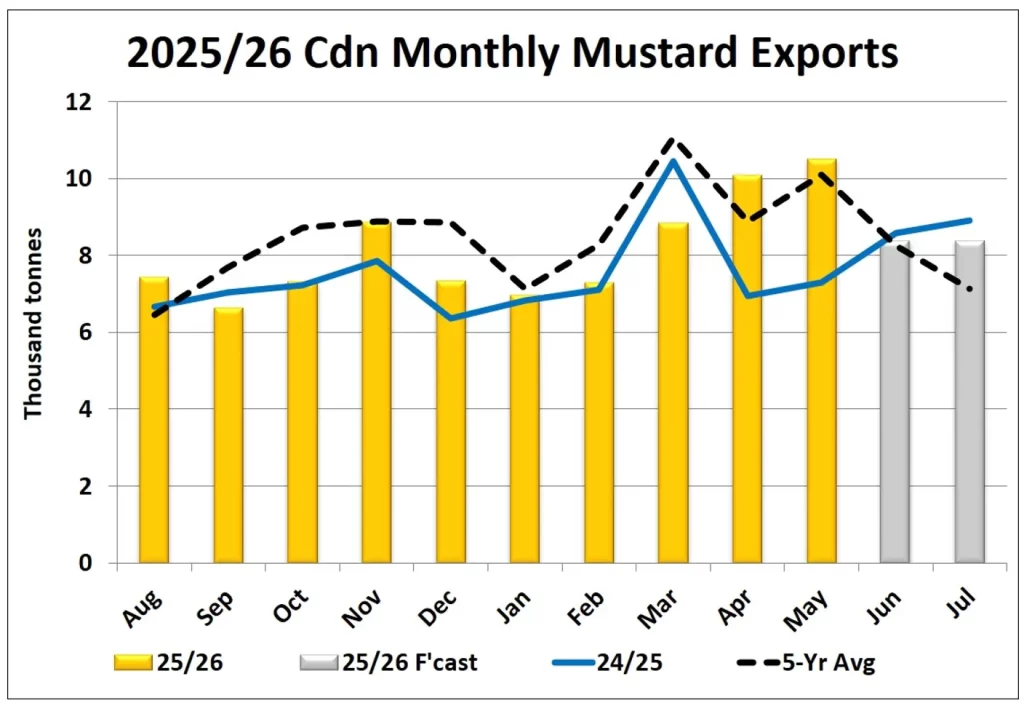
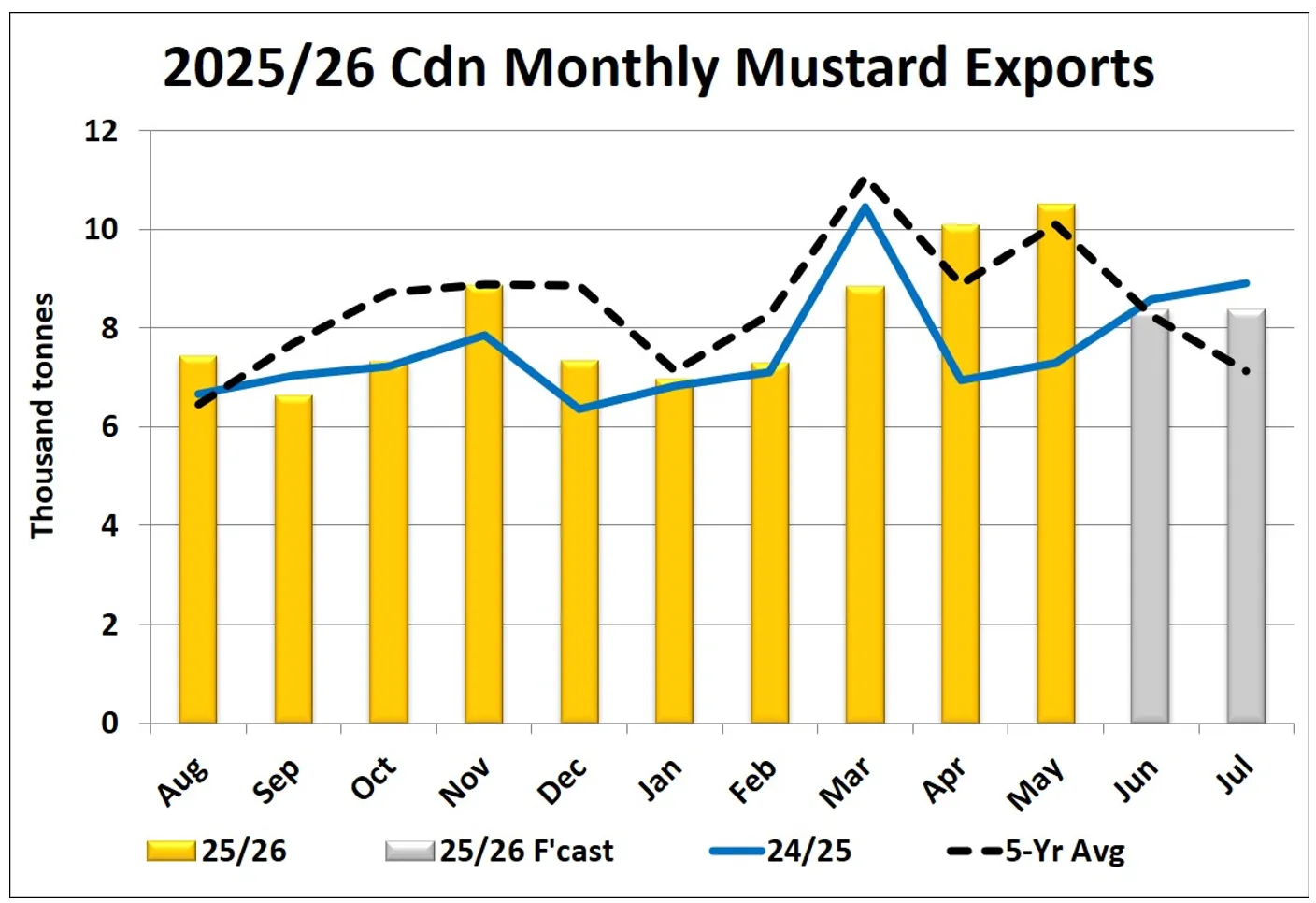
- Canadian mustard exports were more positive in May, rising to 10,500 tonnes, the highest monthly total since March 2024. While exports to Europe declined and volumes to the US were roughly steady, shipments improved to multiple countries in Asia, including China, Sri Lanka, South Korea and Thailand. It remains to be seen whether this business is repeatable, but this stronger performance in May has caused us to nudge our 2025/26 full-year forecast up slightly to 98,000 tonnes, which would be the most since 2022/23.
- Mustard imports by the EU were weak again in May at 4,600 tonnes, the second lowest total in several years. European imports have been modest for most of 2025/26, which suggests domestic production rose last year, but official mustard crop estimates are not available. This also makes it difficult to get a handle on possible impact of the 2026 heatwave on EU mustard production, which could result in larger import needs in 2026/27.
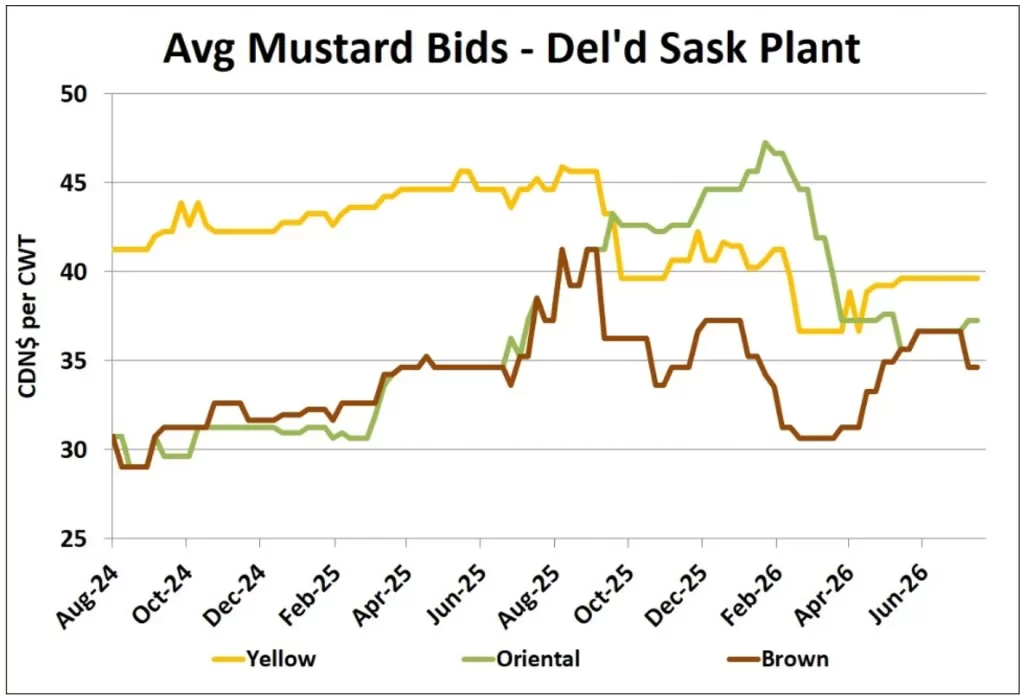
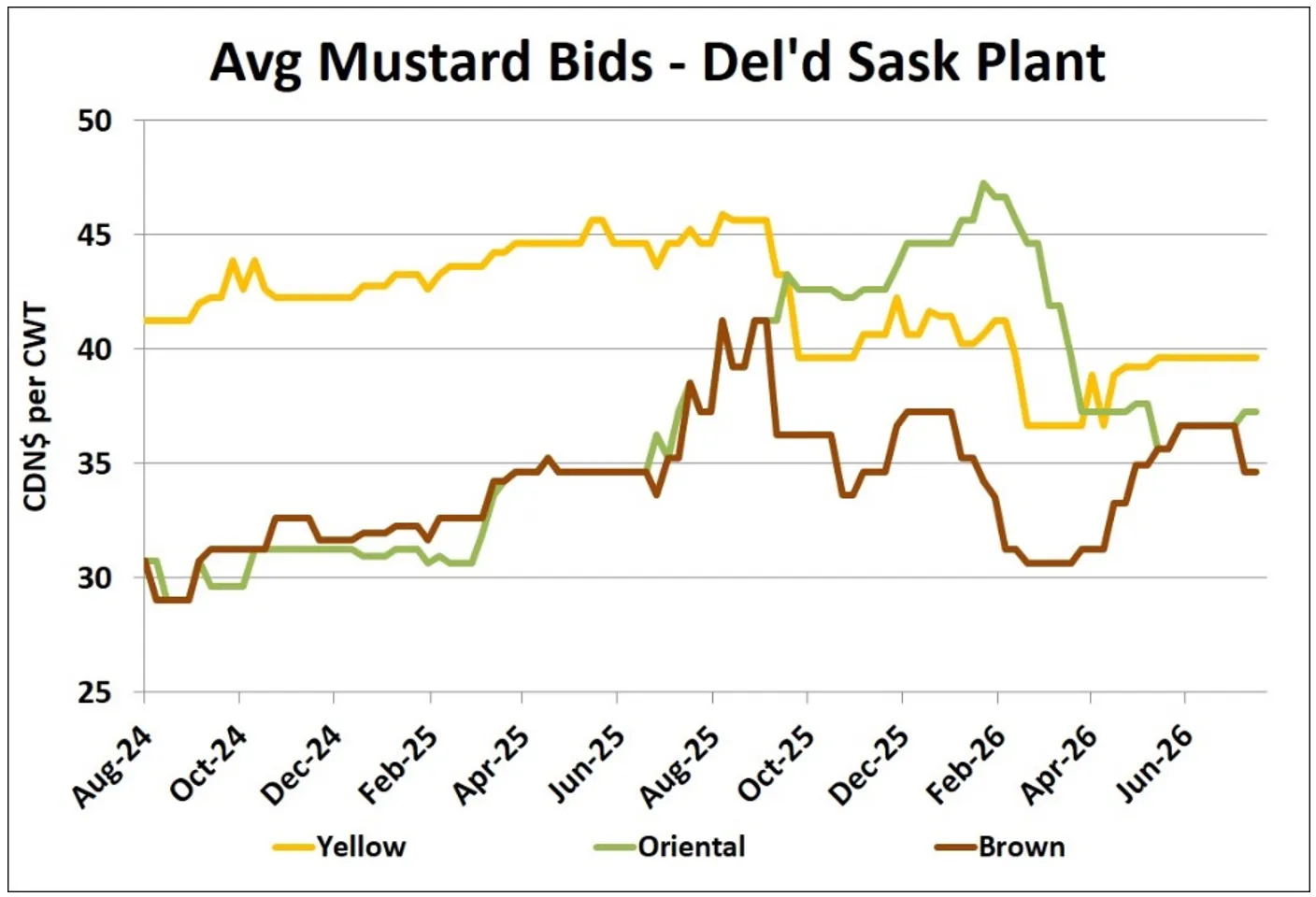
- Both old-crop and new-crop bids for all three classes of mustard have turned lower as it’s becoming clearer that 2026 yields will be above average. Price declines at this time of year aren’t unusual, as normal seasonal patterns tend to move lower ahead of harvest. Old-crop trade has essentially stopped and new-crop activity is also quiet, allowing bids to soften.
Outlook
Favourable yield prospects are adding weight to the normal seasonal declines, allowing bids to turn lower as the mustard market shifts to the 2026/27 crop. While yields look positive, acreage changes vary by class. Once the harvest lows are in, reduced acreage of yellow mustard could mean the strongest recovery while brown and oriental mustard would be more subdued. Concerns about quiet European demand could also weigh on brown mustard prices.