Market Developments
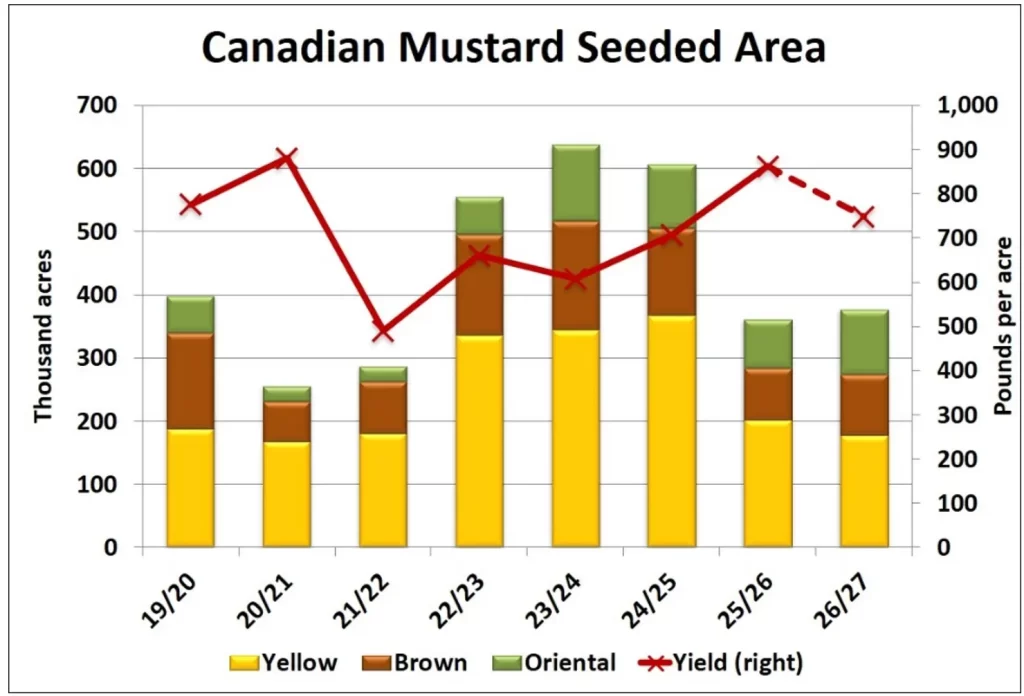
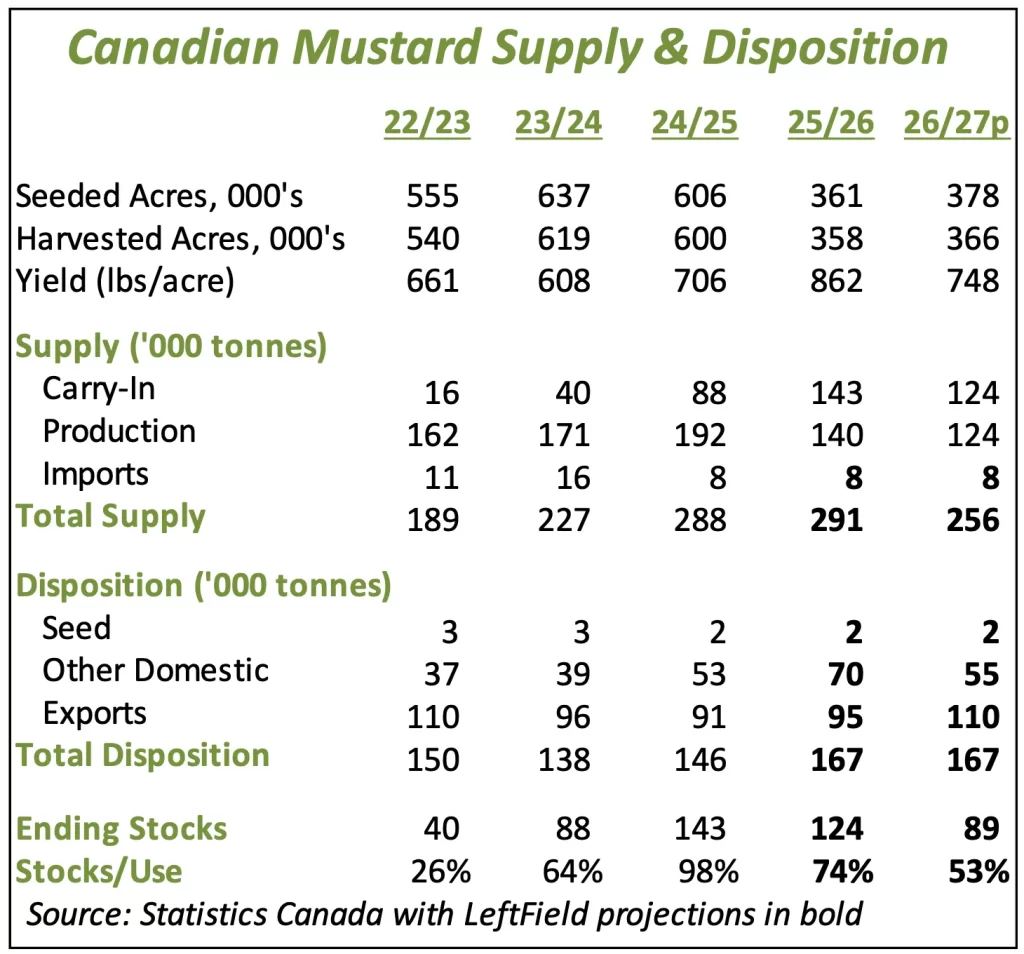
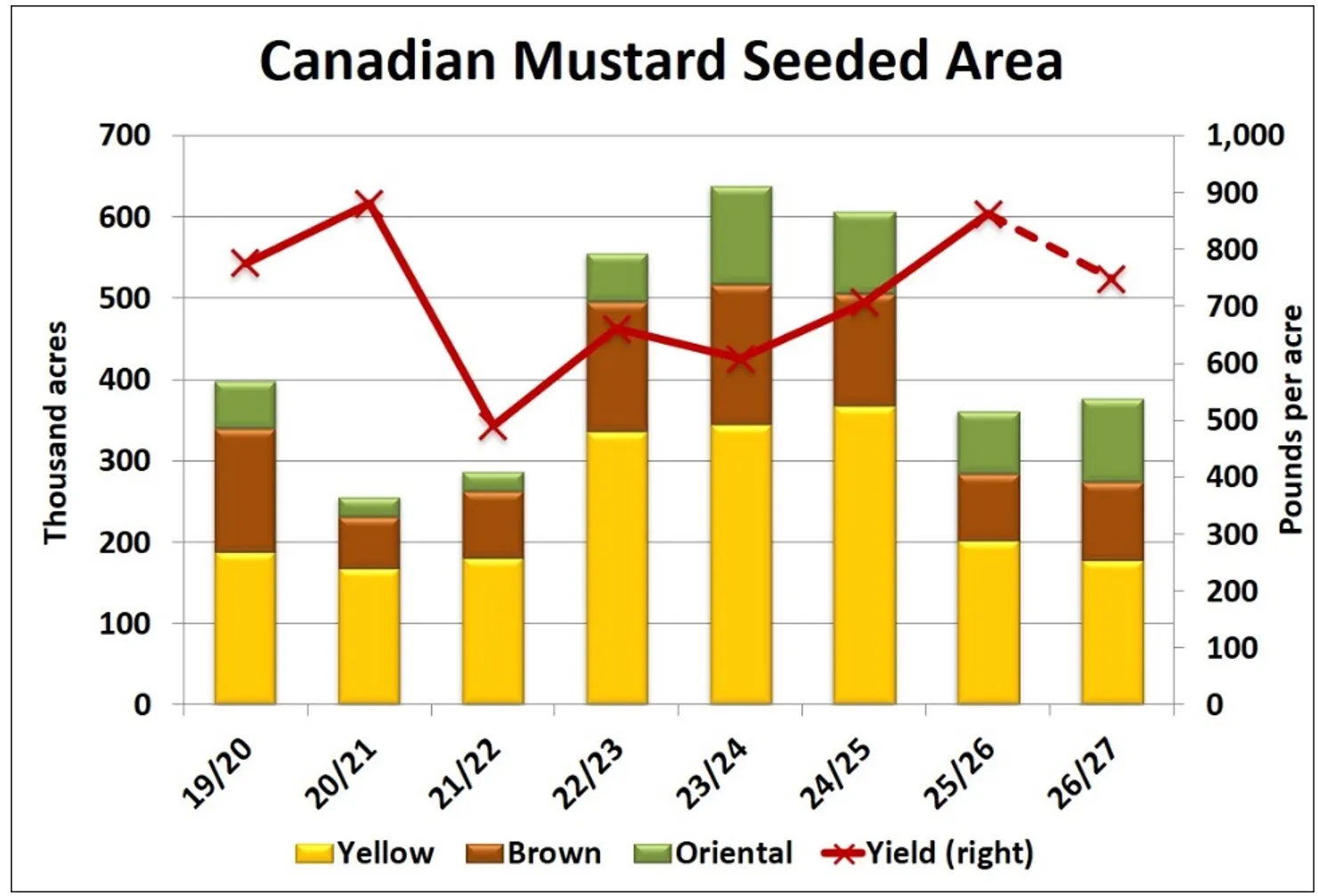
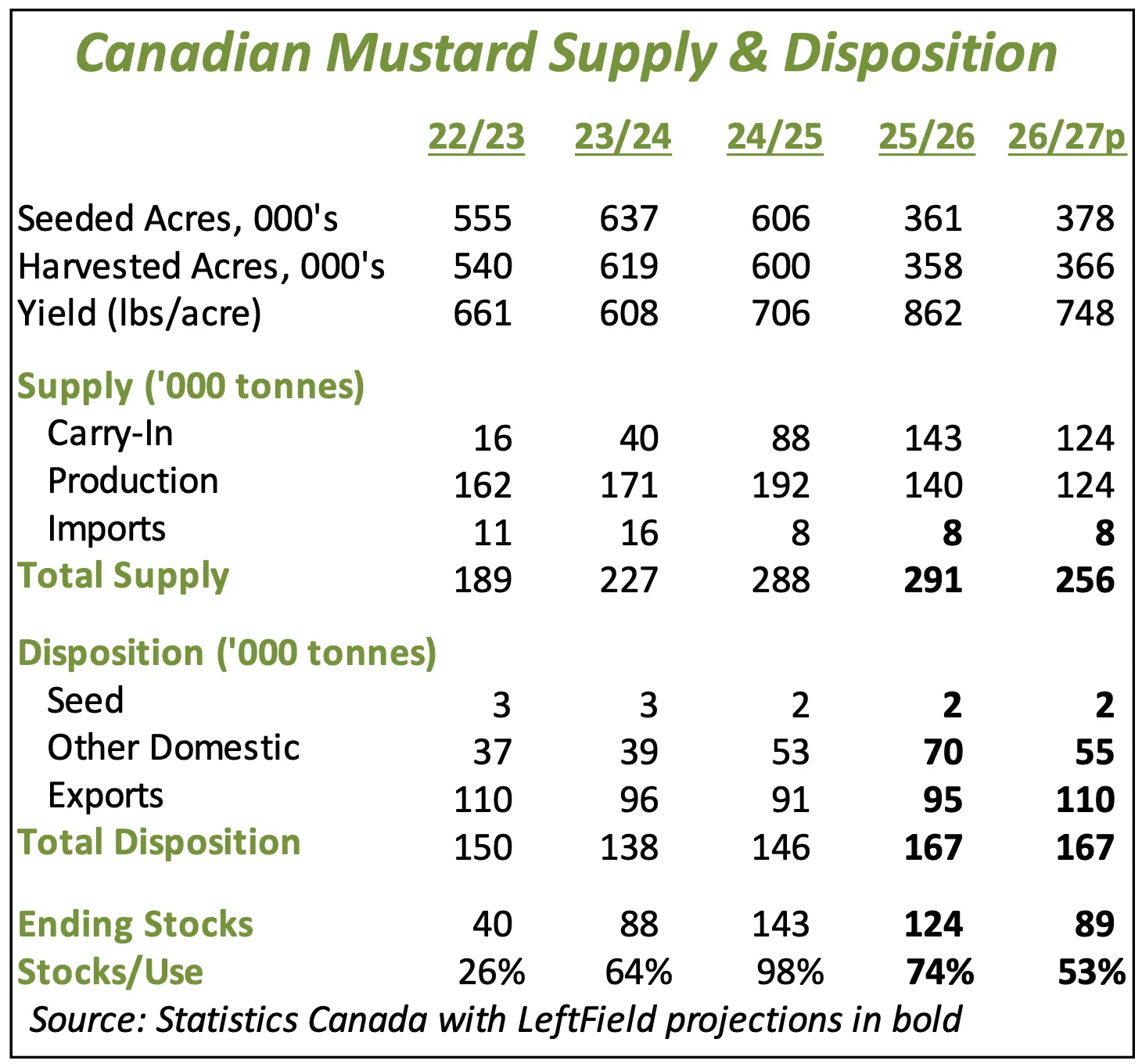
- Even though StatsCan showed a 5% increase in 2026 mustard area, the number was surprisingly low, at least to us. Keep in mind, seeded area of 361,000 acres in 2025 was a sharp drop from the three previous years and we had expected a stronger recovery in 2026. In addition, this June estimate of 378,000 acres was far less than StatsCan’s March forecast of 488,000 acres. For now, we’ll adopt the StatsCan acreage but will wait for confirmation from Sask crop insurance acreage data.
- We’re still using the 10-year olympic average yield of 748 lb/acre (862 last year), which would result in a 2026/27 mustard crop of 124,000 tonnes, 15% less than last year and the smallest since 2021/22.
- StatsCan only provided a breakdown by mustard type for Saskatchewan, which showed brown acreage accounting for 26% of mustard seeded area (5-year average of 26%) and oriental at 27% (16%), with yellow at 47% (58%) of the total. If we use that same breakdown for Alberta mustard area (108,000 acres), western Canadian area of brown mustard would be just under 100,000 acres (up 18% from last year), oriental just over 100,000 acres (34% higher) and yellow mustard at 175-180,000 acres, 12% less than a year ago. Even if yields slip back to the 10-year olympic average, brown mustard production would still be up 15%, oriental up 50% while yellow mustard production would be down 36%.
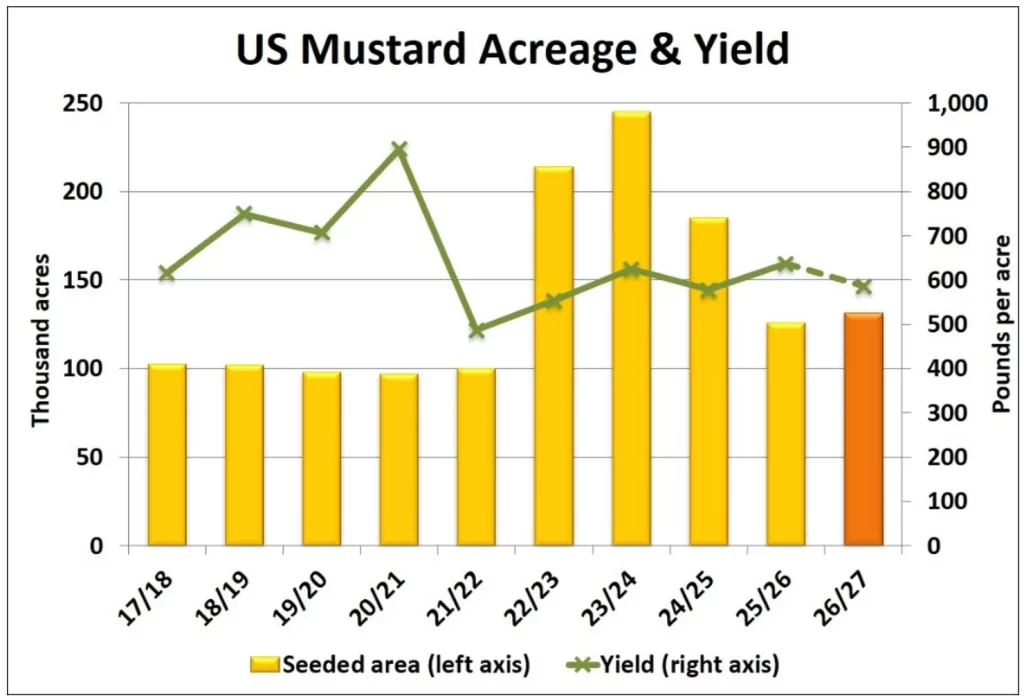
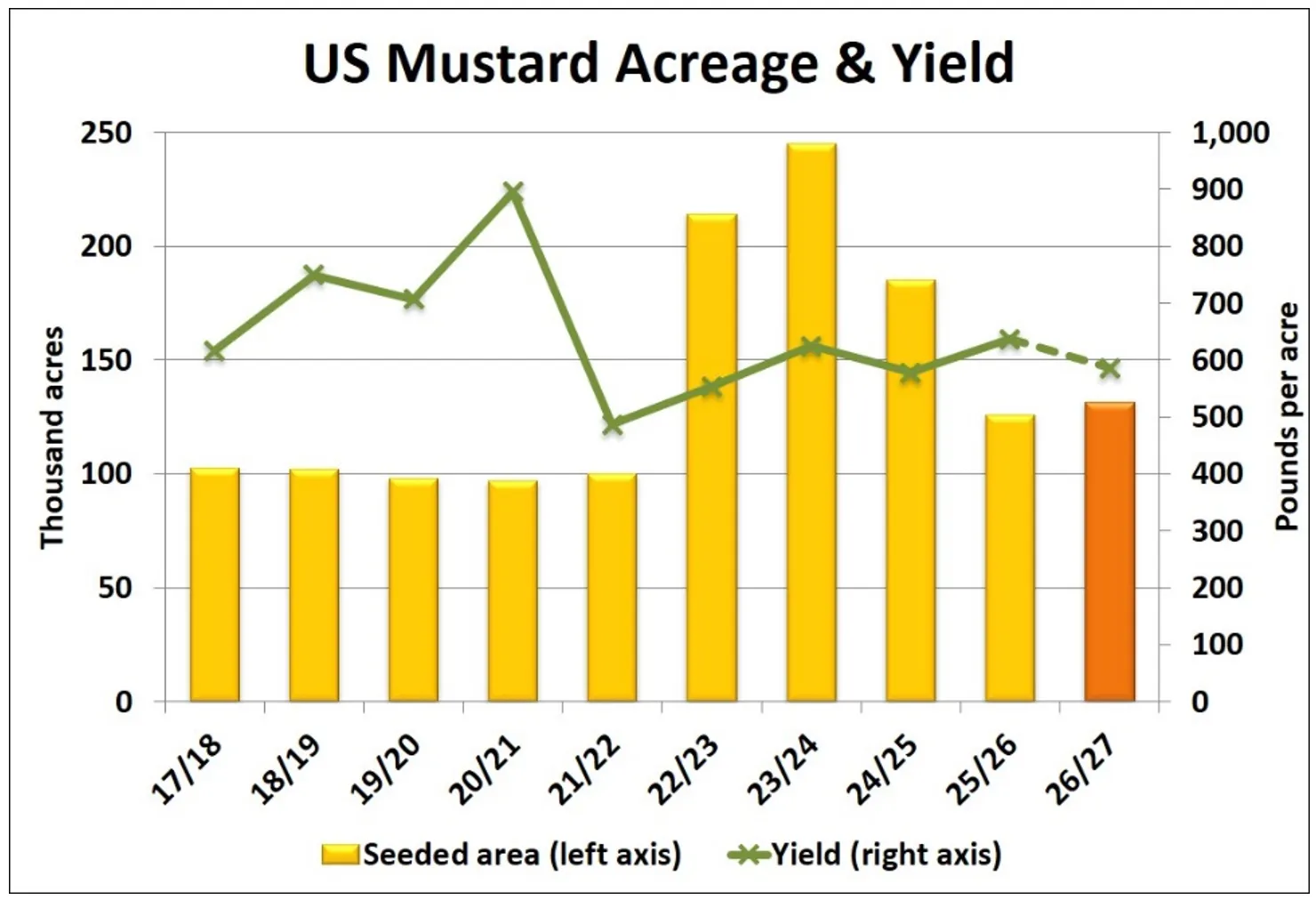
- The USDA also showed a modest increase in 2026 mustard area in the US. Seeded area was estimated at 131,500 acres, 4% more than 2025 but still far lower than the previous three years. Typically though, we wait for the seeded acreage declarations from the Farm Service Agency for confirmation (and the breakdown by type). Based on the olympic average yield of 585 lb/acre (636 last year), the 2026 US mustard crop would come in just shy of 71.5 mln pounds (32,000 tonnes), almost unchanged from last year. This type of outcome would suggest a stable level of US mustard imports for 2026/27, similar to the 49,500 tonnes estimated in 2025/26.
Outlook
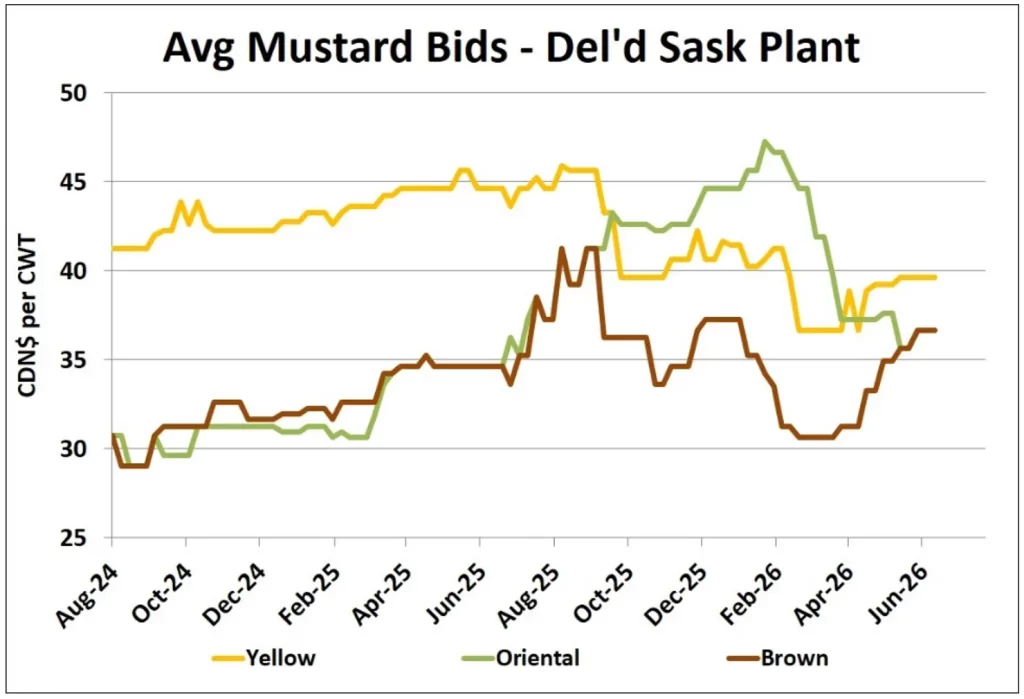
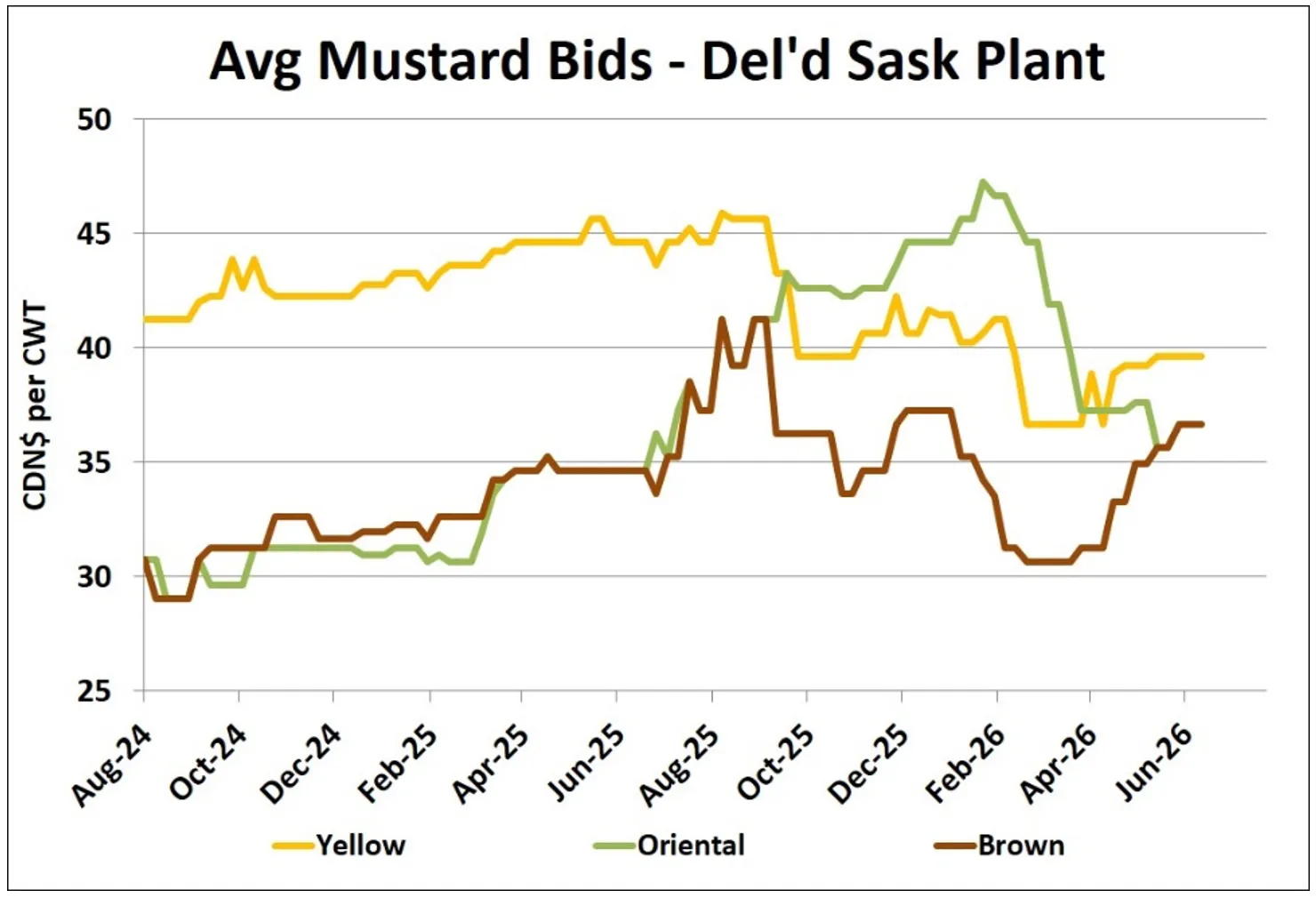
The StatsCan acreage estimates were lower than we expected and if true, would set the stage for more strength for mustard bids heading into 2026/27. In key mustard-growing areas, it’s still not clear if this year’s rains are a net positive or negative for yields, adding more uncertainty to the outlook. If StatsCan’s acreage breakdown is correct, yellow mustard prices could see the most upside potential, followed by brown while oriental prices could trail the other classes.