
Have you ever opened a familiar jar of mustard only to discover that it has significantly more kick than you remember?
That question recently sent Toronto Star business reporter Jake Edmiston on a months-long investigation into an unusually spicy jar of Dijon mustard. What began as a mystery at the dinner table soon became a much larger story about mustard production, Canadian agriculture and the natural factors that influence mustard’s distinctive heat.
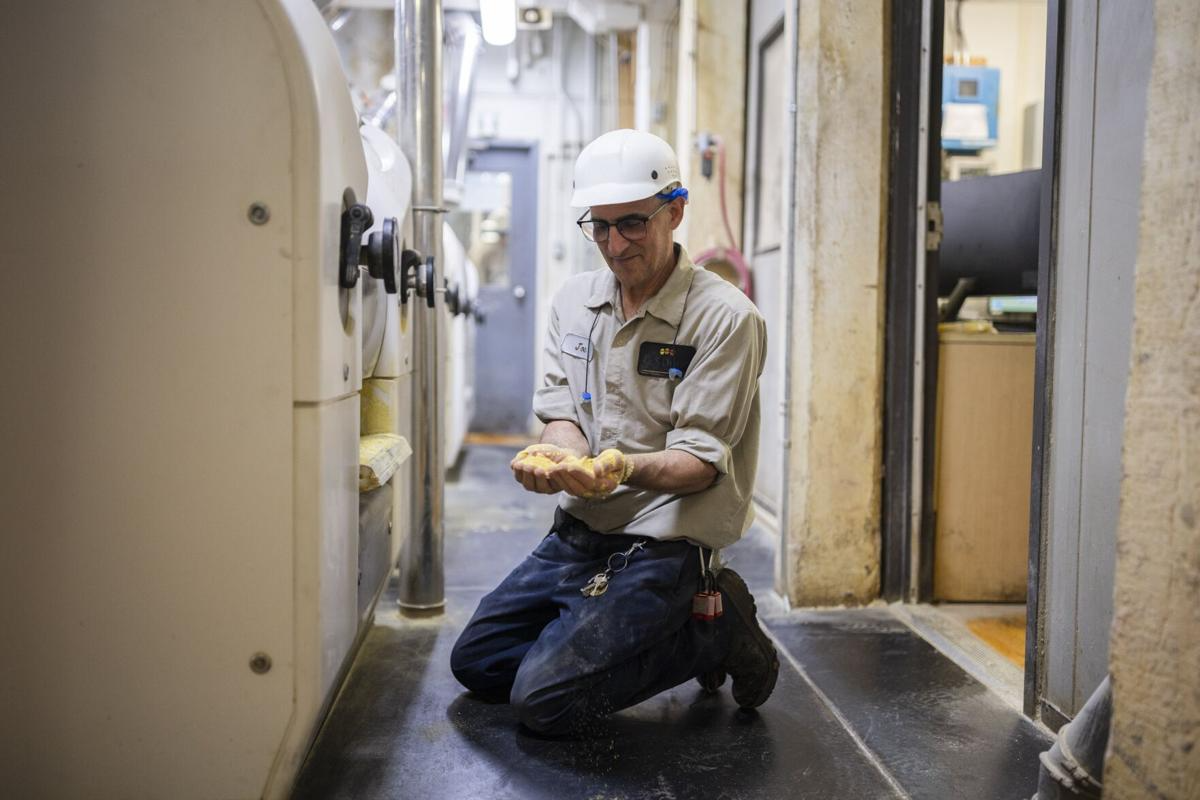
The investigation traces the mustard supply chain from France to a mustard mill in Hamilton and ultimately to the Canadian Prairies, one of the world’s most important mustard-growing regions.
Nick Iwanyshyn for the Toronto Star
It Starts with the Seed
Mustard’s characteristic heat comes from naturally occurring compounds in the seed called glucosinolates. When mustard is ground and combined with liquid, these compounds help create the sharp, pungent flavour associated with Dijon, hot mustard and other mustard products.
But mustard is an agricultural ingredient, and like any crop, its characteristics can change depending on growing conditions.
Researchers studying Canadian mustard have observed that hotter and drier conditions on the Prairies can contribute to increased glucosinolate levels in the seed. The result? Mustard produced from those crops may deliver a noticeably stronger kick.
Nick Iwanyshyn for the Toronto Star
From the Canadian Prairies to Products Around the World
For G.S. Dunn, the story highlights something we have understood through generations of mustard milling: exceptional mustard begins with the seed.
Growing conditions, seed variety, quality and processing all play an important role in the flavour and functionality of the finished ingredient. As a Canadian mustard miller, G.S. Dunn works closely with mustard grown in Western Canada and transforms this remarkable crop into ingredients used by food manufacturers around the world.
The Toronto Star’s investigation is a fascinating look at just how much can be discovered from something as simple as an unexpectedly spicy spoonful of mustard—and how closely the flavour on your plate can be connected to conditions thousands of kilometres away in a Canadian mustard field.
Nick Iwanyshyn for the Toronto Star
Want to learn how the mystery was solved?
Follow Jake Edmiston’s investigation as he traces an unexpectedly spicy jar of Dijon mustard back through the science, agriculture and supply chain behind it.


