Market Developments
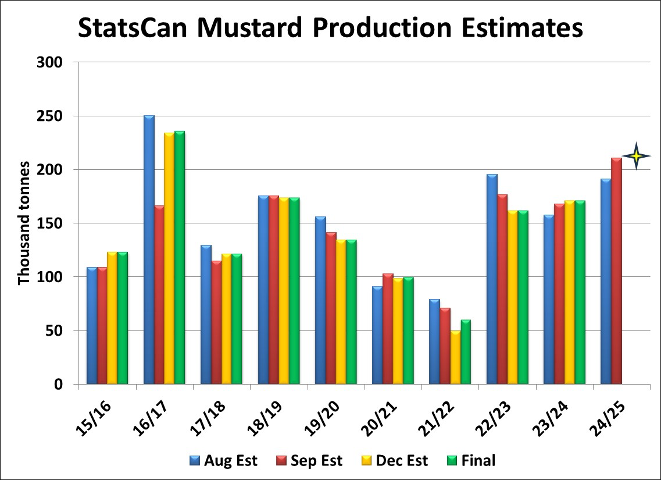
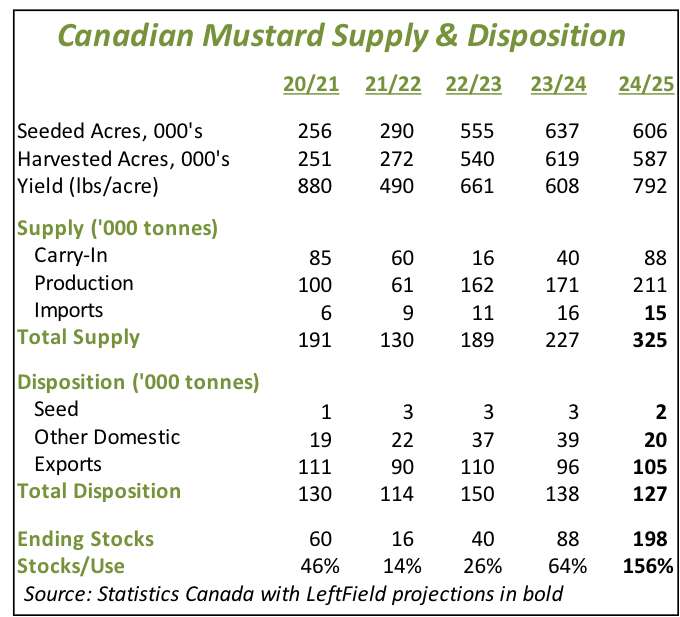
- We’re not expecting large changes in StatsCan’s 2024 mustard production estimate on December 5. Based on StatsCan’s track record since switching to model-based yield estimates for August and September, the survey-based number in December has often (but not always) been lower. On the other hand, Sask Ag’s final crop report of the season raised its mustard yield estimate well above StatsCan’s September yield, raising the odds of a larger production number. The added complication for the survey results in this December release is the tendency for farmers to under-report mustard production. On balance, it’s possible the 2024 crop could be closer to 225,000 tonnes, still well above last year and pushing supplies up to burdensome levels.
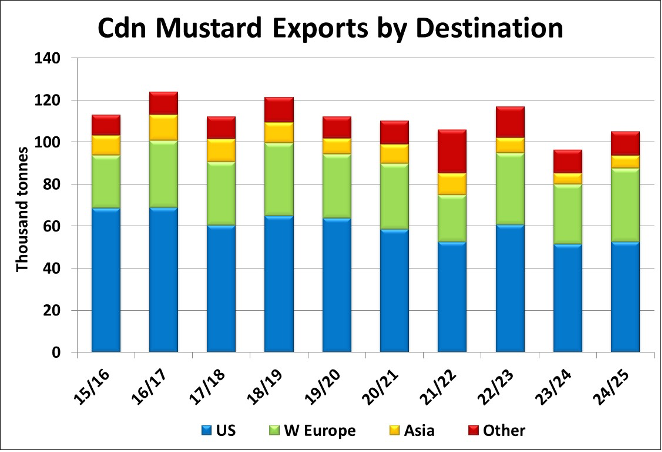
- The potential for US tariffs on Canadian mustard is a significant risk to the market. The US typically accounts for 50-55% of Canadian exports, with an even larger share of the yellow mustard market. While US farmers have increased mustard production in recent years, processors there still rely on Canadian mustard. As a result, tariffs (if they are imposed) would largely add to their costs. If US farmers respond and increase production in 2025, the negative impacts would then shift to the Canadian side of the border.
- Mustard imports by the EU improved in September to 7,400 tonnes but were still lower than the 5-year average of 9,200 tonnes. In September, Ukraine was the largest source of mustard for the EU at 4,300 tonnes while Canadian mustard accounted for only 1,300 tonnes of the total. While EU mustard imports tend to be lower in the first few months of the marketing year, volumes early this year have also been subdued by the large buildup in inventories prior to the July 1 tariffs on Russian mustard. Even with this slower start, imports for Q1 (Jul-Sep) of 2024/25 are 20,300 tonnes, not far behind the 5-year average of 23,400 tonnes.
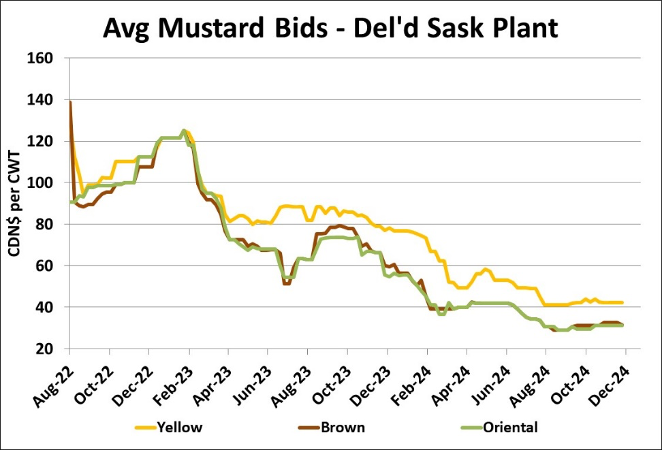
- There’s still very little movement in posted mustard bids but a bit of life could be showing up in yellow mustard. The risk that tariffs would raise the cost of Canadian mustard could be prompting some US buyers to increase their coverage. Even if this is the case, these bumps in bids may not last long, especially with some Canadian mustard growers looking for opportunities to unload their supplies.
Outlook
While it’s still far from certain, possible US tariffs on imported mustard could inject a bit of short-term life into the market, particularly for yellow mustard. Buyers could be looking to build up inventories ahead of tariffs and this fresh business could give bids a brief lift. Beyond that though, tariffs would encourage more US domestic production. The oriental mustard market is still flat, with farmers’ reluctance to sell providing a floor but very little volume is being traded. Brown mustard could see some support from the European market later in the year, but that isn’t showing up yet.