Market Developments
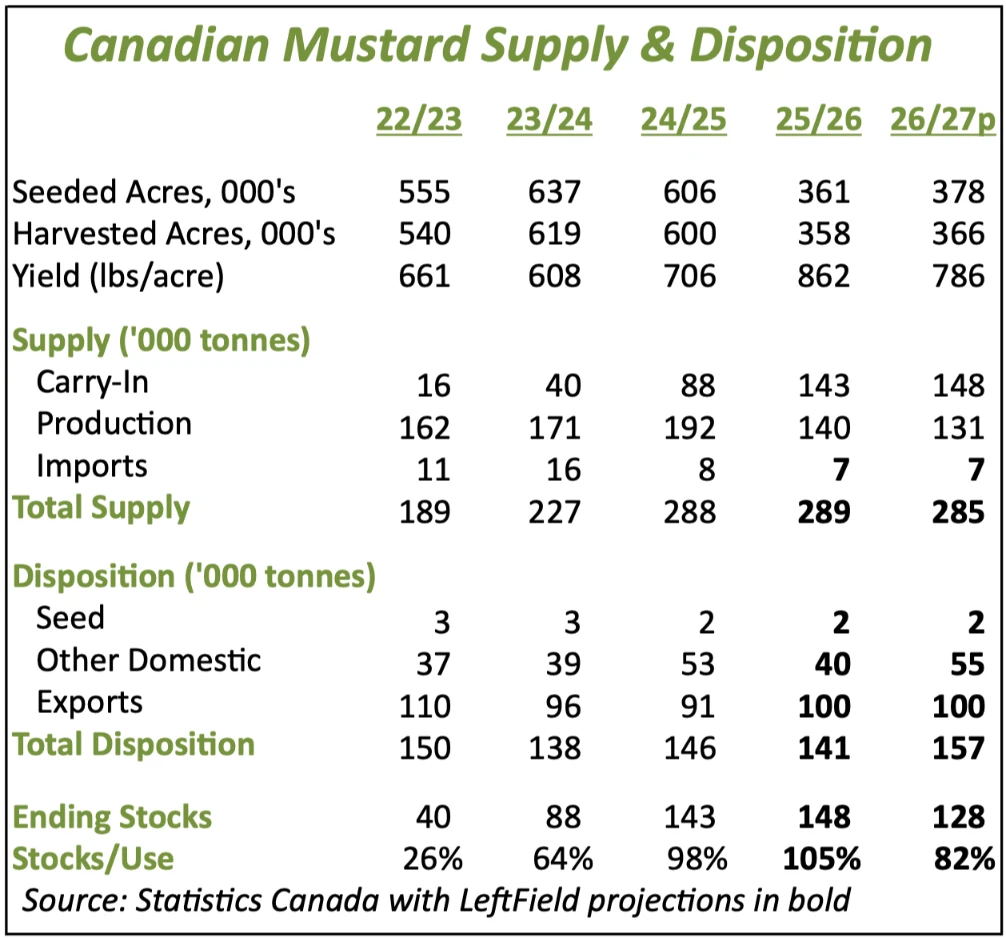
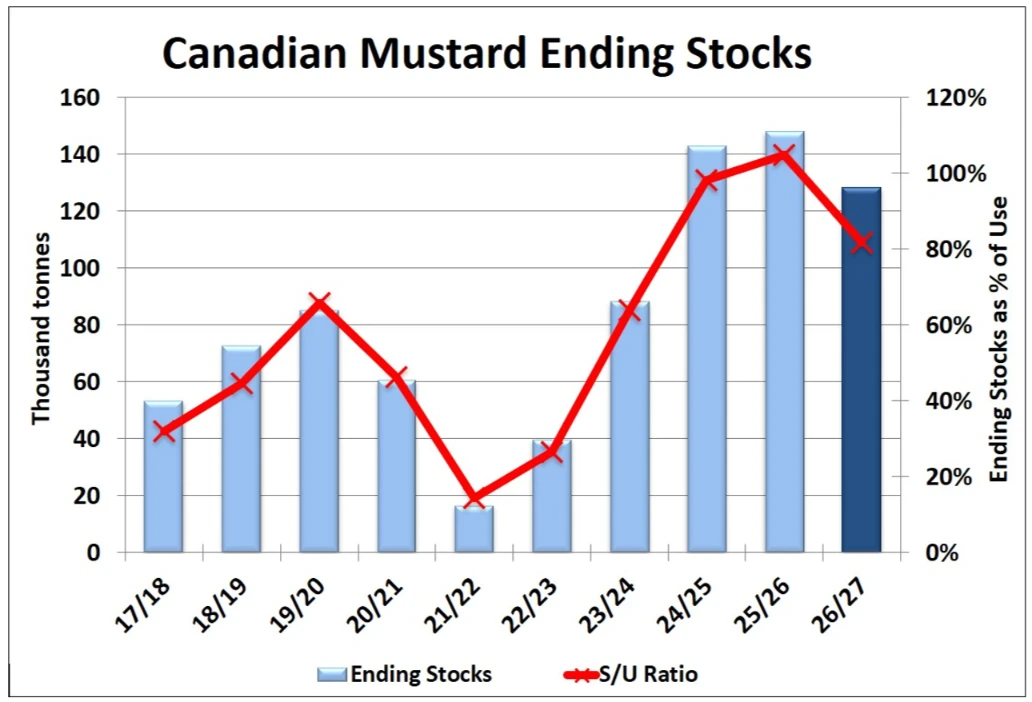
- The first Sask Ag 2026 yield estimates showed the mustard yield at a record 1,129 pounds (23.8 bushels) per acre. In last year’s data from SCIC, the yellow mustard yield was unusually high, which may be partly the result of newer varieties. If this Sask Ag yield is close to reality, it would add roughly 50-55,000 tonnes to our 2026 crop estimate and make the 2026/27 market feel heavier.
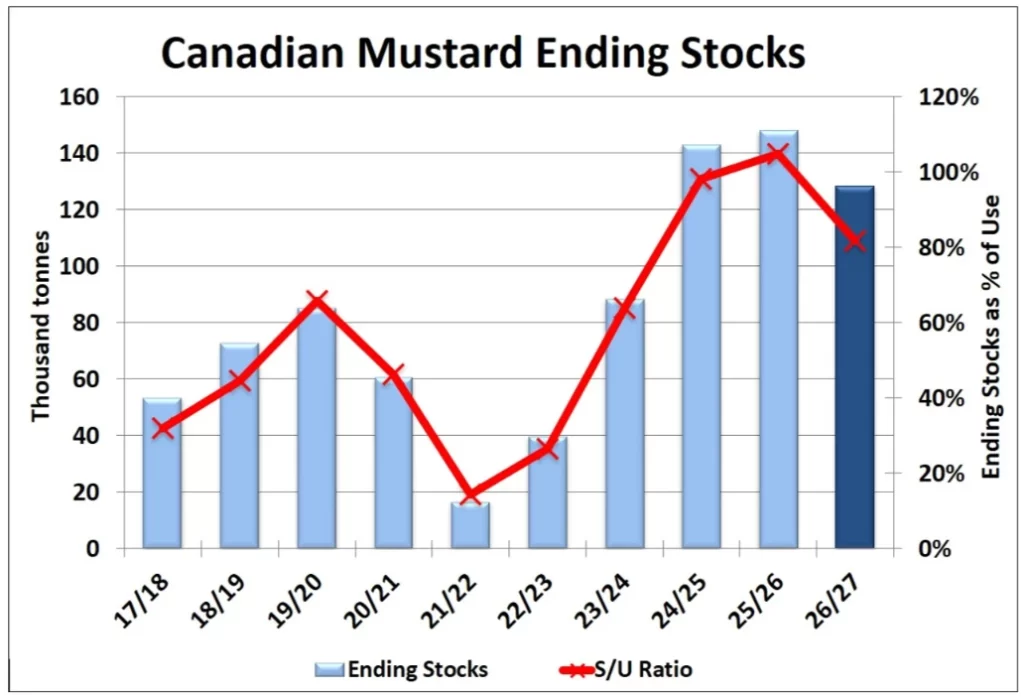
- Last week, StatsCan estimated 2025/26 mustard ending stocks at 148,000 tonnes, up slightly from 2024/25 and the highest since 2005/06. Keep in mind, lower quality mustard from the last two harvests, especially 2025, means that a sizable portion of the ending stocks is a 3Can or lower grade. While it’s unclear how much of that low-quality mustard remains, it could be as much as 40-50,000 tonnes. And if the 2026 harvest is also damaged by adverse weather, that total could increase.
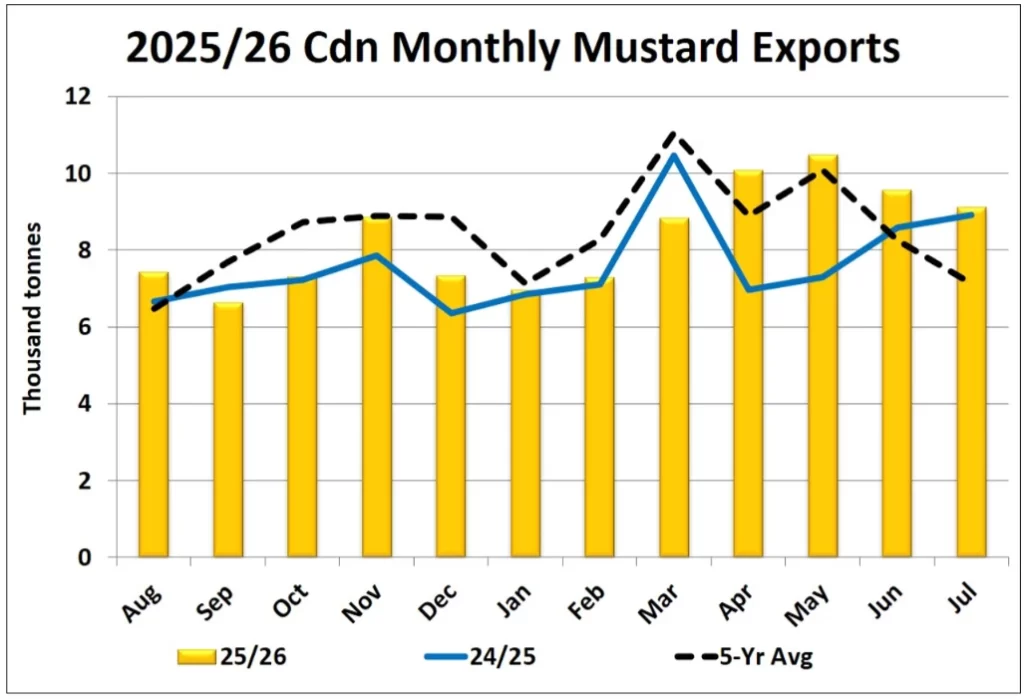
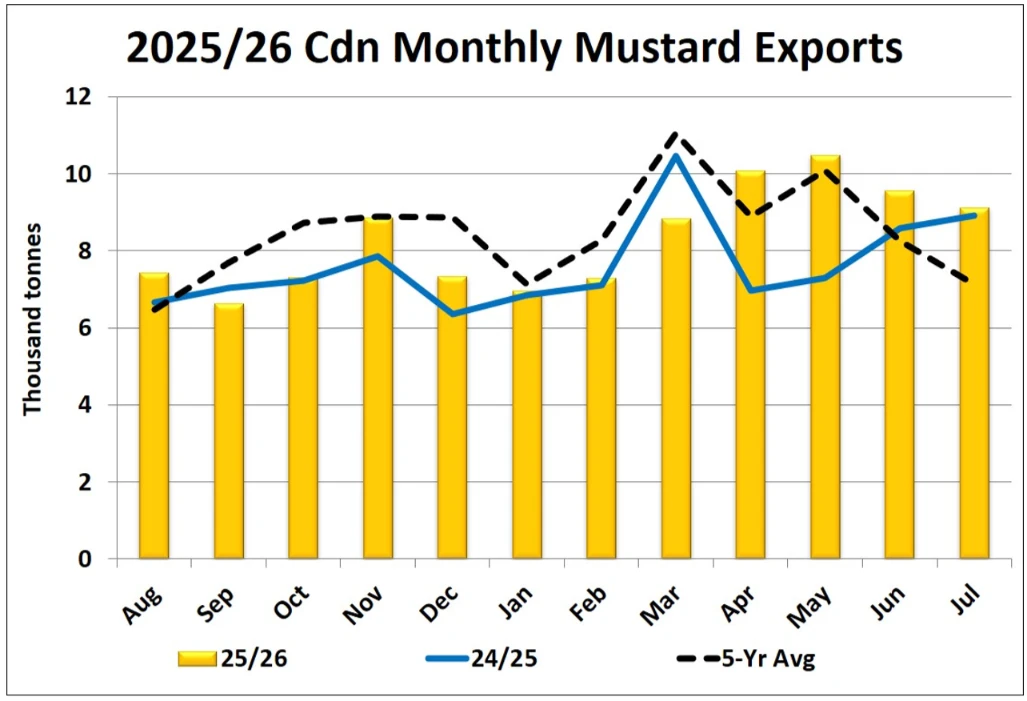
- Canadian mustard exports in July dipped to 9,100 tonnes, but a slowdown late in the year is part of the normal pattern. This amount was well above the 5-year average of 7,100 tonnes for the month and slightly higher than a year ago. This brings the full-year total to 99,900 tonnes, up from last year’s low of 91,200 and the most since 2022/23. Exports to the US were largely steady in 2025/26 at 50,800 tonnes, with the largest gain seen in exports to western Europe, likely helped by the EU tariffs on Russian mustard. Volumes were also up slightly to African and the Asian countries.
- After another very slow start, the pace of the Saskatchewan mustard harvest improved in the last two weeks. As of September 7, 50% of the crop had been harvested, now ahead of last year at 27% but still short of the 10-year average of 69% complete. At this stage, we still haven’t heard much about the quality of the harvest but the heavy rains across much of the province have raised concerns about possible damage.
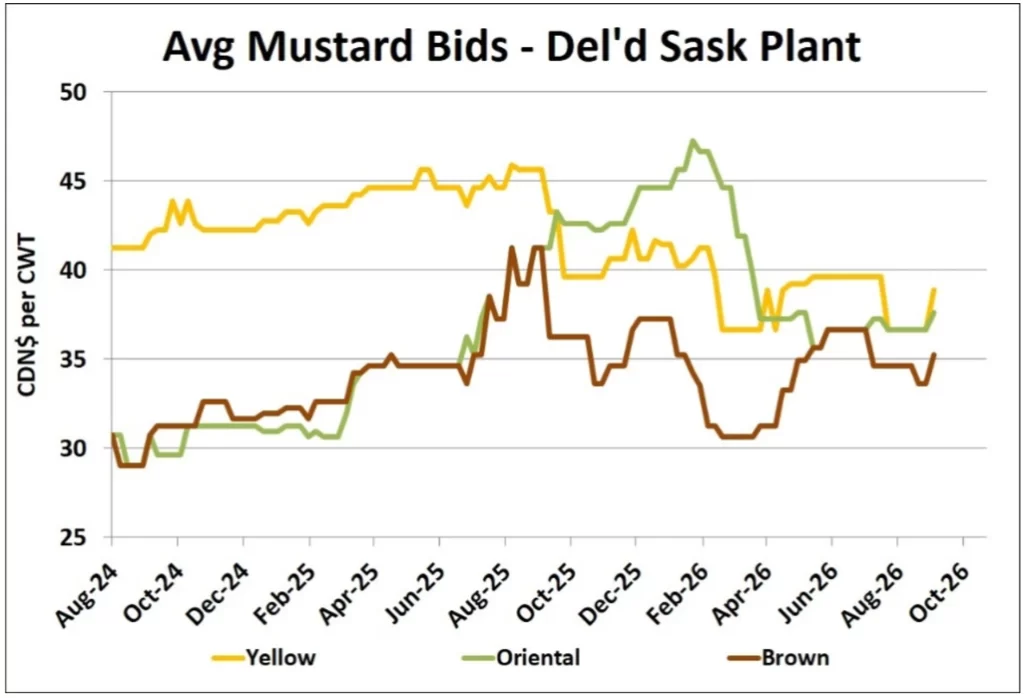
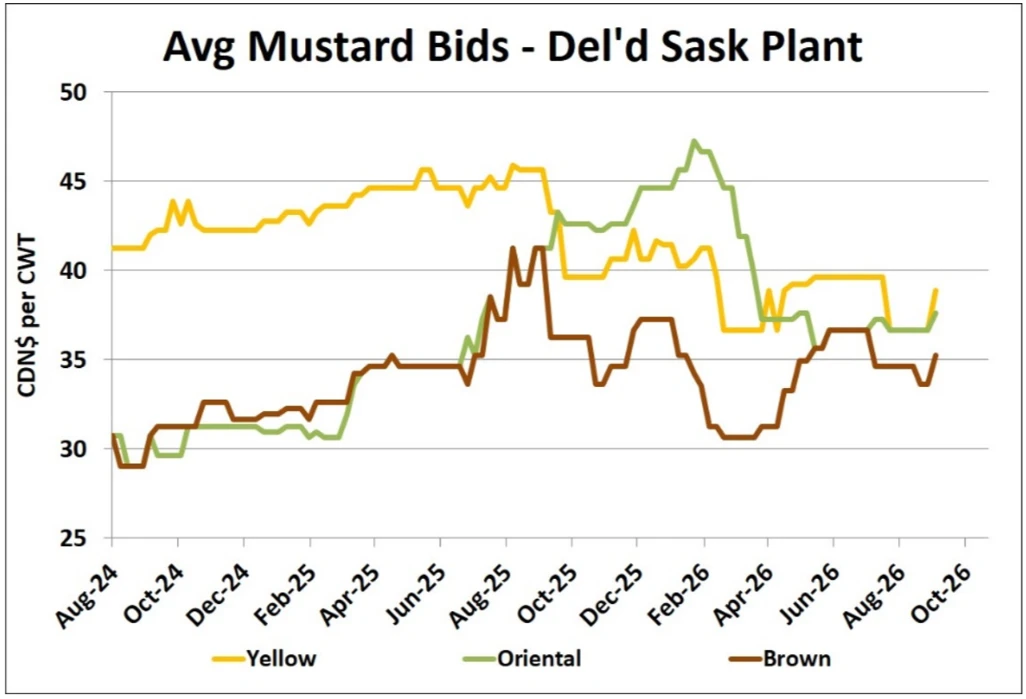
- Concerns about the quality and (possibly) quantity of the 2026 mustard harvest are causing bids to rebound quickly from the seasonal lows. So far, average bids for all three classes are still roughly in the range of the last six months or so, but the momentum is higher. Farmer selling is understandably quiet, given the uncertainty in the harvest outcome, which adds more upside potential to the market, at least in the short term.
Outlook
The outcome of the 2026 Canadian mustard harvest is very much up in the air, both for yield and quality. That said, concerns are growing among farmers and buyers, which is adding to the normal seasonal tendency of rising prices at harvest time. The harvest delays are overshadowing the regular market factors, which include a drop in yellow mustard acres that could be offset by higher yields. Brown and oriental mustard supplies would be more well-balanced (if not for the harvest problems). At the same time, export demand feels a bit softer and could moderate the upside potential.